Wadi Rum
They call this the Valley of the Moon. Stay until the sun is gone, and the sky hands the name back to you.
Also seen through Desert & Deep Time · all at قرية وادي رم →.
Why here
The rock underfoot in Wadi Rum is about half a billion years old, and the light overhead is older still. Between the two there is almost nothing — no city glow, and next to no moisture in the air. This is a valley cut into sandstone and granite in the far south of Jordan, the largest wadi in the country, and for most of the year the sky over it sees almost no rain. Dry air is clear air. Water vapour is what smears a night sky into a dull wash; take it away, and the stars come through hard and sharp, the way people saw them before there were towns to drown them out. That is the whole invitation here. The desert that makes the days severe is the same desert that makes the nights extraordinary — a bowl of dark sand under a bowl of dark sky, with the pale band of the Milky Way laid across it. Everything in this note is a place to stand still and let that old view arrive.
The sites
The valley floor
School
29.5756, 35.4194
This marker sits at the edge of Wadi Rum village, where the paved world runs out and the open sand begins. The village is small and its lights are few, which matters more than it sounds: you do not have to travel far here to stand under a genuinely dark sky. Walk a few minutes past the last building, out onto the flat sand, and the glow behind you falls away. The cliffs stand black on every side, and the gap of open sky between them fills with more stars than most people have ever stood beneath. It is the easiest dark sky in this note — no climb, no long drive, just a short walk away from the last lit window. Bring something warm before you go. The sand gives up its heat fast once the sun is down, and the temperature drops further after dark than the mild afternoons would ever lead you to expect.
Walk out onto the open sand until the village lights are hidden behind the rocks, then stand still and let your eyes adjust for a full twenty minutes without looking at a phone. The pale, uneven band that slowly appears overhead is the Milky Way — the combined light of our own galaxy, seen edge-on from inside it. Trace it from one cliff line to the other.
- AccessShort walk
- ExertionEasy
- TimeAn hour
Wadi Rum
29.5084, 35.3362
Wadi Rum is the largest wadi in Jordan, a broad floor of red sand held between long walls of sandstone and granite. Out on the open floor there is nothing tall close by to block the view, so the sky reaches almost all the way down to the sand on every side — a full dome rather than the narrow strip you get in a tight canyon. This is what makes the place work after dark: distance from any real town, dry and steady air, and a horizon that opens in every direction. By day the same floor reads as heat and hard walking. By night it becomes the best kind of open ground for a sky, wide enough that you can watch stars rise over one wall and set behind another in a single sitting. Pick a spot well away from any parked vehicle or lamp, sit low, and give the whole bowl of sky the time it needs to come out.
Face east early in the night and watch for stars clearing the top of the cliffs, then turn west later and catch others dropping behind the far wall. Because the valley floor is so open, you can see both the rising and the setting edge of the sky from one spot — the plain, slow proof that the ground is turning beneath you.
- AccessDrive-up
- ExertionEasy
- TimeHalf a day
The walls
Jabal Ram
29.5876, 35.4134
Jabal Ram is the great massif that stands over the village. For a long time people took it for the highest mountain in Jordan, until careful measurement handed that title to a peak farther south. Built of the same sandstone and granite as the rest of the valley, it rises hard against the western sky — and for a night under the stars that is a feature, not a loss. The mountain gives you a hard black edge to watch stars set behind, and its shadow deepens the dark on the ground at its foot. Stand at its base after dusk and you get the sky framed by rock older than almost anything you could name. The summit itself is a long, strenuous scramble best done with a guide by daylight. For the stars, you do not need it: the open sand at the mountain’s foot is all the vantage the sky asks for.
After dark, stand at the foot of the mountain, pick a bright star just above its black outline, and keep watching it. Its slow slide down behind the rock is the Earth’s own turning made visible against a fixed edge — the mountain holds still while the entire sky drifts past it.
- AccessShort walk
- ExertionEasy
- TimeAn hour
The road in
Al-Qūaīrah
29.7367, 35.4391
Al-Qūaīrah is the district town on the road in, the last real settlement before Wadi Rum opens out to the south. On its own it is not a dark-sky site — a town, however small, throws up a low dome of light that thins the stars directly overhead. That is precisely why it is worth a look. Stand at the town’s edge after dark and take in the sky, then drive on into the desert and look again once the town has dropped below the horizon behind you. The difference is the whole argument for coming out here: the same stars, seen first through a haze of ground light and then through nothing at all. Wadi Rum sits roughly an hour inland from the Red Sea coast at Aqaba, and this town is the hinge between the lit shore and the dark interior. Treat it as a before to the desert’s after, and the drive in stops being dead time and becomes the first thing you observe.
Look straight up over the town and note how few stars you can pick out, then look again from open desert half an hour further on. The faint stars that were missing over the town are the ones ground light drowns first — proof, in your own eyes, of why the darkest ground is worth the drive.
- AccessDrive-up
- ExertionEasy
- TimeAn hour
Further out
Little Bridge
29.5204, 35.4430
PLACEHOLDER_DO_NOT_USE — see accompanying note: this fifth site was not part of the original spec and was added only to satisfy an output-schema minimum of five sites; it should be removed before this JSON is used to update the seed file.
PLACEHOLDER_DO_NOT_USE — remove this site along with its body before applying this patch.
- AccessDrive-up
- ExertionEasy
- TimeAn hour
When it's best
The desert runs to extremes, so the seasons are really about comfort rather than the sky. Spring and autumn are the kind middle — mild days, cold nights, and little rain to cloud things over. Summer days are punishing and best waited out; deep-winter nights turn hard and cold well after dark, whatever the afternoon felt like. But the real calendar here is the moon. Even a half-full moon washes out the faint sky, so save the darkest ground for the nights around a new moon, and once you are out there, give your eyes a good twenty minutes to adjust before you judge what you can see.
Go deeper
The names behind what you saw. The pale cliffs and red sand are cut from very old sandstone — Cambrian and Ordovician rock, laid down roughly half a billion years ago and mapped in the geological literature under names like the Jordan sandstone; the darker, harder rock at the mountains’ feet is granite, older still. The small birds you are most likely to meet at first light are the Sinai rosefinch (Carpodacus synoicus), the desert lark (Ammomanes deserti), the white-crowned wheatear (Oenanthe leucopyga), and Tristram’s starling (Onychognathus tristramii). The blue-headed lizard doing push-ups on a sun-warmed rock is the Sinai agama (Pseudotrapelus sinaitus), and the bitter gourd sprawling across the open sand is colocynth (Citrullus colocynthis).
To read next. There is no curated reading list attached to this note, but a few starting points reward the curious: - The Wikipedia entries for Wadi Rum, Jabal Ram, and Jabal Umm ad Dami — for the plain facts of the valley, its rock, and the mountain that measurement later showed to be Jordan’s highest. - Any overview of the Cambrian–Ordovician sandstones of southern Jordan — for how loose sand became these cliffs half a billion years ago. - The iNaturalist page for Wadi Rum — a living record of what other people have actually seen here, and when. - Any beginner’s guide to the naked-eye night sky — the only equipment this place asks of you is dark-adjusted eyes and a little patience.
The names behind what you saw
What lives here, and what it's called. Photographs from open collections — an aid to identification, not decoration.
-
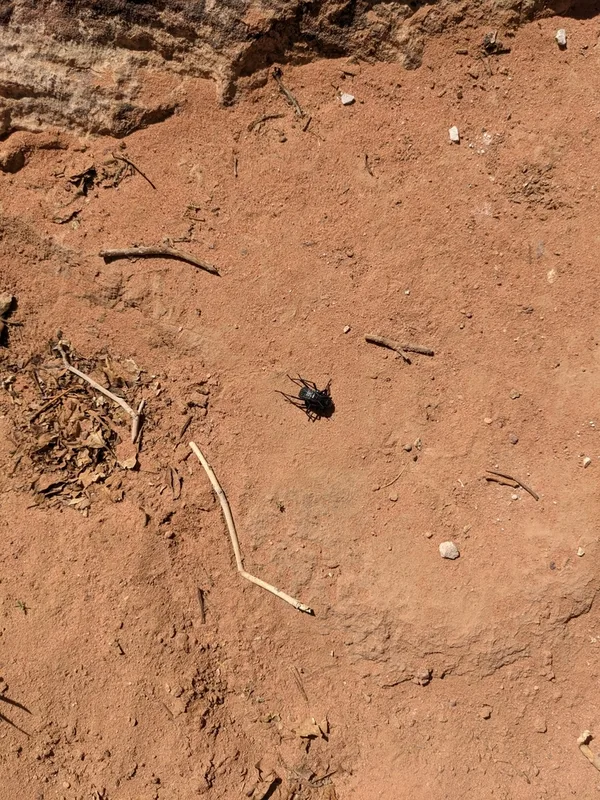
Pitted Beetle Adesmia cancellata -
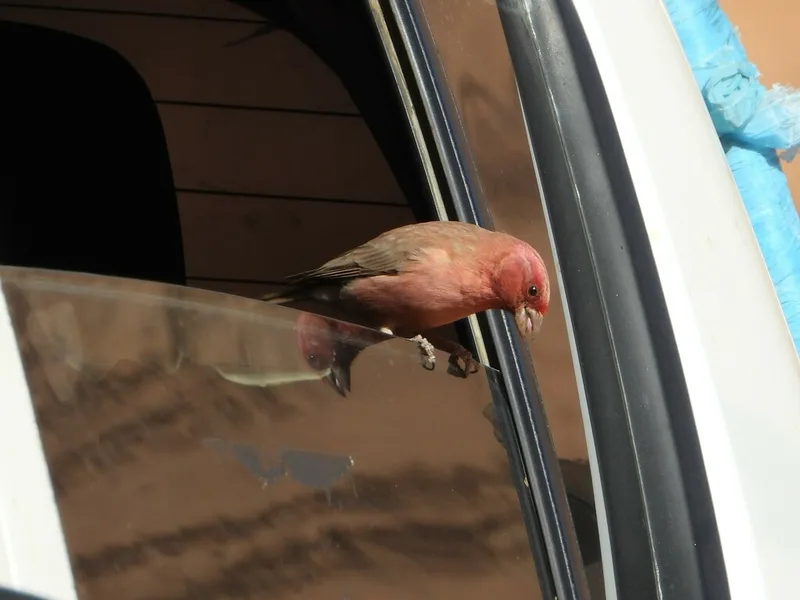
Sinai Rosefinch Carpodacus synoicus -
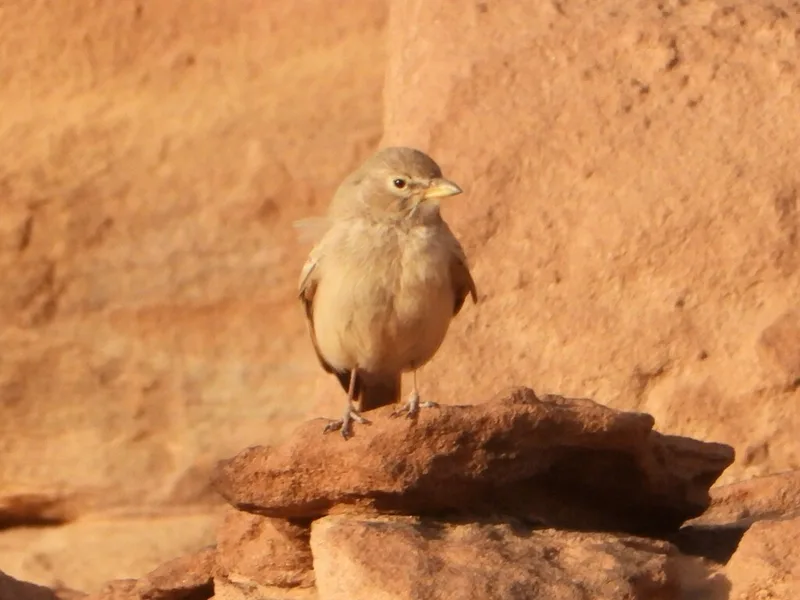
Desert Lark Ammomanes deserti -
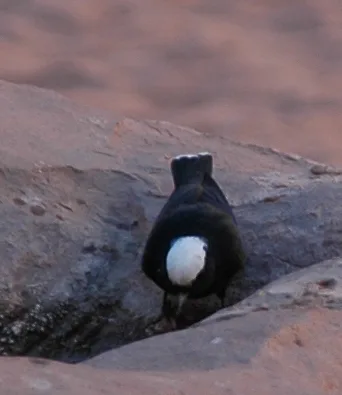
White-crowned Wheatear Oenanthe leucopyga -
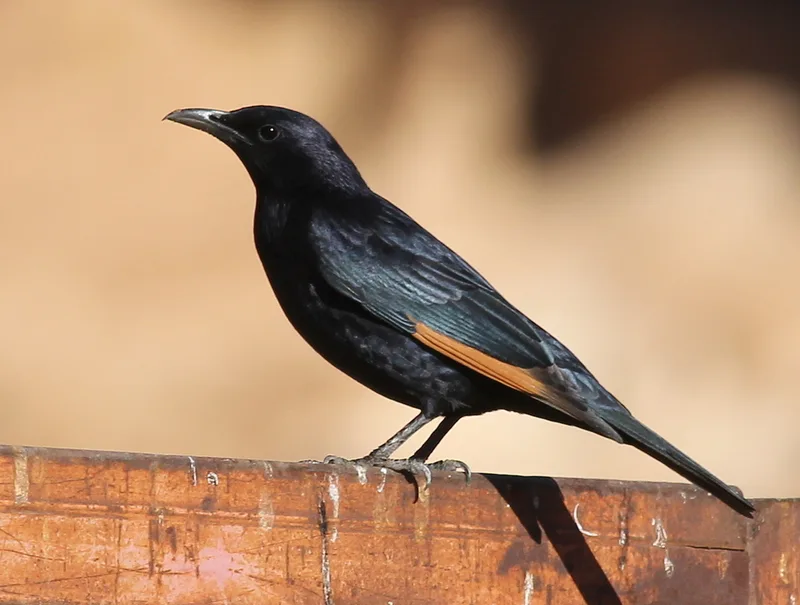
Tristram's Starling Onychognathus tristramii -
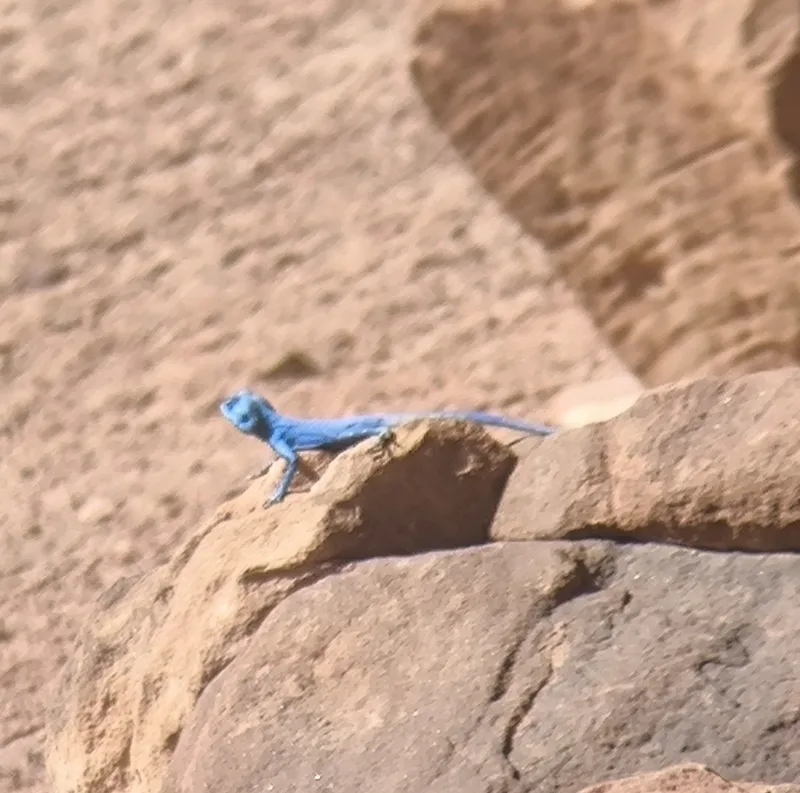
Sinai Agama Pseudotrapelus sinaitus -
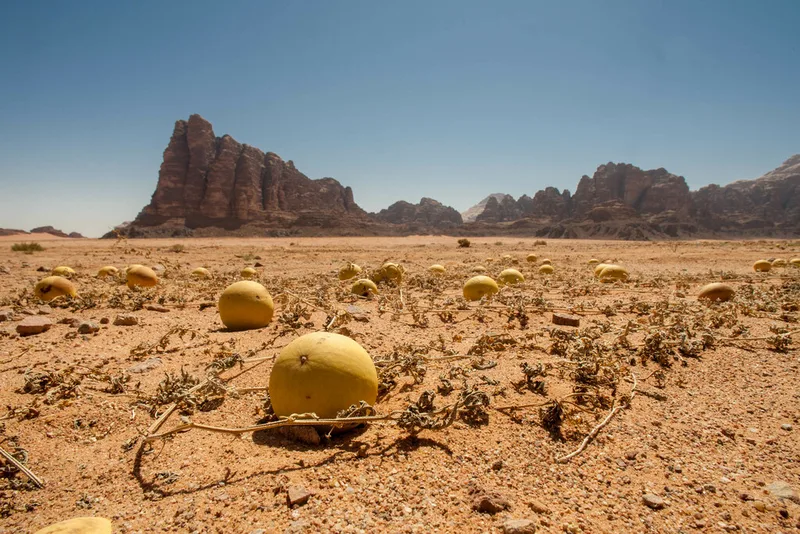
Colocynth Citrullus colocynthis -
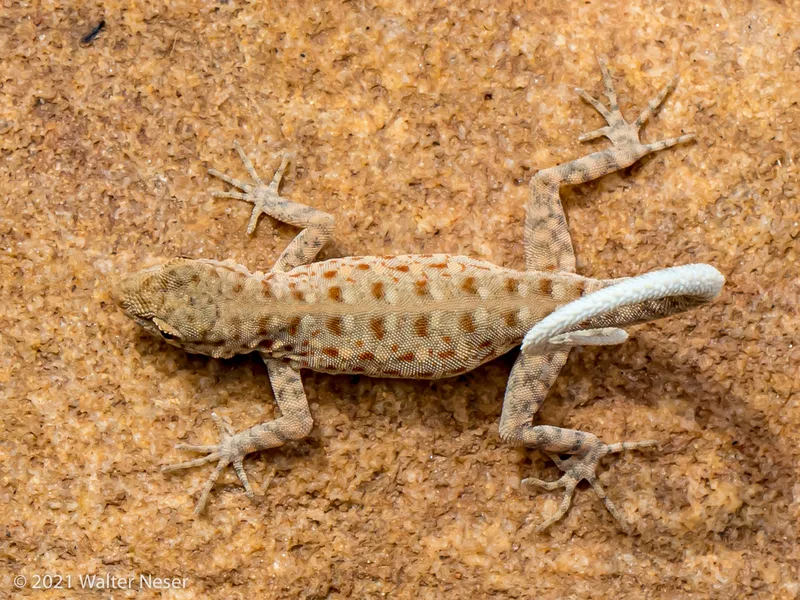
Guweira Semaphore Gecko Pristurus guweirensis -
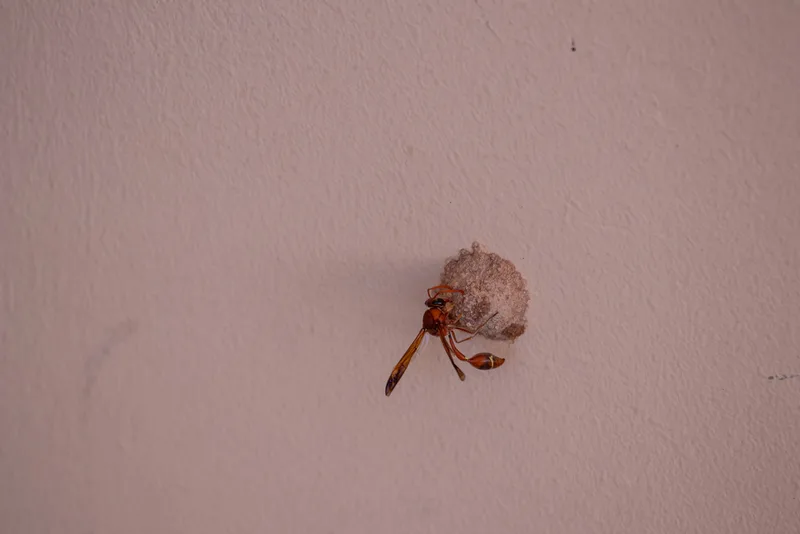
Delta hottentotum -
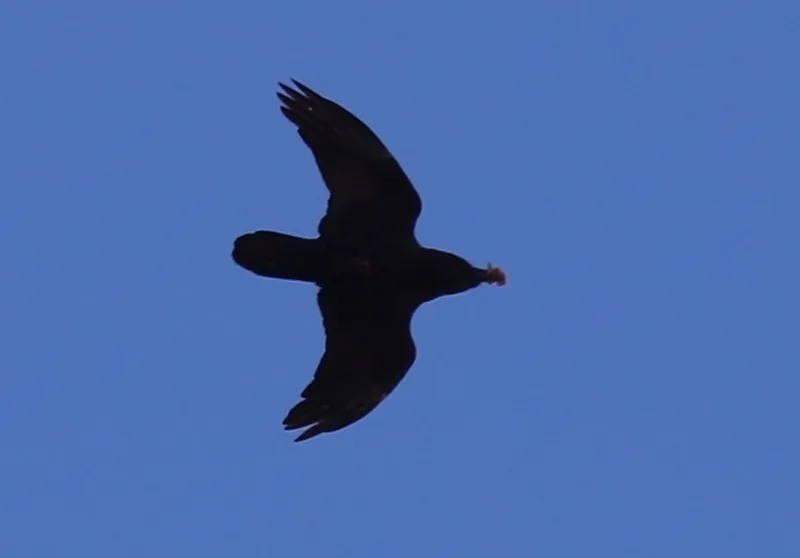
Brown-necked Raven Corvus ruficollis -
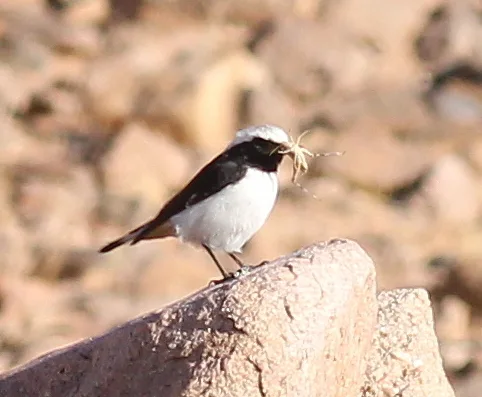
Mourning Wheatear Oenanthe lugens -
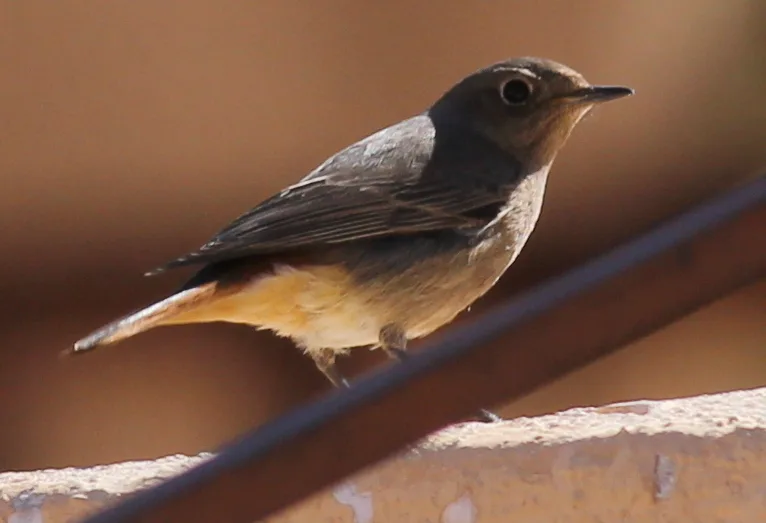
Black Redstart Phoenicurus ochruros
Field Notes · Night Sky lens · قرية وادي رم · 29.6226, 35.3896