Teide
Parque Nacional del Teide · Canary Islands, Spain
Climb above the clouds and the night sky comes back to what it always was — older than the mountain that lifts you to meet it.
Also seen through Volcanic · all at Parque Nacional del Teide →.
Why here
Most of what blurs a night sky sits low, in the damp, dusty air near the sea. Teide’s answer is height. The mountain climbs so far above the island that the clouds often gather below you, spread out like a second sea, while the summit stands in air that is thin, dry, and remarkably still. This is the highest ground in Spain, a volcanic peak rising alone out of the Atlantic, and the same lift that puts it above the weather puts it above the haze that dims the stars. Come up as the light fails and you can watch two skies at once: the ordinary one draining from the west, and the other filling in overhead, faint stars crowding between the bright ones you already know. The high basin around the peak is dark, open, and far from the coast’s glow. Everything in this note comes back to that one plain fact — to see the sky clearly, you first have to climb above the air that hides it.
The sites
The high eastern shoulder
Izaña
28.3073, −16.5021
Izaña is the high eastern shoulder of the park, a long open ridge where the mountain road runs close to the top of the weather. Air this high and this dry tends to hold still, and still air is what a clear sky is made of — it is the plain difference between stars that shiver and stars that hold a steady point. From here the eastern half of the sky opens wide, and the glow of the coastal towns stays low and far behind the ridge, leaving the dark mostly whole. There is little up here but rock, road, and sky, which is exactly what the night asks for. The ground is exposed and the wind can be hard, so this is a place to arrive while there is still light: find your footing, pick a spot, and settle in. Then let the ridge fall quiet as the first stars come out over the sea below, and bring more warmth than the drive up suggests you will need.
Pick out a bright star low over the eastern horizon and watch it steadily for a minute. If it barely shivers and holds a hard, clean point of light, you are seeing the calm, even air stacked over this ridge — the same stillness that lets faint stars through instead of smearing them into a blur.
- AccessDrive-up
- ExertionEasy
- TimeAn hour
Corral del Niño
28.3028, −16.5194
Corral del Niño is a pullout high on the same eastern ridge, a shallow hollow rimmed by dark volcanic ground with the sky wide open above it. The bowl is the point: low rock on almost every side blocks stray light and gives you a clean rim to sit against while the whole dome of the sky turns overhead. It sits well above the clouds that often pool over the island, so on many nights you look up into clear air and down onto a floor of grey. This is a place that rewards patience over motion — there is nothing to walk to, only a sky to let arrive. Reach it before dark, when the road is easy and the last light shows you the ground. Then stay past dusk, when the enclosed dark makes the faint stars easiest to find and the cold gives you every reason to keep still and keep looking up.
Sit with your back to any lingering glow and let your eyes adjust for a full ten minutes without looking at a phone. Slowly the pale band of the Milky Way will lift out of the dark overhead — the crowded light of our own galaxy, showing this well only because so much of the haze that hides it is already beneath you.
- AccessDrive-up
- ExertionEasy
- TimeAn hour
Watching the dark arrive
Sunset Viewpoint
28.3028, −16.5220
This viewpoint faces west across the high country, set where the ground falls away toward the far rim of the basin and an open horizon. It is named for the obvious reason, but the sunset is only the opening act. Stay put after the color fades and you get the quieter show — the sky over the peak deepening from blue to grey to black, and the stars filling in from the top down, faint ones crowding between the bright ones you already know. Because you are standing above most of the island’s moist low air, that filling-in goes further here than it does at the coast: stars keep arriving long after you would expect the sky to be full. There is no rush and no wrong moment to look. Come with time to spare and something warm, take in the last of the light, and then simply do not leave when the sun does.
As the western color drains, fix on a single patch of clear sky just above the horizon and count the stars in it. Keep counting every few minutes as the light goes — the same patch keeps gaining stars, each new one a measure of how much dimming air you have climbed above.
- AccessDrive-up
- ExertionEasy
- TimeHalf a day
Mirador de Pico Viejo
28.2699, −16.6450
Pico Viejo gives a long, open view across the western volcanic country toward the mountain’s broad flank. By day it is a place to read the shape of the land; by night it becomes a wide, dark window on the sky, with the bulk of the peak standing black against the stars to the east. It sits high enough that the clouds coming off the Atlantic often break against the slopes below the overlook, leaving the air above you clear. That is the whole trick of this mountain restated in a single view — the weather gathers down there, and the sky stays open up here. The horizon is low and the surroundings empty, so little competes with the stars once the sun is gone. Arrive in daylight to take in the distance, then let that same distance go dark and fill with stars, and keep your layers close as the temperature drops with the light.
Find the dark mass of the peak to the east and use it as a marker, then look just off its shoulder as the sky darkens. Watch how the stars sharpen and multiply against that black edge — the mountain gives your eye a fixed, lightless frame to measure the deepening dark against.
- AccessDrive-up
- ExertionEasy
- TimeAn hour
A clean, low horizon
Mirador del Llano de Ucanca
28.2114, −16.6351
Llano de Ucanca overlooks the broad, flat floor of the high basin — an open plain of pale ground ringed by distant walls. For the night sky, flat and open is exactly what you want: the horizon sits low all the way around, from one rim clear across to the other, opening most of the sky to view. The basin floor is far from any town, and the surrounding walls hold back what little glow reaches this high, so the dark settles in deep and even. Stand at the overlook as the light goes and the plain below turns to shadow while the sky above grows enormous. It is a wide, plain sky, and an easy place to take in the whole turning dome at once. Give your eyes time in the dark, and give yourself time to simply stand under it.
Trace the line where the pale basin floor meets the sky the whole way around you. Because that horizon sits so low and so far off, you can follow a single bright constellation from the moment it clears one rim until it sinks behind the other — the slow turn of the entire sky, laid out end to end.
- AccessDrive-up
- ExertionEasy
- TimeAn hour
Mirador de Boca Tauce
28.2142, −16.6783
Boca Tauce sits at the western gateway of the high basin, where the road bends and the country opens toward the lower slopes. The ground here is dark old lava, and the western horizon drops away, giving a long, clean line for the last of the daylight and, later, for stars setting toward the sea of cloud that often lies that way. It is a good place to watch the sky change hands — the sun leaving in the west while, behind you, the dark is already climbing over the peak. Because the horizon is so open on this side, low stars and planets show here that a walled-in overlook would hide. Come for the end of the day and stay into the dark; the road out is easy once your eyes have the stars to steer by, and the cold is a fair price for a horizon this clean.
After the sun is well down, look low along the western horizon for a bright planet or a first-magnitude star setting toward the cloud. Watch it redden and dim as it drops — the same thick, dust-laden air near the horizon that you spent the climb rising above, seen edge-on as it swallows the light.
- AccessDrive-up
- ExertionEasy
- TimeAn hour
A shape against the stars
Roque Cinchado
28.2247, −16.6318
Roque Cinchado is a lone pillar of old rock standing apart on the basin floor, weathered into a narrow, top-heavy shape that the years have picked out of the softer ground around it. By day it stands out on the basin floor; by night it becomes something better — a dark, definite shape to set against the stars. A sky full of faint points can be hard to hold onto with nothing in the frame; a strong silhouette gives the eye an anchor and the whole scene a sense of scale. It is a short walk from the road, and the ground is easy underfoot. Come at dusk while the pillar still catches the last light on its weathered flanks, then wait for it to go black against a sky that keeps getting deeper behind it, until the rock is a shadow and the stars are the only bright thing left.
Stand so the dark pillar cuts across a bright patch of sky, then wait for full dark. As the stars crowd in behind and around the black shape, notice how much steadier and closer they look with something solid to measure them against — the rock turns a scatter of points into a scene with depth.
- AccessShort walk
- ExertionEasy
- TimeAn hour
El Teide
28.2491, −16.6274
El Teide is the peak itself, the high point the whole park is built around, and from this viewpoint it stands over you as a single great dark mass. For the night sky it plays one clear role: scale. When the summit goes black against the stars, the eye finally grasps how much mountain you have climbed — and therefore how much of the sky’s dimming air now lies below you rather than above. The peak also blocks stray light from beyond it, deepening the dark on its far side. Come while there is light to see the mountain plainly, then let it become a shadow and watch the stars gather close around its rim. Stay put as the cold comes on; the show only improves as the sky blackens behind the peak and the last faint stars find the edge of the rock.
Find the sharp line where the dark peak meets the sky and follow it upward with your eye. Watch for the faintest stars to appear right along that edge, where the black rock makes them easiest to catch — each one a star you would lose entirely in the brighter, thicker air down at the coast.
- AccessDrive-up
- ExertionEasy
- TimeAn hour
When it's best
The sky here is good on many more nights than not — the dry, settled air above the clouds is the whole point of the place. What you time is the moon: the darkest nights fall around a new moon, when no moonlight washes out the faint stars, and the bright heart of the Milky Way rides highest through the short summer nights. Cold is the constant companion. Even in spring the high country stays near or below freezing once the sun is down, and cloud can climb over the peak in any season, so the mountain, not the calendar, has the last word. Go up in daylight, watch the sun leave, and stay for the dark — and carry far more warmth than the drive up suggests you will need.
Go deeper
The names behind what you saw. The peak is Teide, a stratovolcano and the highest point in Spain; the pale dome high on its eastern flank is Montaña Blanca, the mountain’s third-highest summit. The lizard basking on warm rock by day is the Tenerife lizard, Gallotia galloti. The tall red spikes and the pale, dense shrubs of the high slopes are red Mount Teide bugloss, Echium wildpretii, and white-flowered broom, Cytisus supranubius — the living cover of a world that goes bitterly cold after dark.
To read next. The verified reading here is short — for the night sky, the darkness itself is the reference, and the deepest source is a moonless night on the ridge. One formal source stands out:
- Geological values justifying the nomination of Teide National Park as a World Heritage Site (Universidad de Las Palmas de Gran Canaria, 2008) — the clearest account of how the mountain was built so high, which is the same lift that carries you above the clouds and into the clear night air.
The names behind what you saw
What lives here, and what it's called. Photographs from open collections — an aid to identification, not decoration.
-
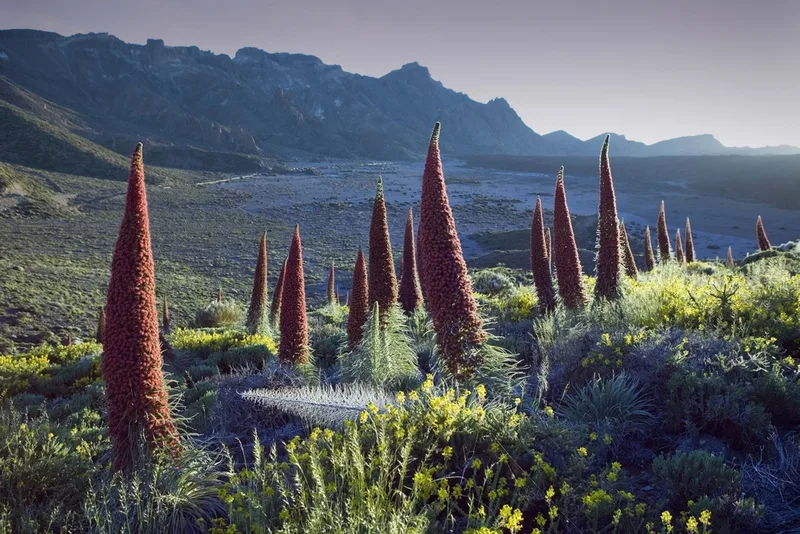
Red Mount Teide Bugloss Echium wildpretii -
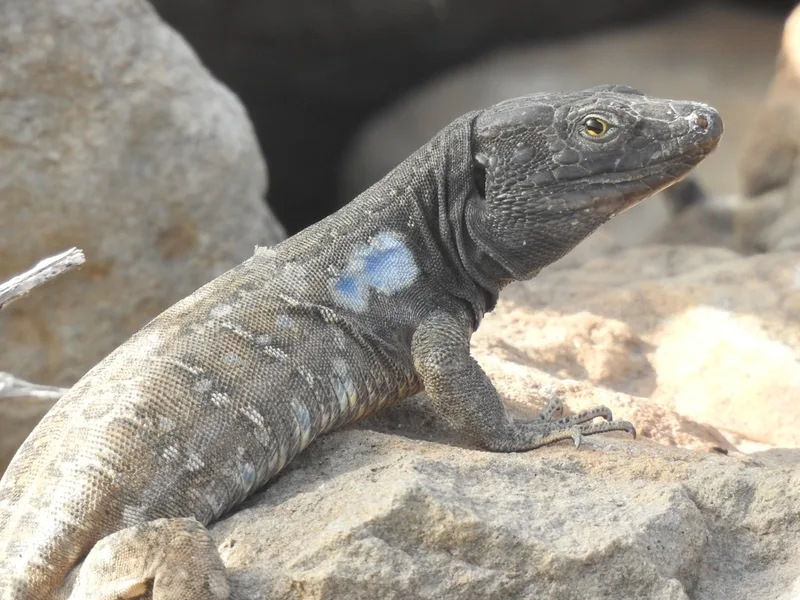
Tenerife Lizard Gallotia galloti -
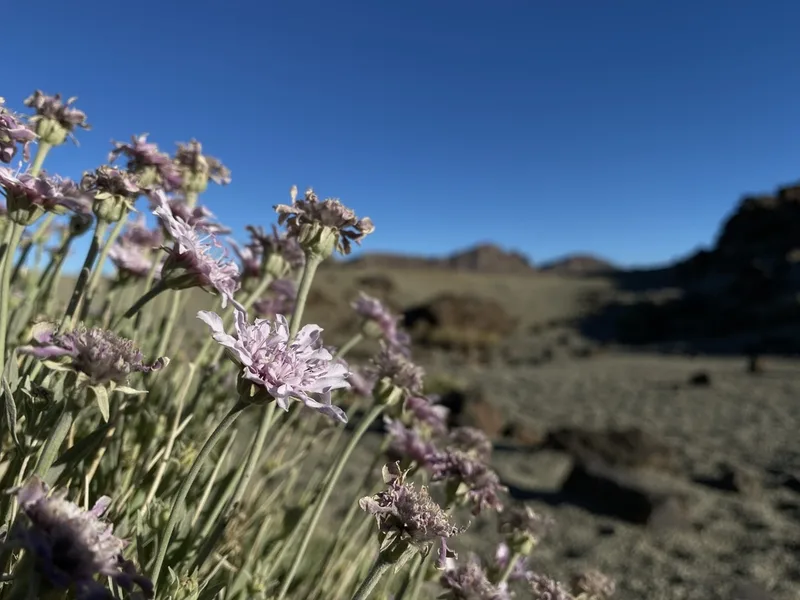
Hoary Pterocephalus Pterocephalus lasiospermus -
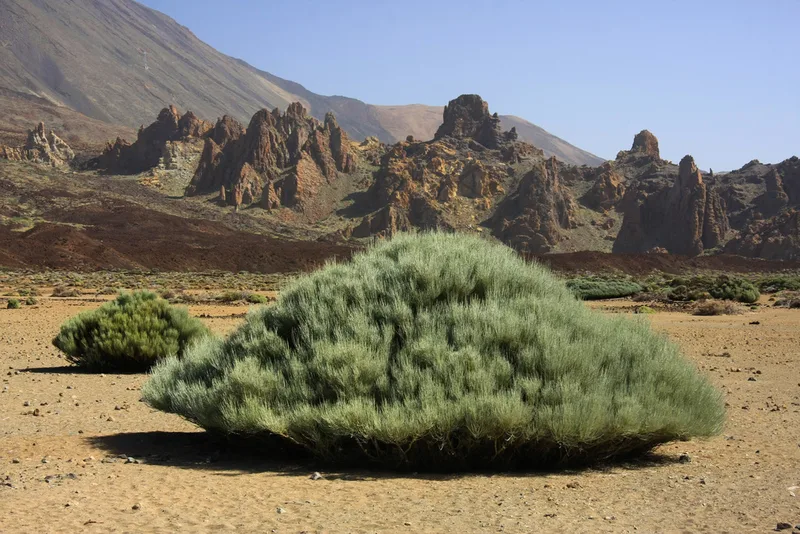
White-flowered Broom Cytisus supranubius -
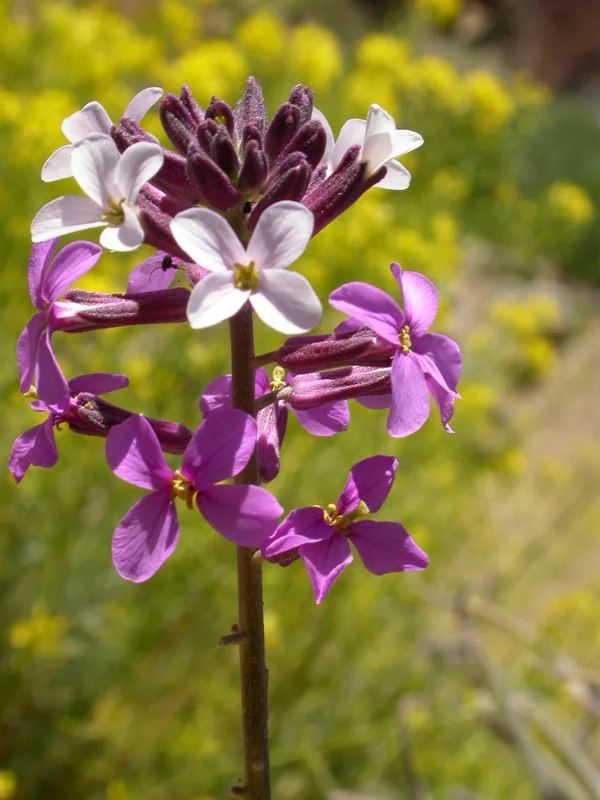
Icarian Treacle Mustard Erysimum scoparium -
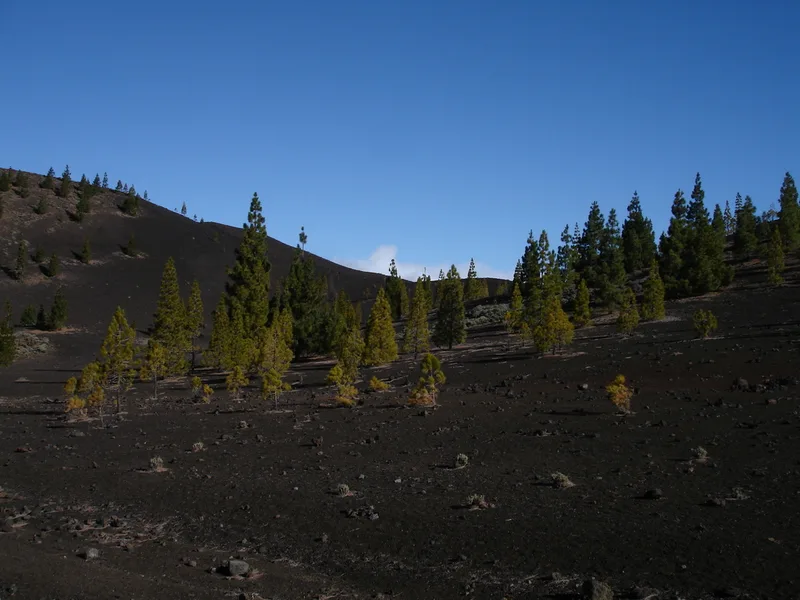
Canary Island pine Pinus canariensis -
Berthelot's Pipit Anthus berthelotii -
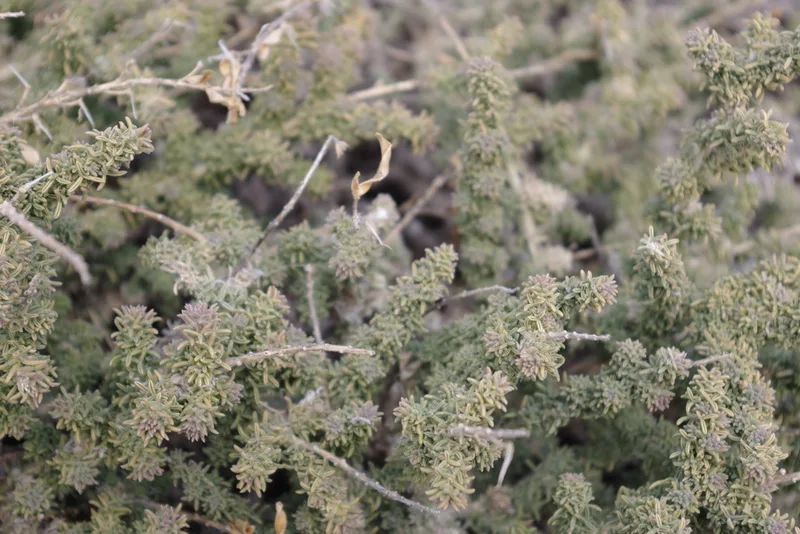
Bean-trefoil Adenocarpus viscosus -
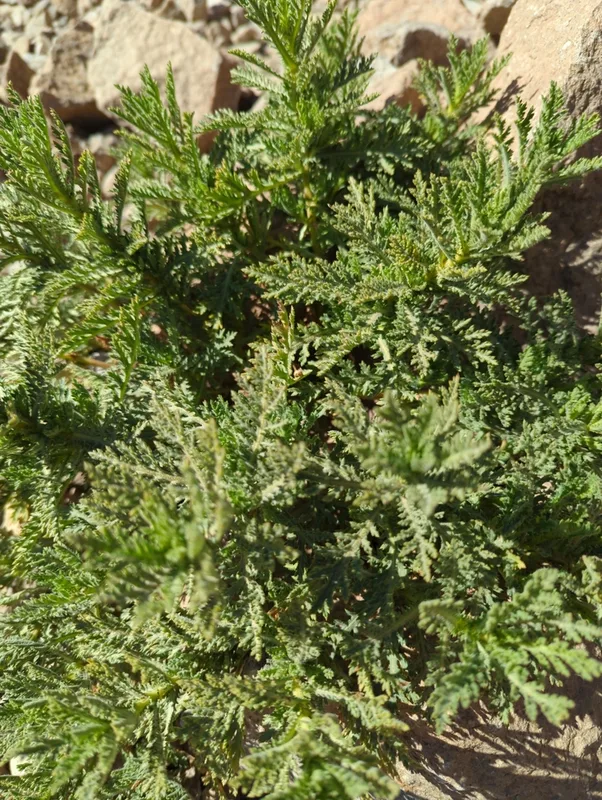
Tenerife Daisy Argyranthemum tenerifae -
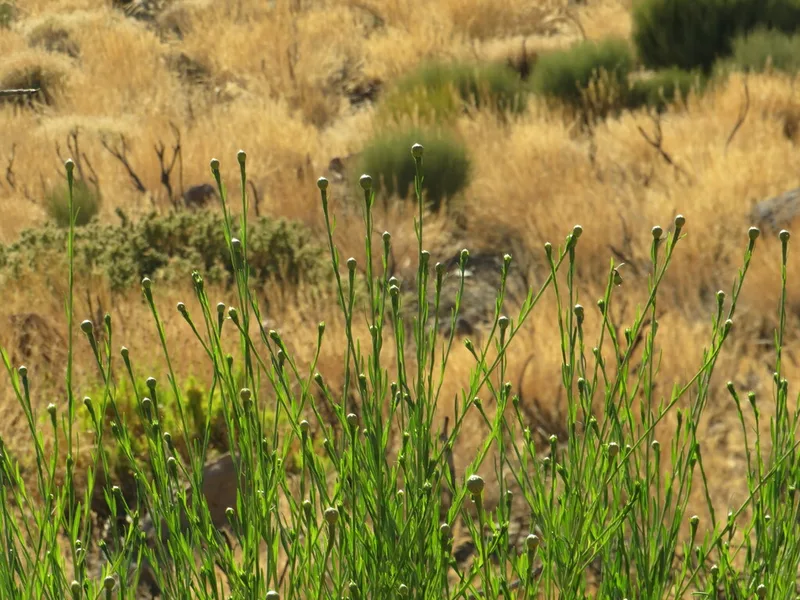
Cheirolophus teydis -
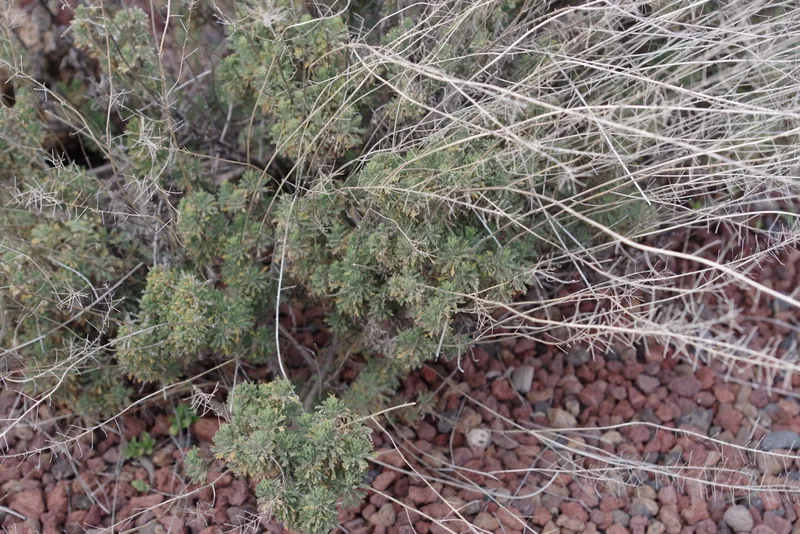
Descurainia bourgaeana -
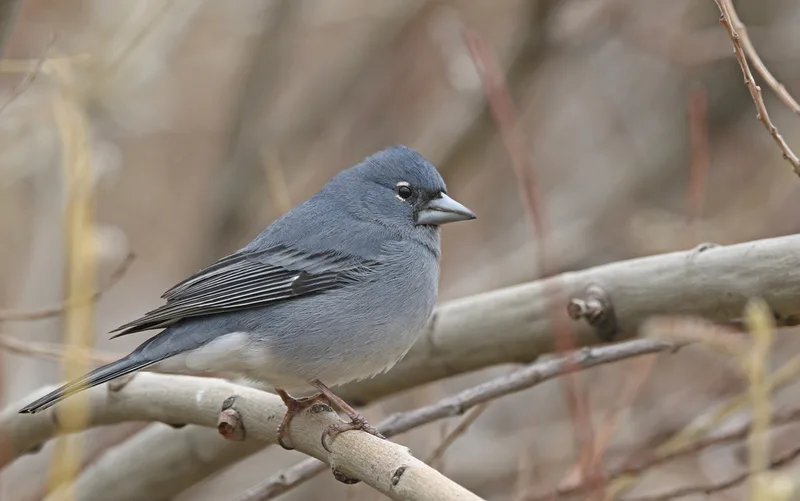
Tenerife Blue Chaffinch Fringilla teydea
Field Notes · Night Sky lens · Parque Nacional del Teide · 28.2688, −16.6374