Pinnacles
Pinnacles National Park · California, USA
Some places bury their age. Here the rock has nothing left to hide it with.
Also seen through Volcanic · all at Pinnacles National Park →.
Why here
Most landscapes hide their age under soil, forest, or grass. Pinnacles doesn’t have the cover to spare. Here the rock itself is the ground, and where the rock is bare, you can read it directly, and what it says spans an enormous stretch of time compressed into a short walk. Deep under everything sits hard, ancient rock that finished forming tens of millions of years before anything else here existed. Then, much later, a young volcano built itself directly on top of that older rock, its lava piling up in what is, against the ground beneath it, a single quick burst of geologic time. Later still, a much younger layer of sediment settled over parts of both. Nowhere does the book show every page. Long stretches of time between these chapters left no rock at all, the record simply silent where erosion or non-deposition skipped ahead. That absence is not a flaw. It’s what makes the exposed rock at Pinnacles worth slowing down for: an open book, missing pages included, that a paved or forested landscape would keep closed.
The story
The order matters. First there was simply old, dense rock, cooling far underground more than sixty million years ago, in a period so much older than anything else here that nothing directly connects it to what came next. Then, tens of millions of years later, a volcano erupted on top of that quiet basement, building a mountain of pale, light volcanic rock in what is, geologically, a much shorter and more recent chapter. Later again, sediment settled over parts of both. Wind and water have spent the time since cutting back down through all of it, which is why a short walk here can cross tens of millions of years without the trail ever changing grade.
Life on that exposed rock keeps its own, much faster clock. Gray pines root in whatever soil the rock has managed to hold onto, fence lizards use the bare stone to warm themselves in the open, and California condors nest and roost on cliff ledges that erosion, not the birds, cut open first.
People arrived to find rock already doing most of the talking. The land was set aside for protection early in the twentieth century, first as a forest reserve and then, a couple of years later, as a national monument by presidential order, official recognition, unusually early, that bare rock like this was worth leaving open rather than covering over.
The sites
Where two ages meet
Old Pinnacles
36.4951, −121.1731
Old Pinnacles offers a low, close vantage, exactly what makes it worth a stop for anyone chasing the rock’s age rather than its height. Canyons cut down instead of across, which means the walls here expose rock in the order it was laid down, older rock lower, younger rock higher, wherever the water has cut deep enough to show both. Much of the park’s dramatic high country hides this order behind sheer faces and tumbled boulders; here, at trail level, it’s closer to eye height and easier to take slowly. Come here specifically to look, not just to walk; the canyon is a patient place, and the story in its walls doesn’t reveal itself at a glance the way a spire does from a distance.
Walk the canyon watching the low walls rather than the skyline. Where the rock looks pale, broken, and jumbled, you’re beside the younger volcanic rock; where it looks different, you’ve reached rock that had already finished forming tens of millions of years before that volcano ever erupted. The change between them, wherever you find it, is a boundary between two different ages sitting side by side.
- AccessHalf-day hike
- ExertionEasy
- TimeHalf a day
South Chalone Peak
36.4368, −121.1858
South Chalone Peak sits at the edge of the park’s high country, and reaching it means climbing well past the volcanic core that most visitors come to see. The effort pays off in distance rather than drama: from up here, the young, broken rock of the pinnacles reads as a small, sharp-edged patch set inside a much larger, older landscape that has nothing to do with the eruption that made it. That older country was already old ground long before anything volcanic happened nearby, and from this height the difference in age is almost visible as a difference in shape, younger rock jagged and raw, older rock worn smoother by having so much more time to wear. It’s a long, exposed climb with little cover, better suited to a full day than an afternoon. Come for the perspective it’s genuinely hard to get any other way in this park: the volcano’s ruins, seen whole, sitting inside country that predates them by an age most people never think to ask about.
From the summit, compare the sharp, broken skyline of the pinnacles below you with the smoother, rounder shape of the hills stretching past them. The jagged rock is the young volcano; the rounder country around it is older ground that had already finished forming long before that volcano ever built anything on top of it.
- AccessHalf-day hike
- ExertionStrenuous
- TimeA full day
A chapter still being written
High Peaks
36.4858, −121.1983
High Peaks is the most recent chapter in the park’s rock record, and also the one erosion is still actively rewriting. The narrow spires and knife-edge ridgelines here are what’s left of a much larger mass of volcanic rock, tens of millions of years younger than the hard, quiet basement it sits on, and still being cut down a little more with every storm and freeze. Walking the High Peaks trail means walking through that ongoing edit rather than a finished result: loose rock and fresh fractures underfoot. Give it real time and real caution: the trail is narrow and exposed in places, and the rock that makes it so striking is the same rock still coming apart under your boots.
Look at the broken rock underfoot as much as the spires overhead. Loose fragments and fresh-looking fractures are signs that this rock is still actively coming apart, the youngest, most unfinished chapter in a record that, underneath it, goes back tens of millions of years further than anything you’re currently standing on.
- AccessHalf-day hike
- ExertionStrenuous
- TimeHalf a day
Balconies
36.5016, −121.2046
Balconies is a good place to see that not every chapter in this rock was laid down calmly. Up close, the cliffs here are made of a rough, broken texture, chunks of rock of different sizes set inside a finer rock around them, rather than one smooth, even mass. That kind of jumbled texture is a signature of a violent moment in an eruption, a single chaotic event frozen into permanent rock rather than the slow layering that built other parts of this record. The cliffs stand steep and ledge-broken, which also makes them good habitat for cliff-dwelling raptors, condors among them, that use the updrafts these rock faces throw off. Spend time looking at the texture itself rather than only the shape of the cliff. Most of what you’ll read elsewhere in this park is patient, slow-motion change; this is closer to a single instant, preserved. The shade and cooler air here, tucked between rock walls, also make it a comfortable place to stand still and look, in a park where standing still on exposed rock often means standing in full sun.
Get close to the cliff face and look at its texture rather than its shape. A jumble of angular rock fragments set inside a finer rock around them, instead of one smooth mass, marks a moment when the eruption came apart violently, a single chaotic event, not a slow layering, frozen into the stone you’re touching.
- AccessHalf-day hike
- ExertionModerate
- TimeHalf a day
Monolith
36.4733, −121.1867
Monolith is a single standing mass of the park’s volcanic-age rock, set apart from the main ridgelines, which makes it an easy place to read one chapter of the record in isolation rather than tangled up with its neighbors. It survives as a lone tower because this particular body of rock resisted erosion better than the ground around it did, so as everything softer wore away and dropped, the tower was simply left standing. Walk most of the way around its base and the rock reads a little differently depending on which face you’re on: some sides sheer where the rock held together evenly, others broken into blocks and ledges where it didn’t. It’s a quiet, low-effort stop compared with the High Peaks proper, better for slow looking than for scenery, and a clean example of what erosion actually removes rather than what it leaves standing. Come without an agenda beyond looking closely; there is no view here to rush toward, only rock worth spending a little time with.
Walk partway around the base and compare the rock on one side with the rock on another. A sheer, unbroken face has worn down evenly; a blocky, ledge-broken face is where water found a weakness and pried a piece loose, two different outcomes from the same age of rock, wearing down at different speeds.
- AccessHalf-day hike
- ExertionModerate
- TimeAn hour
Reading the book, up close and from afar
Condor Gulch Overloook
36.4852, −121.1925
Condor Gulch Overlook is the place to stop and see the record as a whole rather than one page at a time. From here, the spires below resolve into a single connected mass of rock rather than a scatter of separate towers, which makes it easier to picture the shape of the much larger, single body of rock this all used to be before erosion started cutting it apart. It’s also a reliable place to watch a California condor working the open air over the gulch, wings held flat and mostly still, riding exactly the kind of rising air that sun-warmed bare rock produces. Bring patience rather than a schedule: the overlook offers a bench of open rock to sit on, and both the view and the birds reward waiting rather than a quick look and a photo. Nothing here needs to be rushed, and the shape of the whole formation is easier to hold in mind the longer you sit with it.
Look at the ridge of spires as one connected shape rather than separate towers, then scan the open sky above it. A large soaring bird holding its wings flat and mostly still, riding the rising air off the sun-warmed rock, is likely a California condor, no flapping needed once it finds the lift.
- AccessShort walk
- ExertionModerate
- TimeAn hour
Hawkins Peak
36.4881, −121.1972
Hawkins Peak sits inside the same cluster of rock as the park’s more famous spires, a short rise that trades drama for quiet close observation. It’s a reasonable place to slow down and look closely rather than simply pass through on the way to somewhere more photographed. The climb is real but shorter than the park’s longer approaches, and the surrounding rock rewards a close, unhurried look more than a wide view. Treat it as a chance to read one page of the record slowly, rather than skim the whole book from a distance.
Compare the texture of the rock immediately around you here with what you remember from the taller spires nearby. Even rock from the same eruption, the same age exactly, can end up looking completely different depending on small differences in how it cooled and how the weather since has worked on it.
- AccessHalf-day hike
- ExertionModerate
- TimeHalf a day
When it's best
Come when the air is cool enough to linger on bare rock, since there is little shade anywhere in the exposed high country. Spring dresses the same stone in color: paintbrush and warrior’s plume are usually near their best by then, easing off as the season warms, while mariposa lily and buckwheat wait for early summer to have their turn. Summer heat turns open rock into a real hazard by midday, worth avoiding rather than pushing through. None of that changes what the rock has to say. The seasons change how comfortable it is to read; the record itself reads the same in any month.
Go deeper
The names behind what you saw. The old, dense rock underneath everything is mapped simply as Mesozoic intrusive rock, dating to the Cretaceous, tens of millions of years older than the volcano built on top of it. That younger volcanic rock is the Neenach Volcanic Formation, mostly rhyolite with lesser dacite and andesite. Above parts of both sits a still-younger layer of Pliocene sedimentary rock. The lizard on the warm stone is the western fence lizard, Sceloporus occidentalis; the soaring bird overhead is the California condor, Gymnogyps californianus; the conifer rooted in thin soil is gray pine, Pinus sabiniana.
To read next. Geology of the Pinnacles National Monument, by Philip Andrews, a focused early account of exactly this rock column, for anyone who wants the full sequence of ages in detail rather than in summary. The rest of what a search on this park’s name turns up shares only the word “pinnacle” with this place, an oil-and-gas reef trend in Michigan, a mineral deposit in Australia, unrelated rock described elsewhere, so it isn’t included here.
The names behind what you saw
What lives here, and what it's called. Photographs from open collections — an aid to identification, not decoration.
-
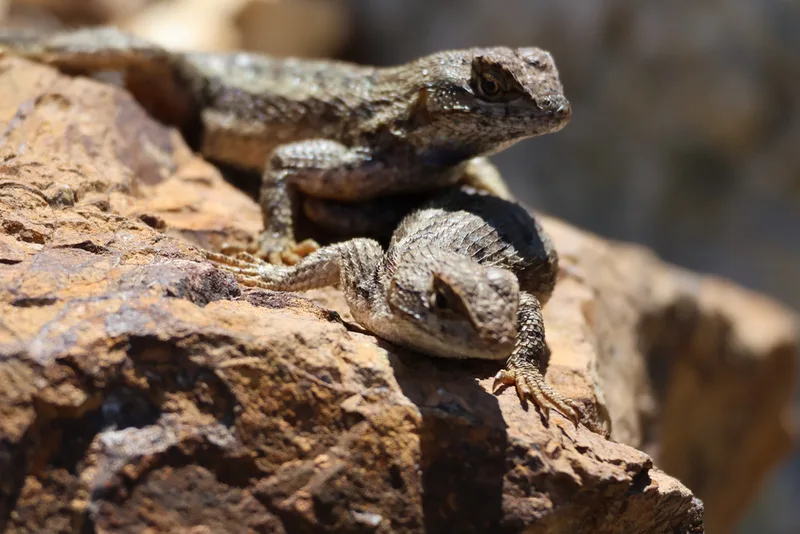
Western Fence Lizard Sceloporus occidentalis -
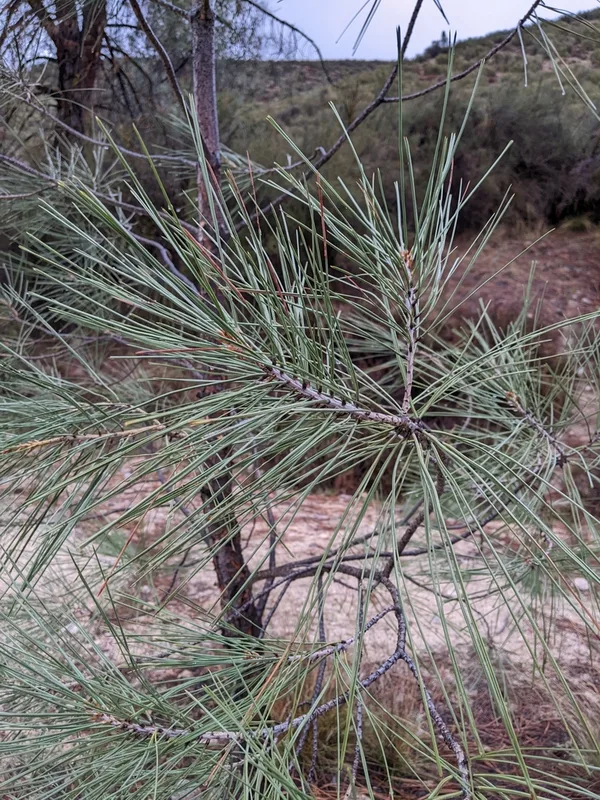
gray pine Pinus sabiniana -
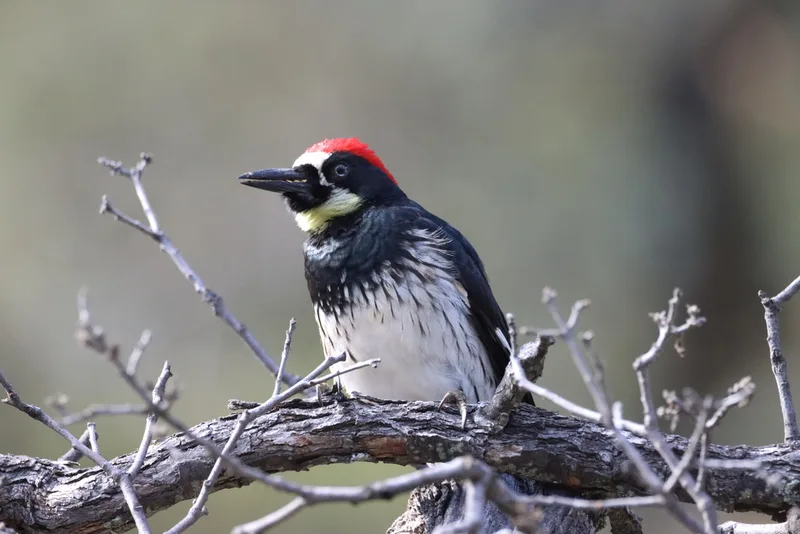
Acorn Woodpecker Melanerpes formicivorus -
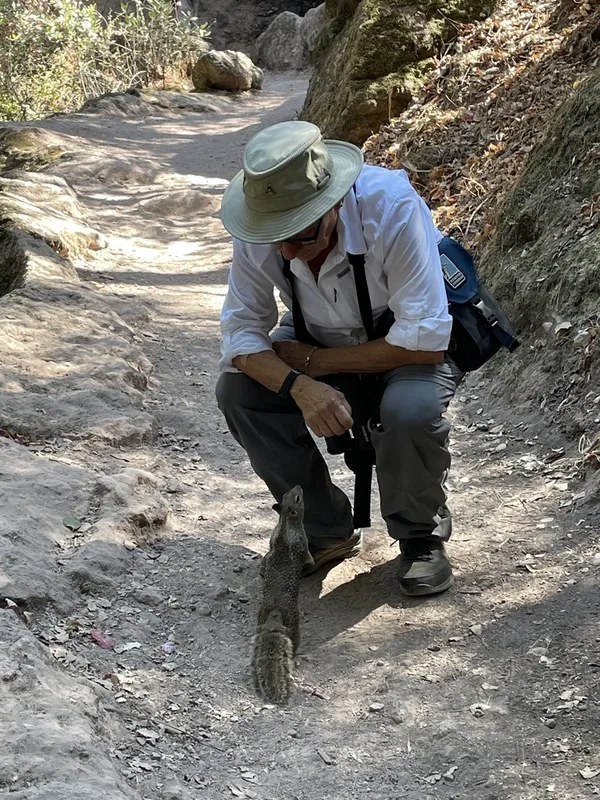
California Ground Squirrel Otospermophilus beecheyi -
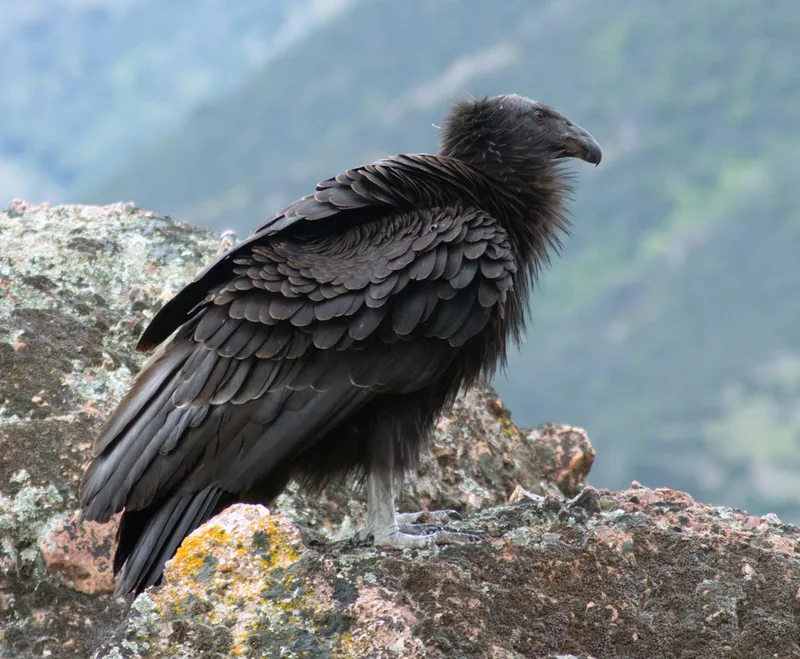
California Condor Gymnogyps californianus -
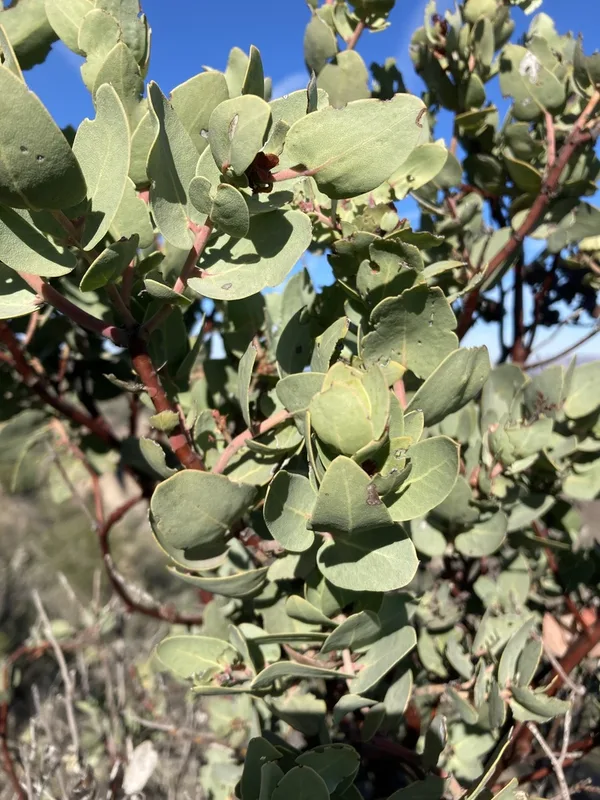
Big Berry Manzanita Arctostaphylos glauca -
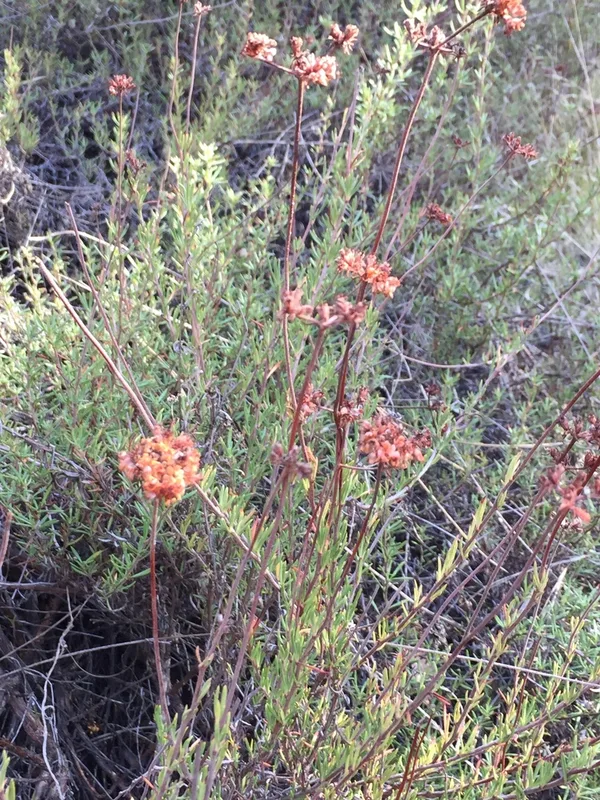
California Buckwheat Eriogonum fasciculatum -
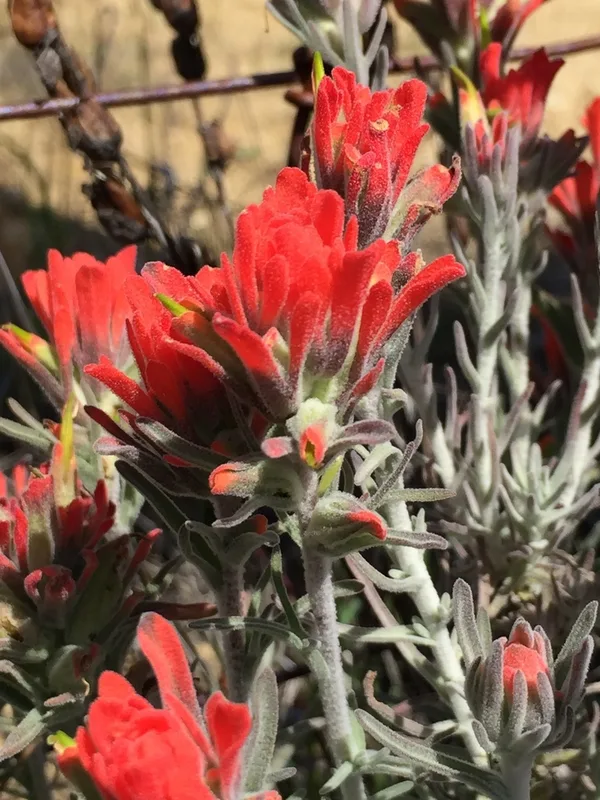
Felt Paintbrush Castilleja foliolosa -
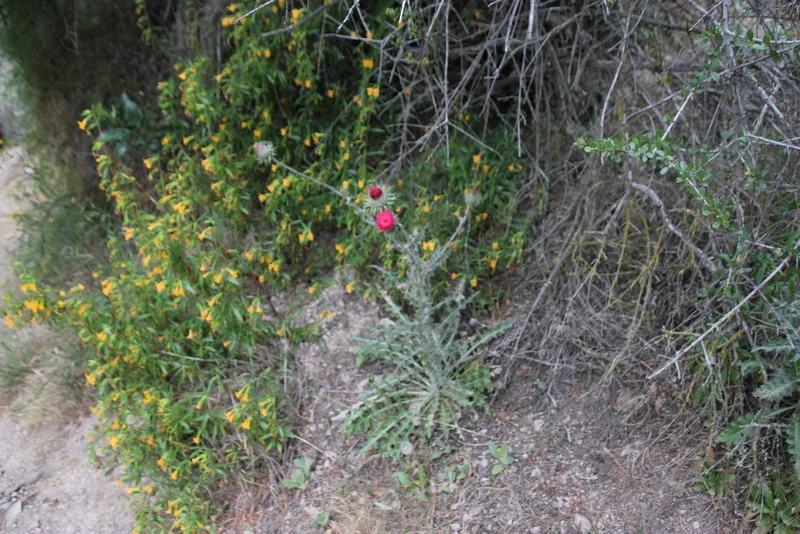
Cobwebby Thistle Cirsium occidentale -
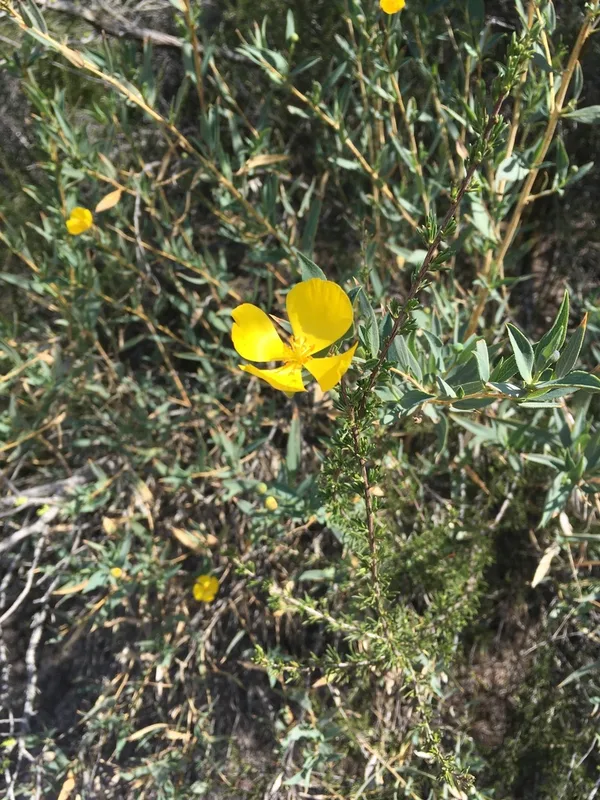
Bush Poppy Dendromecon rigida -
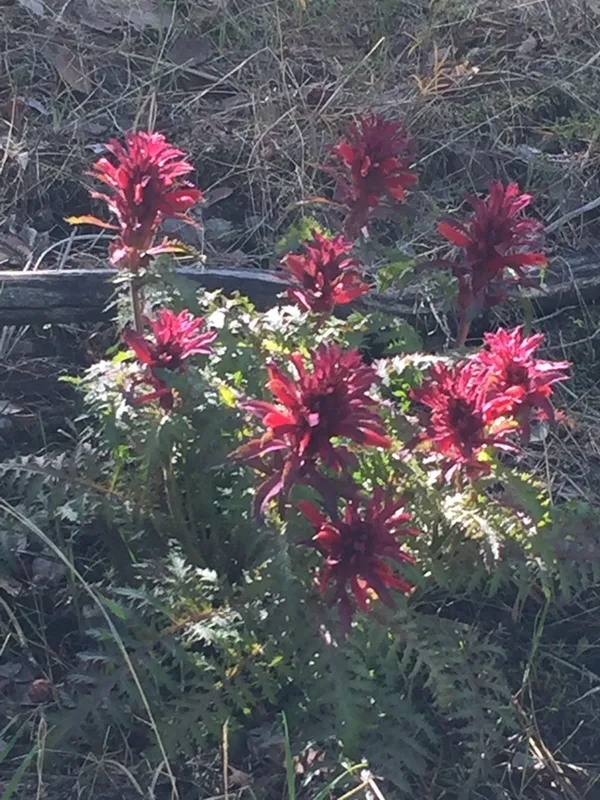
Warrior's Plume Pedicularis densiflora -
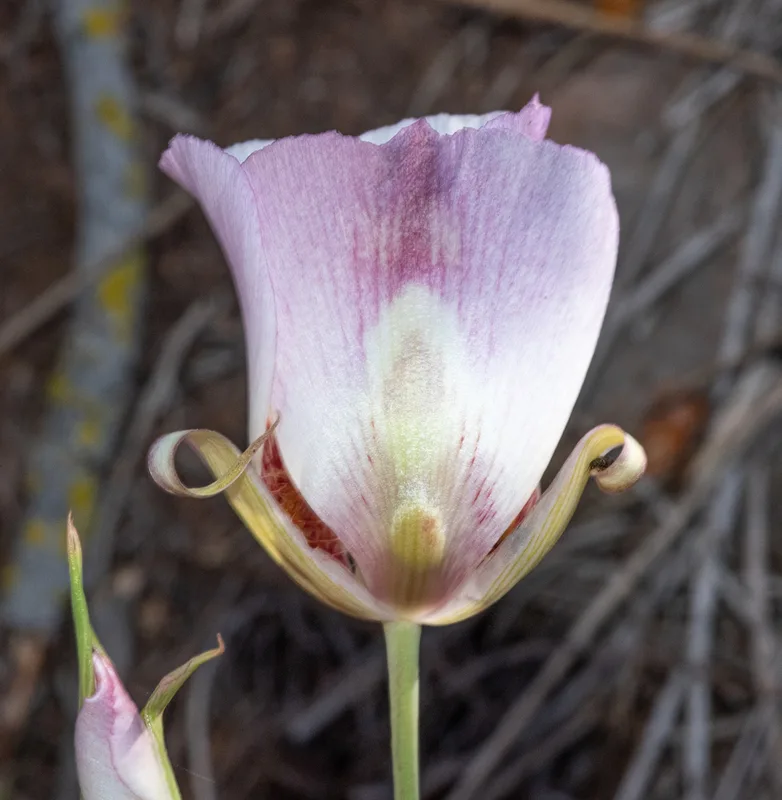
Butterfly Mariposa Lily Calochortus venustus
Field Notes · Desert & Deep Time lens · Pinnacles National Park · 36.4863, −121.1711