The Petrified Forest
Petrified Forest National Park · Arizona, USA
A forest can become stone and still keep the memory of being a forest.
Also seen through Rivers & Canyons · all at Petrified Forest National Park →.
Why here
The Petrified Forest is a desert where time has changed the material but not erased the shape. Triassic sedimentary rock holds the remains of trees, while wind and water expose them across a dry landscape. The logs are stone now, but their trunks, rings, and broken ends keep the structure of wood. That is the note’s key: deep time does not always make the past abstract. Sometimes it preserves a form clearly enough for a person to recognize it. Walk the points and badlands slowly. The desert is an open page, and each piece of petrified wood is a sentence about a living forest that stood here long before this dry country existed.
The sites
Wood in stone
Pintado Point
35.0815, −109.8016
Pintado Point looks over a country where the desert has exposed the old material below it. The colorful slopes are sedimentary layers, and the petrified wood appears as a harder interruption within them. Look for the contrast between long bands of sediment and the individual logs that cut across the story. One is a landscape-scale record of deposition; the other keeps the shape of a tree.
Find a piece of petrified wood and compare its grain with the surrounding rock. The preserved pattern is the clue that the material began as living wood.
- AccessDrive-up
- ExertionEasy
- TimeAn hour
Kachina Point
35.0845, −109.7881
Kachina Point brings the petrified forest’s deep time into the present desert. Ravens cross the open air and lizards use warm rock, while the ground below holds trees turned to stone. The living animals are useful counterpoints. They move across a landscape whose oldest visible objects are fixed in place. Stand at the point and look for both kinds of time: a bird changing position and a log that has kept its form through immense change.
Watch a lizard on a warm surface, then find a fixed piece of petrified wood. The two show present desert life beside a much older preserved forest.
- AccessShort walk
- ExertionEasy
- TimeAn hour
The old landscape exposed
Chinde Point
35.0867, −109.7959
Chinde Point opens the badlands as a geological sequence. Sediment accumulated, hardened, and was later exposed by erosion, leaving slopes that make their layers visible from a distance. Water still cuts the softer material into gullies, but the desert’s dryness keeps the larger shapes open. Look for the horizontal bands and the channels crossing them. The present landscape is a slow conversation between old deposition and newer erosion.
Trace a gully from its head down across several colored layers. The channel is the newest line in a rock record built from much older sediment.
- AccessShort walk
- ExertionEasy
- TimeAn hour
Nizhoni Point
35.0690, −109.7946
Nizhoni Point gives the desert enough distance to show how much country one layer can cover. The badlands are not a pile of unrelated colors. They are continuous deposits broken by water, wind, and later slopes. Find a band that runs across the view and follow it until the land hides it. The exercise turns a broad panorama into a readable surface.
Choose one layer and follow it across the basin. Notice where erosion removes it, leaving a gap that marks the path of later water.
- AccessDrive-up
- ExertionEasy
- TimeAn hour
Life on the desert surface
Carrizo Butte
34.9500, −109.9476
Carrizo Butte carries the living desert above the sedimentary floor. Plateau fence lizards use warm rocks, ravens use the open air, and plants occupy small patches where soil collects. The butte’s slopes make those differences easy to see. Life is not spread evenly across the badlands; it follows shade, rock, and the brief moisture that reaches a pocket. The old forest remains in stone below, while the present desert writes its own smaller pattern over it.
Look for a lizard near a warm rock and then search the shaded side of the same formation. Heat and shelter divide the living surface into small habitats.
- AccessShort walk
- ExertionModerate
- TimeHalf a day
When it's best
Cooler seasons make the open badlands easier to explore, while spring brings more activity among the desert plants and animals. Summer heat is strongest on exposed ground, so early hours help. Sun and cloud change the color of the petrified wood throughout the day. Storms can make washes and clay surfaces slick, so let the ground decide where you walk.
Go deeper
The names behind what you saw. The rock record includes Triassic sedimentary rocks and other Mesozoic sedimentary rocks. Common raven, Corvus corax, eastern collared lizard, Crotaphytus collaris, and plateau fence lizard, Sceloporus tristichus, occupy the desert.
To read next. - The park’s geological material — for the Triassic environment and fossil wood. - The park’s paleontology material — for how wood becomes mineralized while retaining its form.
The names behind what you saw
What lives here, and what it's called. Photographs from open collections — an aid to identification, not decoration.
-
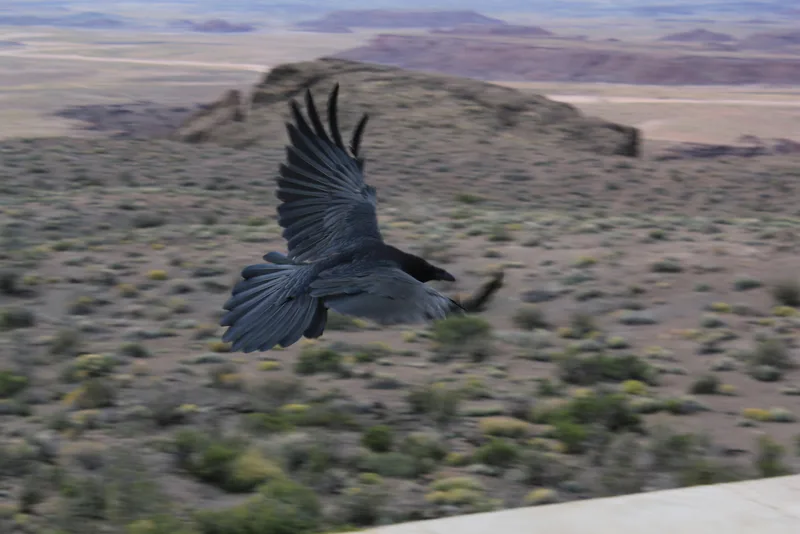
Common Raven Corvus corax -
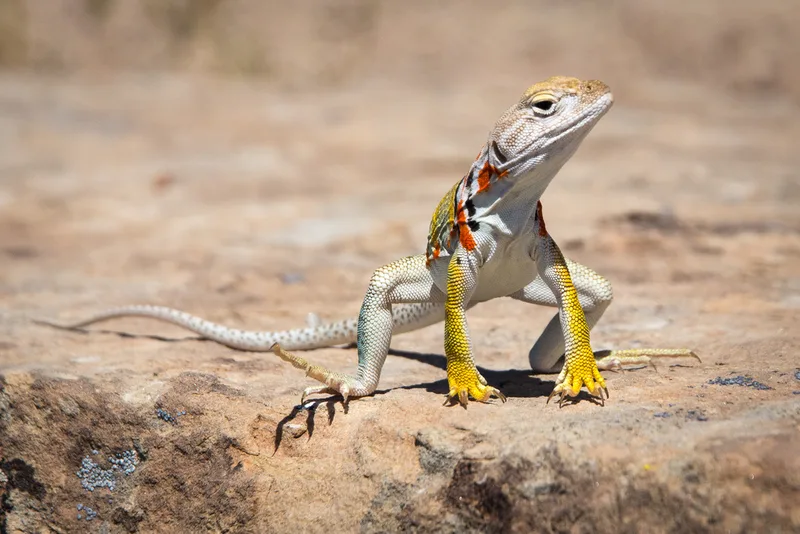
Eastern Collared Lizard Crotaphytus collaris -
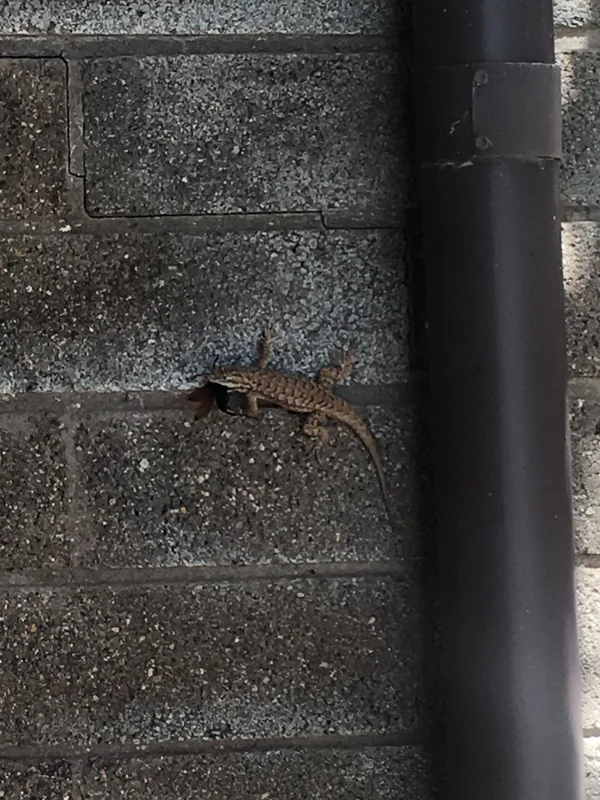
Plateau Fence Lizard Sceloporus tristichus -
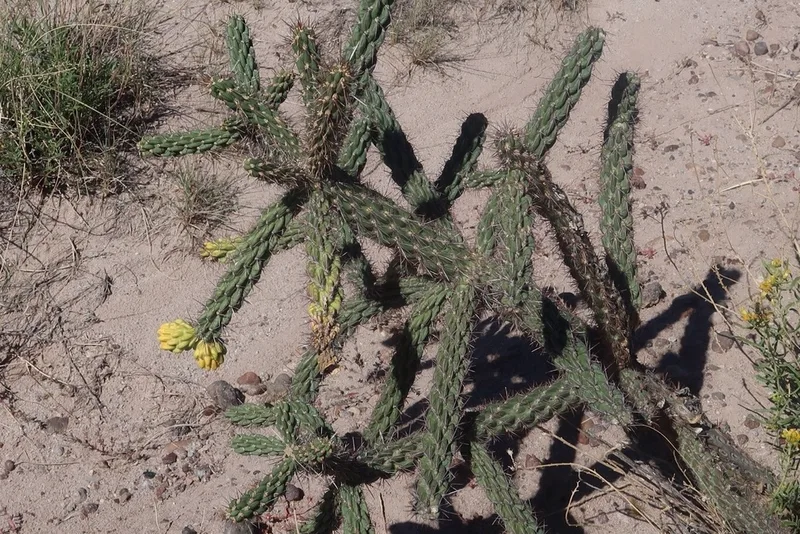
tree cholla Cylindropuntia imbricata -
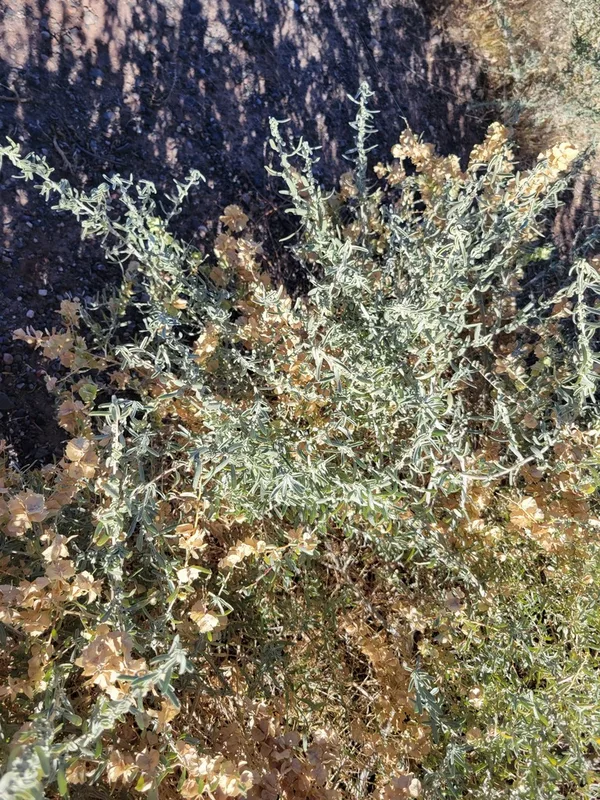
Fourwing Saltbush Atriplex canescens -
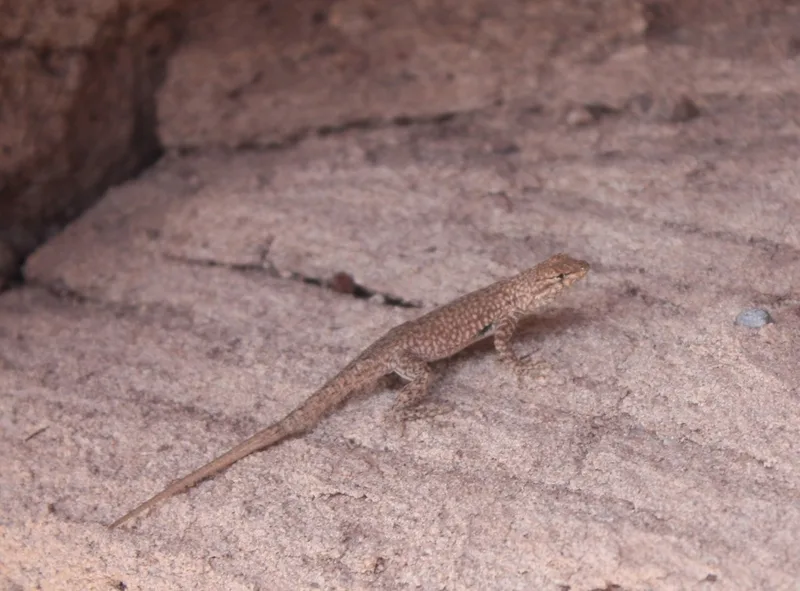
Common Side-blotched Lizard Uta stansburiana -
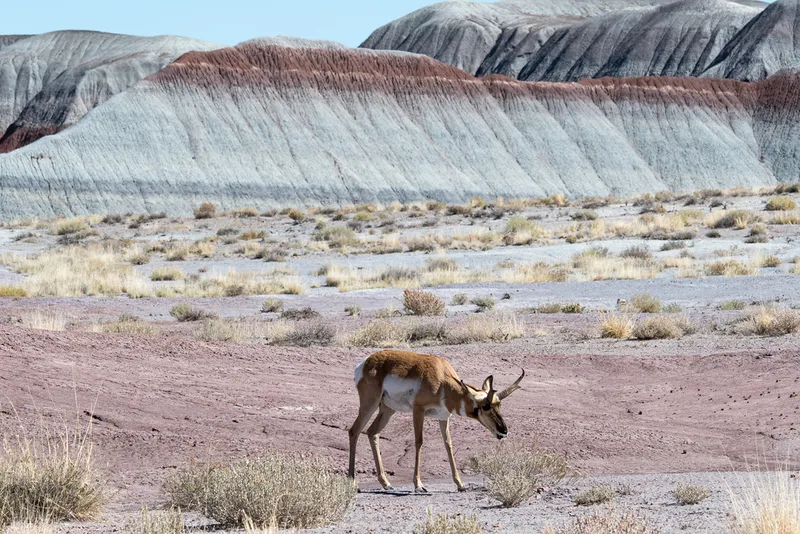
Pronghorn Antilocapra americana -
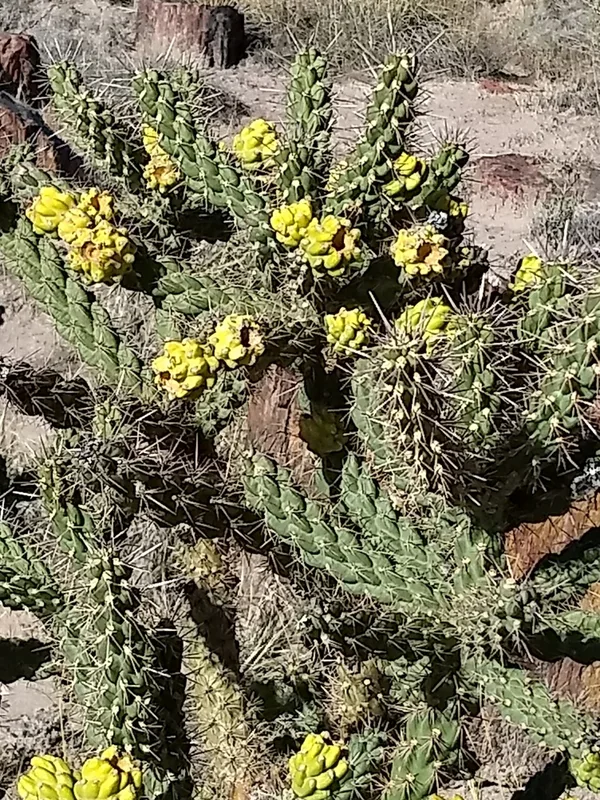
Whipple Cholla Cylindropuntia whipplei -
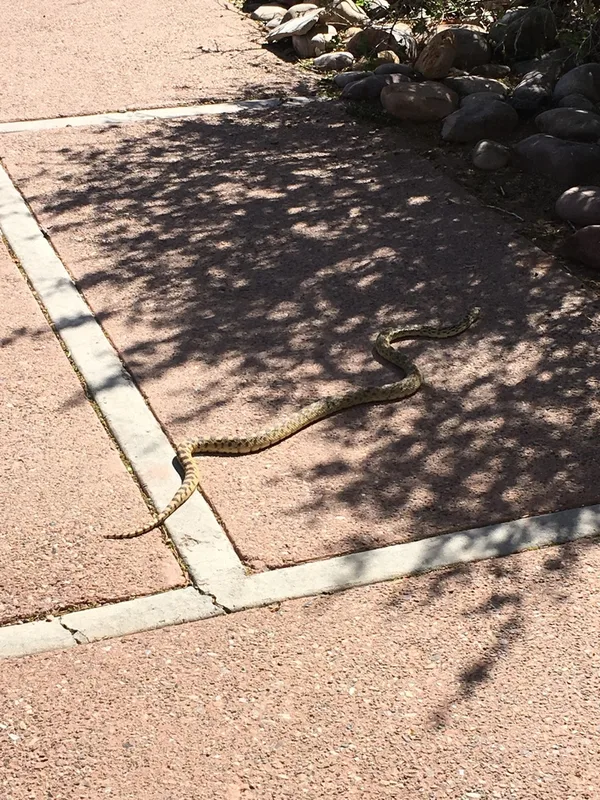
Gopher Snake Pituophis catenifer -
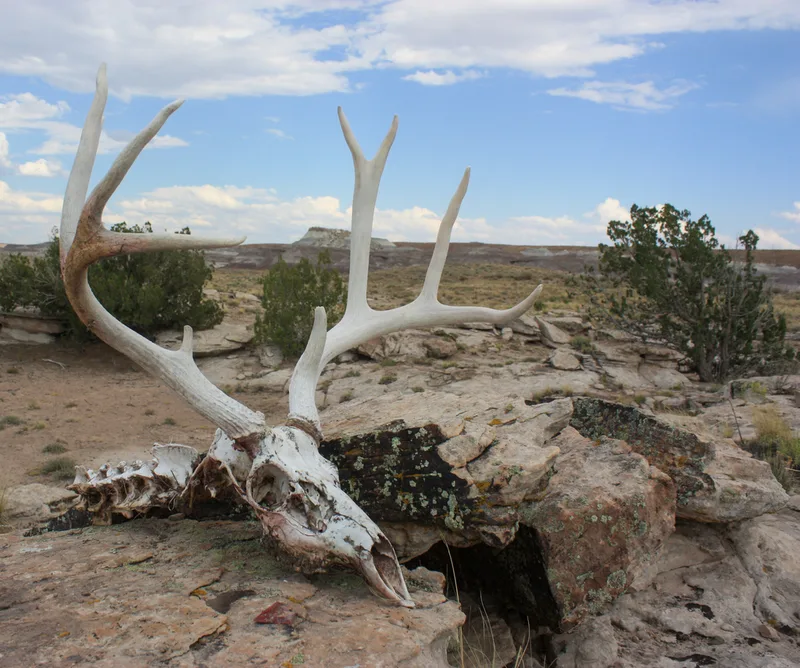
Mule Deer Odocoileus hemionus -
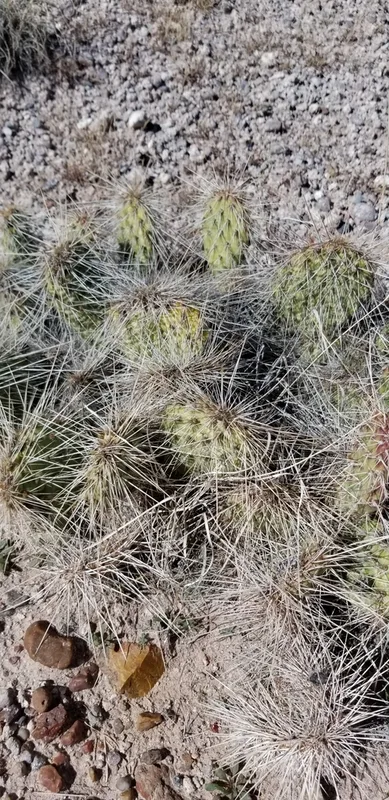
Plains Pricklypear Opuntia polyacantha -
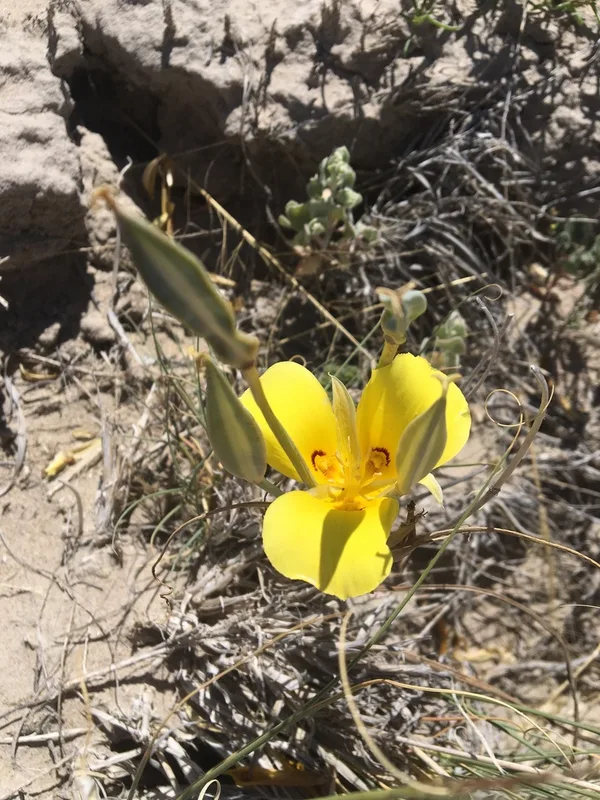
golden mariposa lily Calochortus aureus
Field Notes · Desert & Deep Time lens · Petrified Forest National Park · 34.9745, −109.7080