Natural Bridges
Natural Bridges National Monument · Utah, USA
The towns give out long before the sky does. Wait past dusk, and the dark comes back the way it always was.
Also seen through Desert & Deep Time · all at Natural Bridges National Monument →.
Why here
Wait for the last of the daylight to drain out of the canyons, and something much older takes its place. No town sits close enough to smudge the sky here — this is remote high country on the Colorado Plateau, far from any city’s glow — and when the sun is gone the dark comes back almost the way it always was. Look up on a moonless night and the Milky Way is not a rumor but a real river of light poured clear across the sky. Every point in it is old news: the light left those stars long ago and is only now reaching your eye, and the faintest smudges up there set out before there were any people to look up at all. That is the quiet trade this place offers. You give up the comfort of nearby lights, and in return you get the oldest view there is. Everything else in this note — the three stone bridges, the rim above the canyons — is really just a foreground to stand in while you wait for the sky.
The sites
Two bridges close enough to touch the sky
Owachomo Bridge Overlook
37.5845, −110.0137
Owachomo is the oldest of the monument’s three spans — a slender ribbon of pale sandstone that looks like it should not still be standing. That thinness is what makes it the friendliest of the three to the sky. From the overlook the span cuts a clean dark line, and on a moonless night you can hold the whole arc of it and a field of stars in a single view. It is also the shortest walk to a bridge here, which makes it easiest to reach once the light is gone and easiest to leave again in the dark. Come at dusk, watch the last color drain off the rock, and stay while the stars come up one at a time behind the span. There is no better place in the monument to learn what full dark actually looks like, because nothing stands between you and it but a thread of stone laid down close to three hundred million years ago.
Stand at the overlook after full dark and give your eyes twenty minutes without looking at any light. Then find the thin span against the sky: if the Milky Way is up, its faint band runs behind the bridge like a second arch made of stars. The rock reads black because it is close and unlit; the light behind it looks faint because it has crossed so much distance and time to reach you.
- AccessShort walk
- ExertionEasy
- TimeAn hour
Kachina Bridge Overlook
37.5974, −110.0284
Where Owachomo is a thin ribbon, Kachina is a heavy, blunt mass of the same pale sandstone. A natural bridge is the work of running water: a stream, looping hard against a fin of rock, wears a hole clean through and then pours its whole flow into the shortcut, widening it flood by flood. Give it enough centuries and it will thin the way Owachomo has. For now it is the bulk that holds your eye by day, and by night a black wall that the stars wheel slowly past. Because the overlook sits near the rim of the canyon, the span fills a good part of your view, which makes it a fine foreground to watch a bright star or planet climb out of the dark and over the top of the stone.
From the overlook, compare how thick this span is with the thin bridge downstream. A natural bridge only grows slimmer with age as water and frost pare it back, so the heavier the span, the younger it is. Come back after dark and watch a bright star clear the top of the bridge — a slow, steady measure of the earth turning beneath you.
- AccessDrive-up
- ExertionEasy
- TimeAn hour
Down into White Canyon
Sipapu Bridge View
37.6141, −110.0045
This overlook stands on the rim of White Canyon and looks down and across at Sipapu Bridge, set deep in the gorge below. From up here the span reads small against the canyon walls, and that is the useful part: it shows you how much air and rock stand between you and it. The canyon takes its name from the pale sandstone the whole monument is cut from, sand laid down close to three hundred million years ago and since hardened to stone. By day this is a lesson in scale. After dark it turns into one of the open, unlit platforms the night sky asks for — the canyon a pool of blackness below, the stars filling everything above, and no town glow anywhere on the horizon to thin them out. Give your eyes time here and the faint stars keep arriving, more of them the longer you are willing to wait.
Pick out the pale span of Sipapu on the canyon floor below you, then look straight up. The bridge is near and dark; the stars are unimaginably far and old. If the Milky Way is up, trace its faint band across the sky — you are looking along the flat plate of our own galaxy, edge-on, from a seat inside it.
- AccessDrive-up
- ExertionEasy
- TimeAn hour
Sipapu Bridge View
37.6150, −110.0132
This pullout catches Sipapu from a different angle along the rim than the other viewpoint. The span changes shape as you move between them, thick and solid from one side, a clean window from another, a reminder that these bridges are three-dimensional things and not the flat cutouts they become when seen straight on. For a night visit, having more than one open rim to stand on genuinely matters. As the earth turns, a span that framed nothing but empty sky at dusk can hold a planet or the edge of the Milky Way an hour later. The move is to scout the angles by day, note where the open sky sits against the stone, and come back in the dark knowing exactly where to stand. The canyon itself does the rest, dropping away black beneath you while the sky opens overhead.
In daylight, compare Sipapu’s outline from here with its outline from the other rim pullout — one stone bridge, two different silhouettes. Mark where the open sky sits beside or beneath the span. Then return after dark and wait: as the stars slide west, a bright one will eventually drift into the gap the bridge frames.
- AccessDrive-up
- ExertionEasy
- TimeAn hour
When it's best
The sky is the reason to come, so come when it is darkest. Plan around a new moon, when nothing bright competes with the stars, and skip the nights near a full moon that wash the faint ones out. Any clear night rewards you, but the brightest part of the Milky Way climbs highest in the warm months — low in the east before dawn in spring, riding high overhead by late summer. Weather is the trade-off. Spring days are mild, but the desert nights turn cold and drop below freezing well after dark, so the clearest, calmest viewing often costs you the most warmth. Bring far more layers than the daytime asks for.
Go deeper
The names behind what you saw. The pale rock the bridges are cut from is the Cedar Mesa Sandstone, part of the Cutler Group, laid down in the Permian period. The wider country is the Paradox Basin, a piece of the larger Colorado Plateau. The twisted evergreens on the rim are Colorado pinyon (Pinus edulis) and Utah juniper (Juniperus osteosperma); the low, silver-leaved shrub is roundleaf buffaloberry (Shepherdia rotundifolia); the small ground-hugging cacti include kingcup cactus (Echinocereus triglochidiatus) and smallflower fishhook cactus (Sclerocactus parviflorus).
To read next. Honest warning first: most of the published “Natural Bridge” literature concerns an unrelated formation in Virginia, not this monument, so the list is short.
- Geological evolution of the Colorado Plateau of eastern Utah and western Colorado (2011) — the one book-length treatment that actually takes in Natural Bridges alongside its neighbors, for how these canyons and spans came to be.
- Geological influence on the formation of Samar natural bridge (2015) — a case study from another continent, but the clearest short account of the single process that makes a bridge rather than an arch: a river cutting straight through the rock.
- On the Geological Formation of the Natural Bridge of Virginia (1818) — about a different span across the country, yet among the earliest attempts anyone made to explain how running water carves a bridge of standing stone.
The names behind what you saw
What lives here, and what it's called. Photographs from open collections — an aid to identification, not decoration.
-
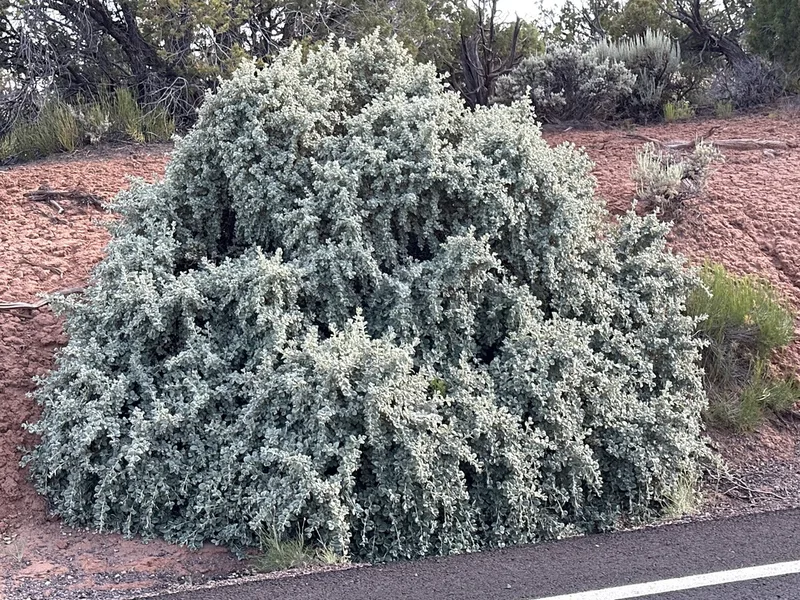
Roundleaf buffaloberry Shepherdia rotundifolia -
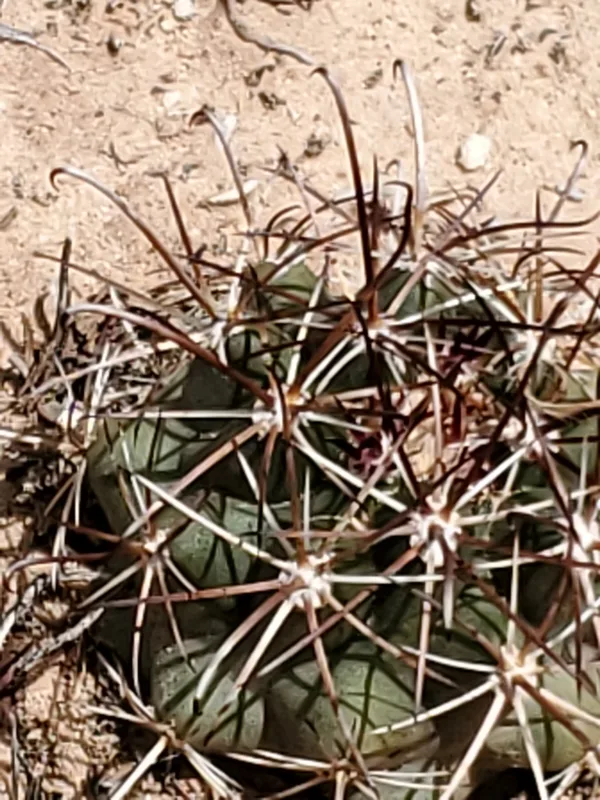
Smallflower Fishhook Cactus Sclerocactus parviflorus -
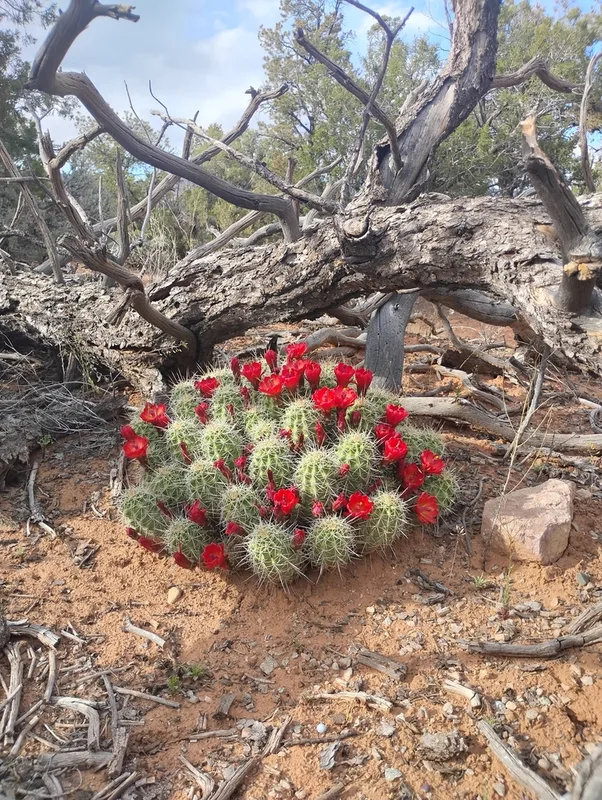
Kingcup Cactus Echinocereus triglochidiatus -
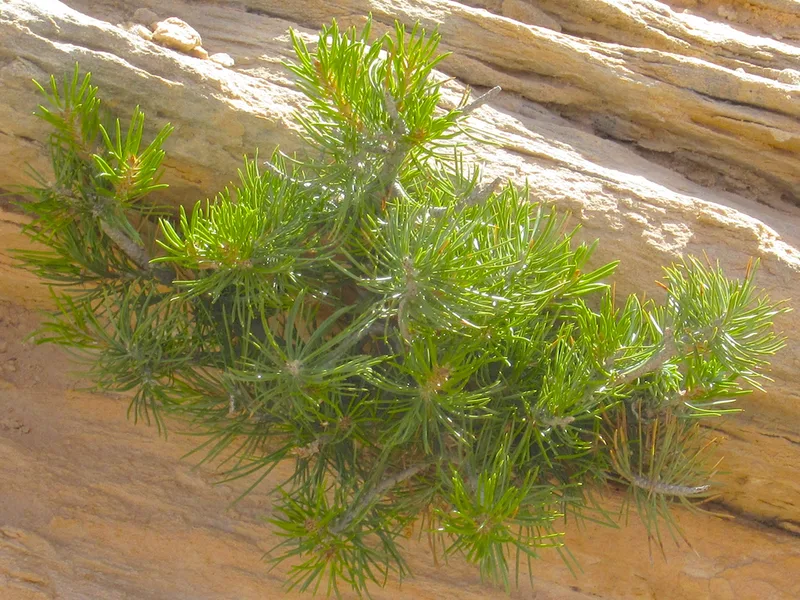
Colorado Pinyon Pinus edulis -
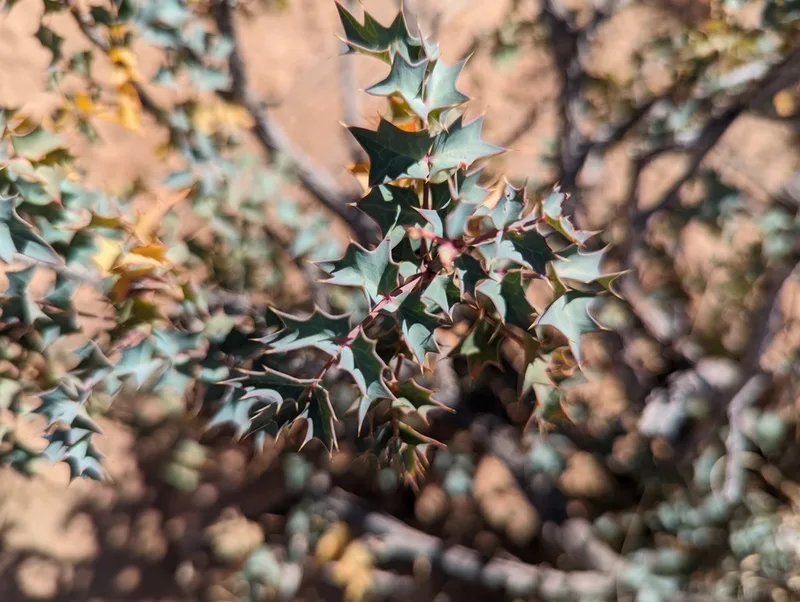
Fremont barberry Berberis fremontii -
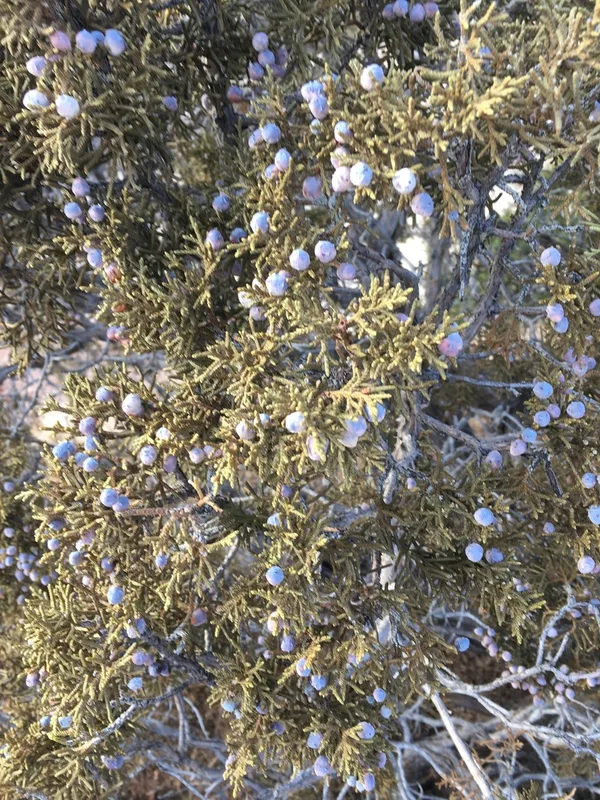
Utah Juniper Juniperus osteosperma -
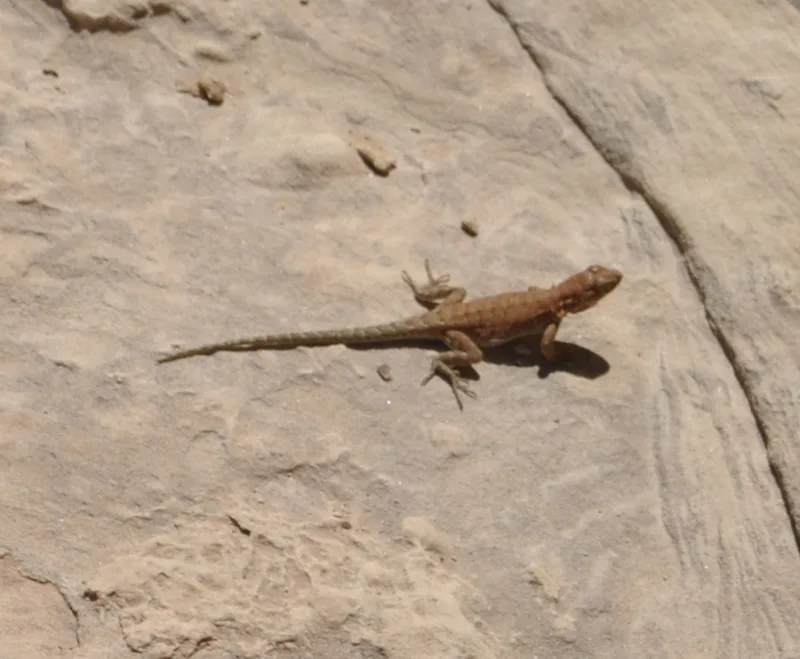
Common Side-blotched Lizard Uta stansburiana -
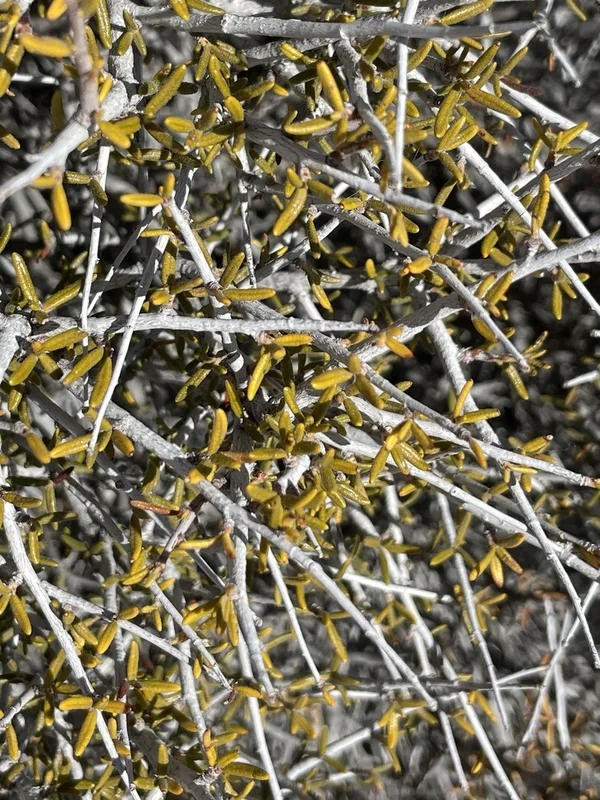
Littleleaf Mountain Mahogany Cercocarpus intricatus -
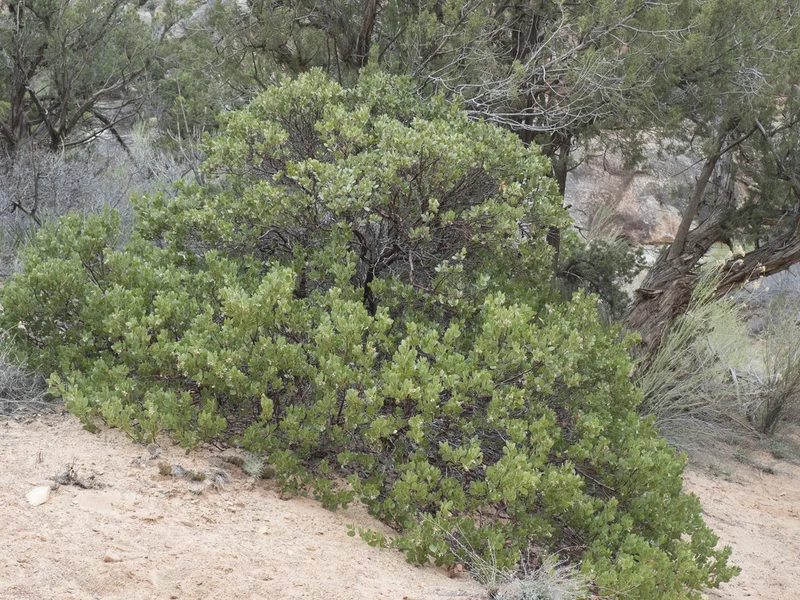
greenleaf manzanita Arctostaphylos patula -
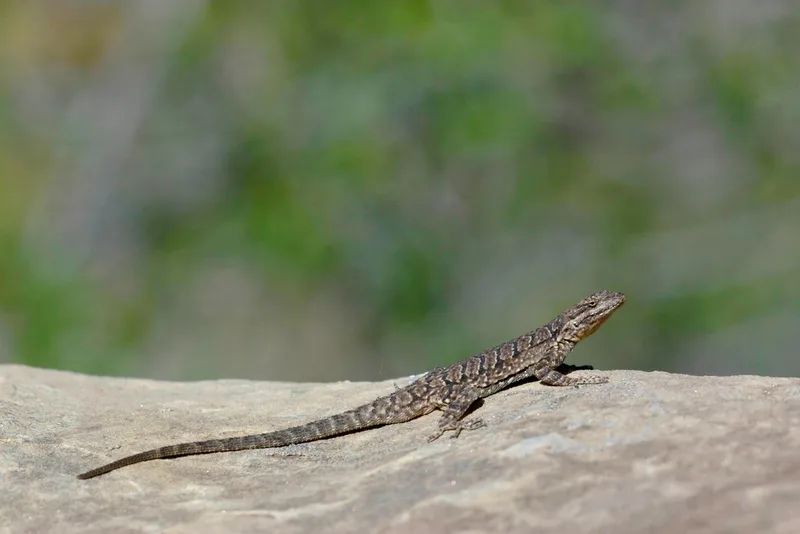
Ornate Tree Lizard Urosaurus ornatus -
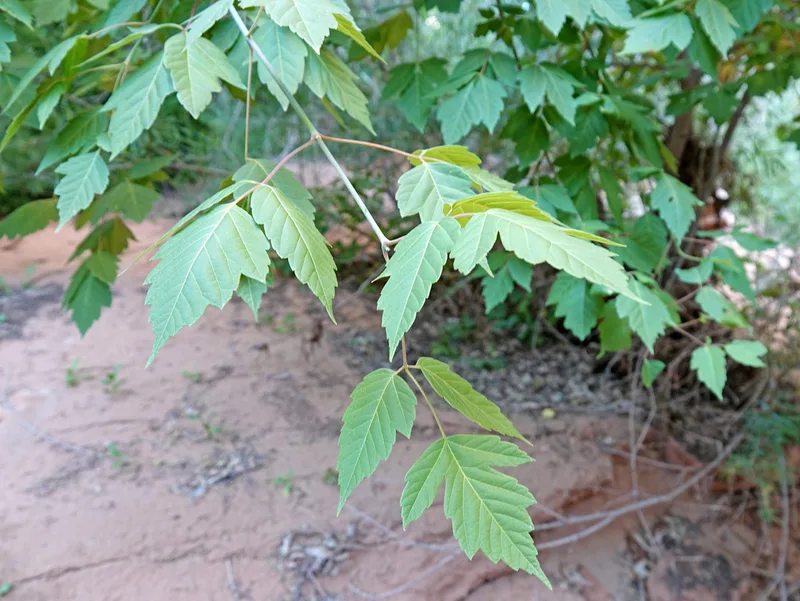
box elder Acer negundo -
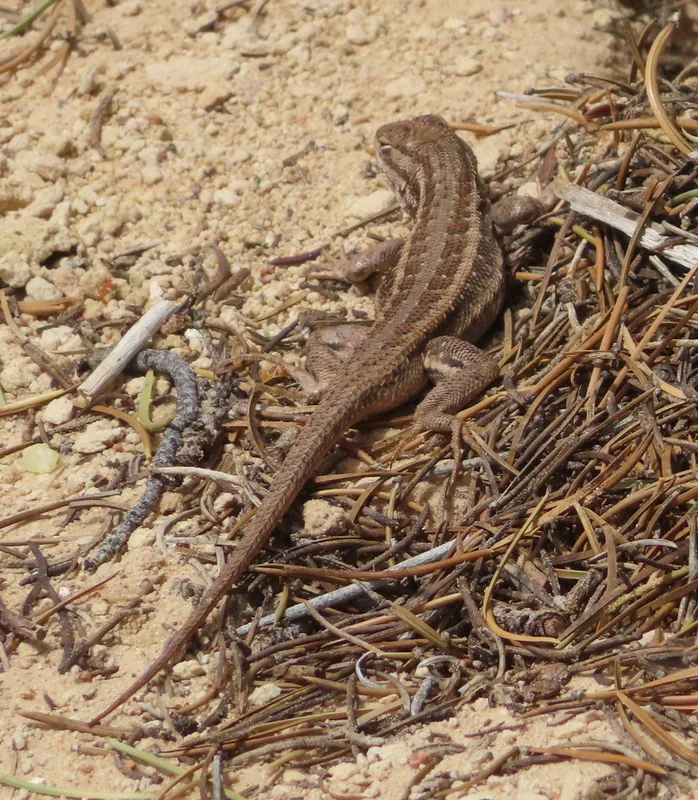
Common Sagebrush Lizard Sceloporus graciosus
Field Notes · Night Sky lens · Natural Bridges National Monument · 37.6026, −110.0112