Grand Canyon
Grand Canyon Village · Arizona, USA
All day the canyon counts its age downward, layer by layer into the rock. After dark, turn your back on it and look up — the sky is older still.
Also seen through Rivers & Canyons · all at Grand Canyon Village →.
Why here
Stand at the rim as the light goes, and the first thing that happens is the canyon disappears. The mile-deep gap below you fills with dark before the sky does, until you are standing at the edge of a blackness with no bottom. Then, slowly, the sky above fills back in — because there is almost nothing out here to light it up. This is high, dry country, far from any large town, and the mile-deep gap below adds a further, empty dark of its own. By day this rim reads deep time downward: bands of rock stacked to the river, the stone at the bottom nearly two billion years old. By night you only have to turn your head. The rim is the rare place you can pivot between the two oldest views there are — down into ancient stone, up into older light — and the whole trip is learning to look both ways.
The story
By day the rock does the talking. The plateau here rose slowly and the river sawed down through it, laying the layers bare — sea-floor limestone at the rim, and far below, near the water, rock almost two billion years old. That much is written on the walls for anyone to read. The dark writes the other half. After the sun drops behind the rim, the canyon goes black from the bottom up, and the high, dry air overhead — thin on cloud, thin on haze — lets the sky come back the way it did before there were towns to dim it.
The day’s life ebbs with the light. The ravens and swifts that rode the canyon air fold away, and elk move out to graze the forest edge at dusk, easiest to see in the low light of early spring. Then the rim goes quiet.
People came late and built along the edge, a village set right at the rim to bring travelers to the view. They built it facing the daylight canyon; the record here is quiet on the nights. But the sky they lived under, before any of their lamps, is the same one still filling in overhead once the last window in the village goes dark.
The sites
Turn around at the rim
Yavapai Point
36.0660, −112.1168
Of all the rim points, this is the one built for reading the rock. By day the layers across the canyon line up like a chart — pale sea-floor limestone at the top, older dune sandstone beneath, and step by step down toward stone almost two billion years old near the water. Spend an afternoon here learning to read the canyon downward, and then stay. As the light drains, the whole gap below you goes black from the bottom up, the layers vanish, and the sky takes over the same eyes you just trained on the rock. It is the cleanest place to feel this note’s whole idea in one spot: you have just looked as far down into time as bare rock will let you, and now you only have to lift your chin to look further. The point faces open sky across the canyon, with the village lights mostly behind you, so the dark comes on cleaner here than you might expect this close to the buildings. Give your eyes a full twenty minutes without a phone screen, and the faint stars will keep arriving long after you think the sky is full.
As the sky darkens, keep your eyes on the far canyon wall until the layered rock fades to a single black mass. Then tip your head straight up and find the first stars overhead. You have just looked down as far as stone goes, and up into a dark that goes further still.
- AccessDrive-up
- ExertionEasy
- TimeAn hour
Hopi Point
36.0745, −112.1549
This point pushes out on a narrow neck toward the middle of the canyon, so the gap falls away on three sides of you and the sky opens almost all the way around. That near-circle of open sky is exactly what a stargazer wants and what a forested rim rarely gives — most overlooks put trees or the village at your back, but out here on the neck there is little between you and the horizon in any direction. By day it is one of the great places to watch the canyon fill with shadow as the sun goes; by night it becomes a platform hung in the dark with stars low on nearly every side. Because you are surrounded by the mile-deep gap, there is almost no ground close enough to throw light back at you — the darkness below is part of what makes the sky above so complete. Walk to the far end of the neck, pick a direction with no village glow, and settle in. Bring a warm layer whatever the month; the rim loses its heat fast once the rock stops giving back the day, and a still night out on this point has a real bite to it.
Stand at the tip of the point and turn slowly all the way around. Notice how much open sky you can take in without a tree or a building in the way, because the canyon has fallen away on three sides of you. Find the darkest quarter of the horizon and watch how low toward it the faint stars begin to reach.
- AccessDrive-up
- ExertionEasy
- TimeAn hour
Mohave Point
36.0724, −112.1660
A short way along the western rim road, this overlook opens wide to the west and south, away from the village and its lights. That direction matters after dark: the glow of the buildings sits to the east, so facing out from here you turn your back on the brightest thing on the ground and look into the emptier half of the sky. By day the point looks down on a great bend of the inner canyon and out to the far cliffs; by night those cliffs become a low black rim under a sky that deepens as your eyes adjust. This is a good place to watch the last color leave the west and the first bright points of light follow it down toward the horizon, one after another, into the gap where the sun went. There is no barrier of forest here — the rim drops away clean — so the sky reaches nearly to your feet on the open side. Come for the changeover: stay through the slow half hour when the canyon stops being scenery you can see and becomes a shape you feel against the stars.
Face west after sunset and watch the brightest points of light appear low over the far rim, following the sun down. Those first lights low in the west are often planets, steadier and brighter than the true stars filling in higher up. Track how the whole sky wheels slowly westward over the hour, the same direction the color went.
- AccessDrive-up
- ExertionEasy
- TimeAn hour
Dark away from the lights
Shoshone Point Traihead
36.0513, −112.0814
This is the rim’s reward for a short walk. From the trailhead a level path runs out through the pine forest, away from the road and the pullouts, to a quiet promontory most people drive past without knowing it is there. That short separation is the whole point after dark: a few minutes on foot puts the road glow and the car headlights behind the trees, and the sky out on the point comes on cleaner and closer than it does at the drive-up rails. The walk is easy and nearly flat, but it runs through unlit forest, so carry a headlamp and know the way back before the light goes. Out at the promontory the canyon opens on three sides, and the forest that hid the point also hides the village behind you. It is the closest thing on this rim to having the dark to yourself without a hard climb — a place to spread a blanket, let your eyes adjust for a good half hour, and take in the whole dome at once with the black gap of the canyon dropping away below.
Once you reach the point, switch off every light and give your eyes a full twenty minutes to adjust. Then look for the faint band of the Milky Way arching across the sky — in a dark this good it shows not as a smudge but as structure, with darker rifts cutting through it. Pick one dark lane and trace it as far as you can before it fades.
- AccessShort walk
- ExertionEasy
- TimeHalf a day
Pima Point
36.0718, −112.2001
Near the far western end of the rim road, this point sits about as far from the village and its lights as the paved rim will take you. Distance is its gift. Out here the ground glow of the buildings has dropped below the trees and the eastern horizon, and the dark that returns is closer to the one the canyon knew before anyone strung a wire to it. By day the point looks far down and across to the west, over some of the widest, quietest country on the South Rim; by night that same emptiness means there is almost nothing out there to light the sky back up. Fewer people come this far, so you may well have the rail to yourself as the stars fill in. The trade is the drive — it is a long way out along the western road and a long way back in the dark — so plan the return before you lose the light. For anyone willing to go to the end of the road, this is where the sky comes back most completely without ever leaving the pavement.
Face east back toward the village after full dark and find the faint dome of light sitting over it on the horizon. Then turn west, away from it, and compare: the western sky, with empty country beneath it, holds far more faint stars low toward the horizon. The difference between the two directions is exactly what a little light does to a night sky.
- AccessDrive-up
- ExertionEasy
- TimeAn hour
Hermits Rest Viewpoint
36.0608, −112.2125
The western rim road ends here, and so does the string of pullouts and their lights. Being at the end of the line is what recommends it after dark: there is no through-traffic, no next overlook with headlights swinging into it, just the last stop before the pavement quits. By day it is a place to look down the canyon’s western reach and out to distant, empty rims; by night those far rims go dark with no town on them to break the line. Because the road simply stops here, the spot empties out as the light goes and the quiet deepens with it. The sky opens wide to the west and south, into the emptier half of the night away from the village glow behind you. Bring everything you need for the dark before you arrive — a warm layer, a headlamp, and a plan for the drive back — because the rim cools hard after sunset and the road out is long and unlit. Settle in facing the open country and let the slow business of the sky filling in happen at its own pace.
After the light goes, look low across the western horizon and count how many separate points of light break the line of the far rims. On a clear night there are almost none from any town — only stars settling toward the horizon. Watch one bright star sink until the black rim finally cuts it off.
- AccessDrive-up
- ExertionEasy
- TimeAn hour
The eastern edge, for the turning of the night
Yaki Point
36.0586, −112.0838
Out on the eastern arm of the rim, this point faces the sunrise side of the canyon, which makes it the place to be at the two dark ends of the night. Most rim-goers come for sunset in the west; far fewer are out here in the black hour before dawn, when the sky is at its darkest and the eastern horizon has not yet begun to pale. By day it looks east down the canyon toward country the morning sun reaches first; by night, and before dawn, that eastern sky is a clean, low horizon with no village glow on it. Come in the last dark hour before first light, face east over the gap, and watch the oldest view there is give way to the newest: the stars holding, then thinning, then the first gray creeping up from the rim while the canyon below is still pure black. Dress for the cold — the hour before dawn on the rim is the coldest of the night.
In the last dark hour before dawn, face east over the canyon and find the brightest point of light low on that horizon — the morning star, usually a planet, the last light to hold as the sky pales. Watch it fade as the first gray rises from the rim, and mark the moment the canyon below you is still black while the sky above has already turned.
- AccessShort walk
- ExertionEasy
- TimeAn hour
Pipecreek Vista
36.0480, −112.0941
A modest pullout on the eastern stretch of the rim, easy to pass by in daylight in favor of the grander named points. After dark its plainness becomes its virtue. It sits back a little from the busiest overlooks, draws a thinner crowd, and opens a clean view east and north across the canyon into the darker half of the sky away from the village. There are no buildings right at hand to spill light, just the rim, the gap, and the open dome overhead. By day it is a quiet place to take the measure of the canyon without a crowd at the rail; by night it is a low-effort dark-sky stop you can reach in minutes and leave when the cold wins. Pull in, let the engine tick down to silence, give your eyes their twenty minutes, and the sky will do the rest. It is the easiest kind of night here — no walk, no plan, just a dark pullout, an open horizon, and as many stars as the air will show you. Keep a warm layer within reach; the still cold settles fast once you stop moving.
From the pullout, once your eyes have adjusted, find the small, faint smudge of the Pleiades — a tight little knot of stars, more of them the longer you look. It is a plain test of how dark your sky has gone: in town you catch a few, and here, on a good night, the knot fills in with stars you cannot see from anywhere with lights.
- AccessDrive-up
- ExertionEasy
- TimeAn hour
When it's best
The sky is darkest on the moonless nights around a new moon, which matters more than the season — worth timing a trip around. Any clear, moonless night rewards you, because the air stays dry and the country stays empty year round. Season mostly changes the cold: rim nights run cold enough to freeze well into spring, so come dressed for winter even when the days are mild. Summer brings short, warm nights with the pale band of the Milky Way riding high; winter nights are longest and sharpest but bitter. Elk drift out to the forest edge at dawn and dusk, easiest to see in the low light of early spring.
Go deeper
The names behind what you saw. The pale cliff-rock at the rim is the Kaibab Formation, a sea-floor limestone; just beneath it lie the Toroweap Formation and the Coconino Sandstone, the old dune rock. The whole stack belongs to the Plateau Province geologic column, which reaches down near the river to rock almost two billion years old. The large grazers at the forest edge are elk, Cervus canadensis; the tumbling black birds along the cliff are the common raven, Corvus corax, and the fast dark arcs off the rim are the white-throated swift, Aeronautes saxatalis. The rim forest is held together by the Colorado pinyon, Pinus edulis.
To read next. - Any overview of the Grand Canyon’s geologic column — it follows the rock layer by layer from rim to river, the downward half of what this rim shows. - The iNaturalist observations for the South Rim — a living, month-by-month record of what is moving on the rim, from the dusk elk to the daytime birds. - Any good primer on dark skies — why dry air, high ground, and empty country let the stars come back, the upward half of the same view. - A seasonal star chart or a night-sky app — it turns the pale band overhead into named constellations and shows where the Milky Way’s structure lies.
The names behind what you saw
What lives here, and what it's called. Photographs from open collections — an aid to identification, not decoration.
-
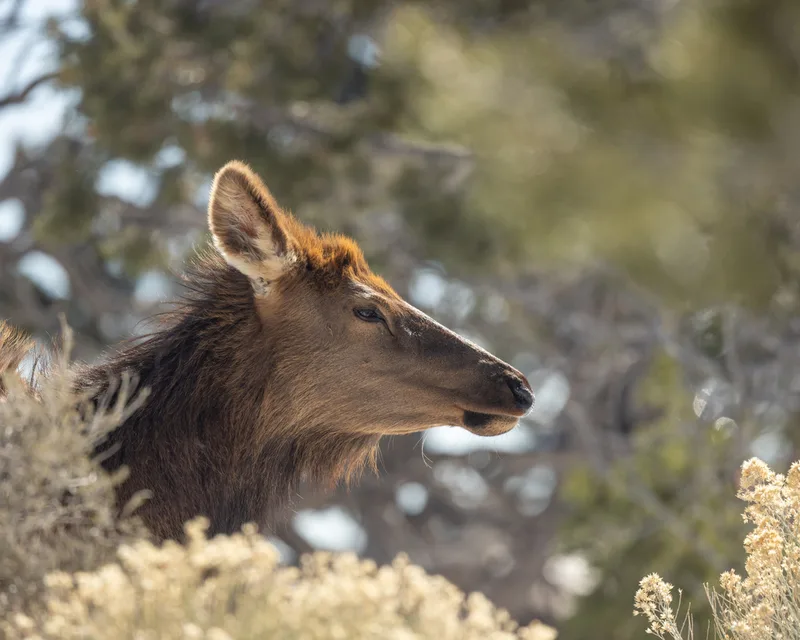
Elk Cervus canadensis -
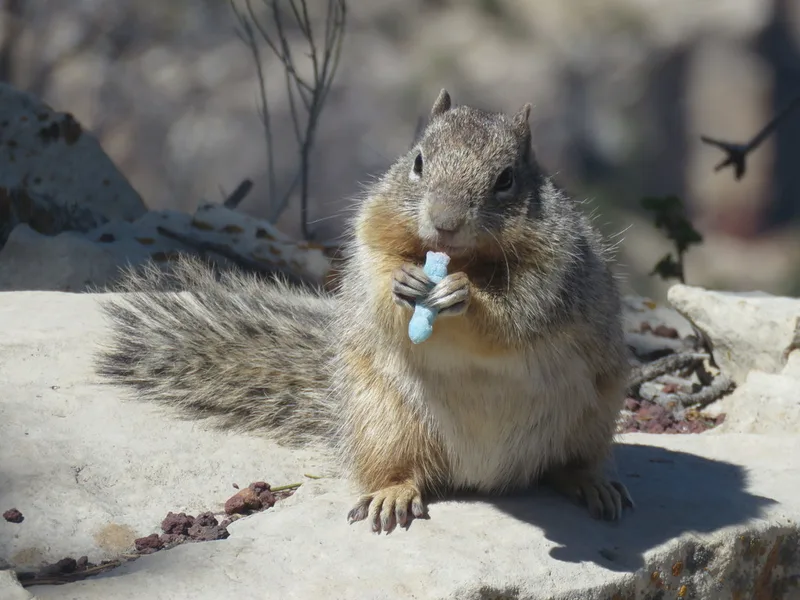
Rock Squirrel Otospermophilus variegatus -
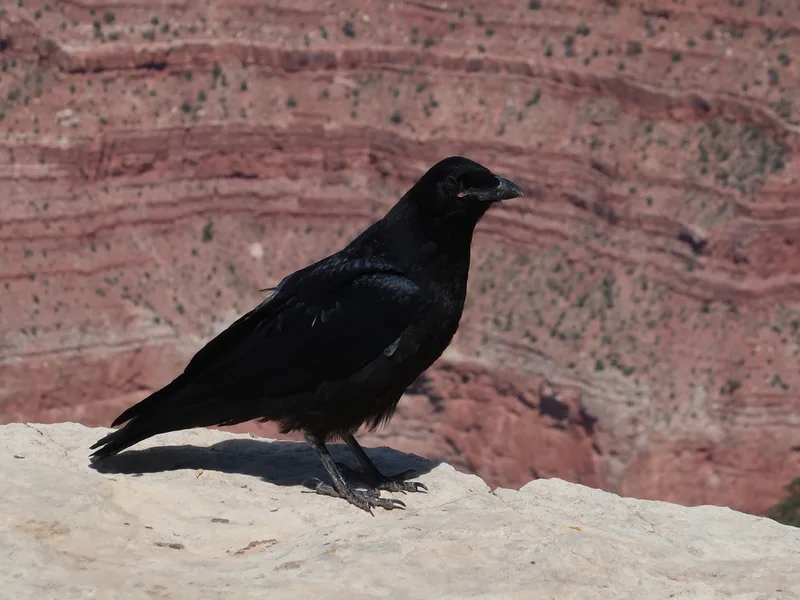
Common Raven Corvus corax -
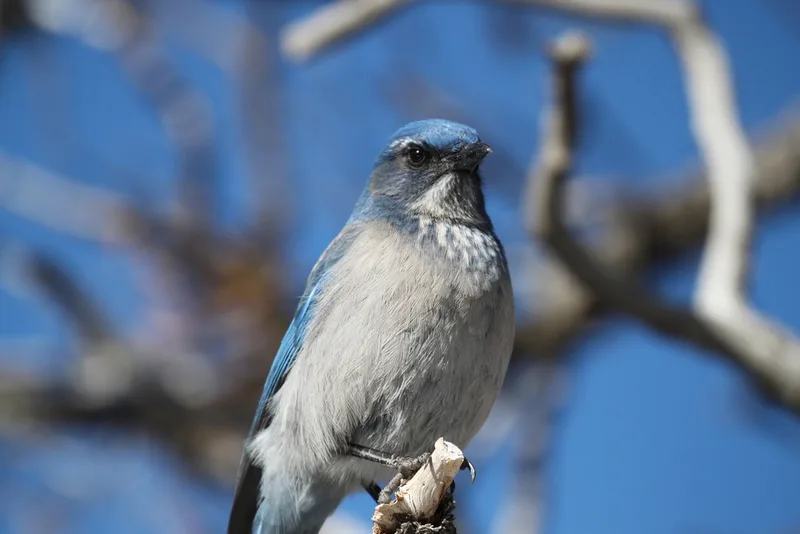
Woodhouse's Scrub-Jay Aphelocoma woodhouseii -
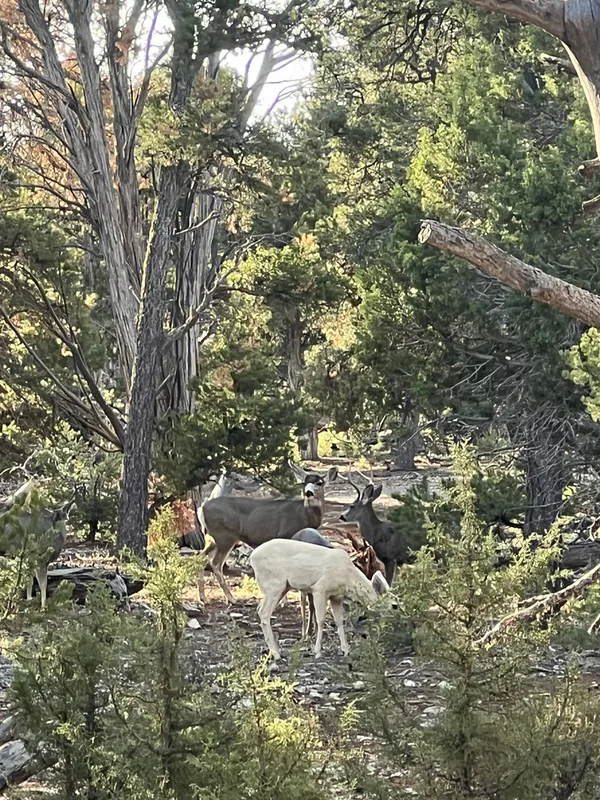
Mule Deer Odocoileus hemionus -
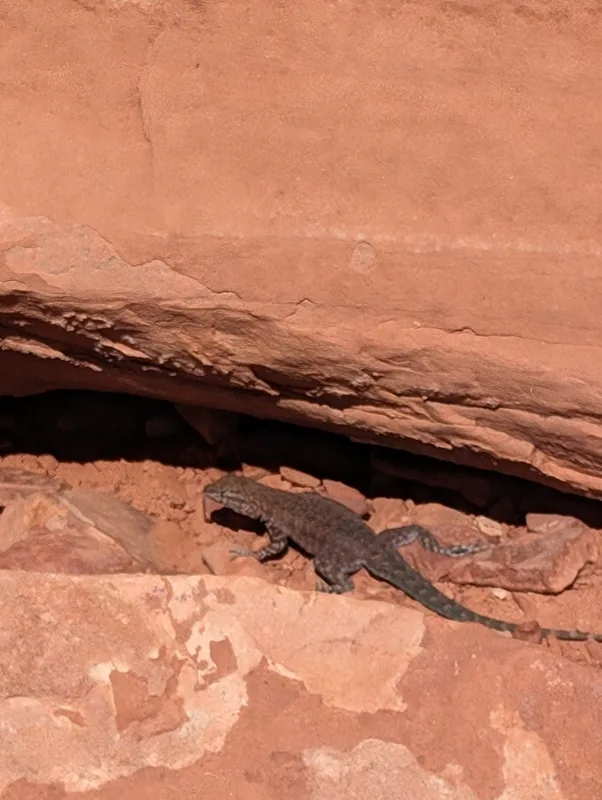
Plateau Fence Lizard Sceloporus tristichus -
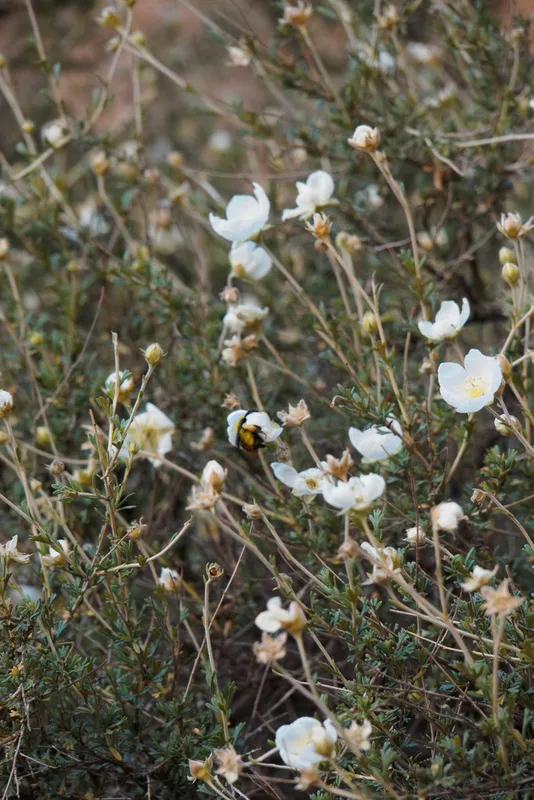
Apache plume Fallugia paradoxa -
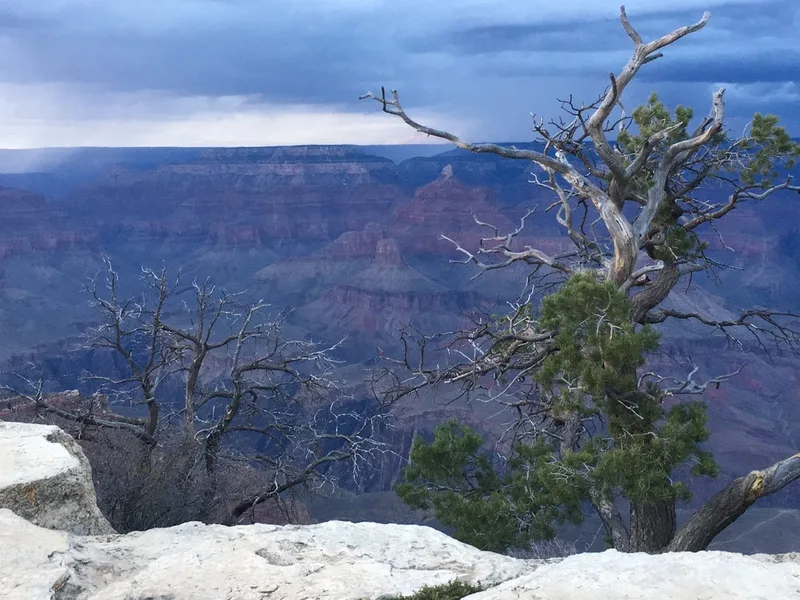
Colorado Pinyon Pinus edulis -
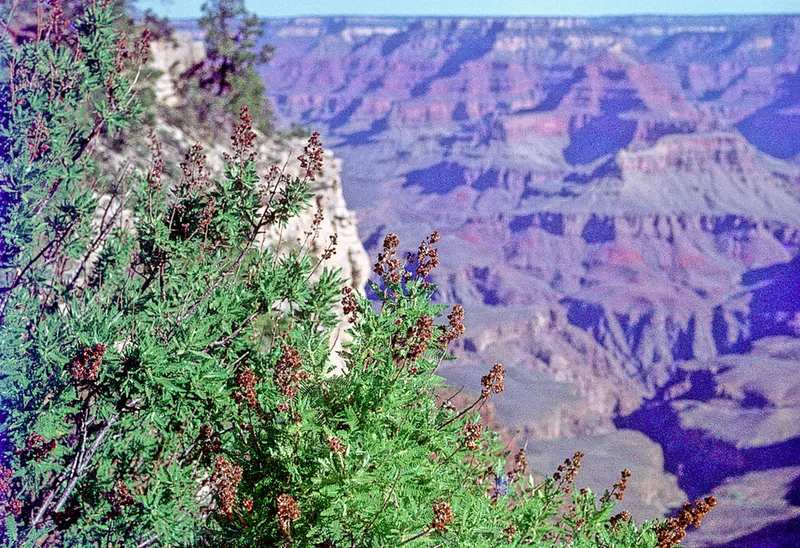
fernbush Chamaebatiaria millefolium -
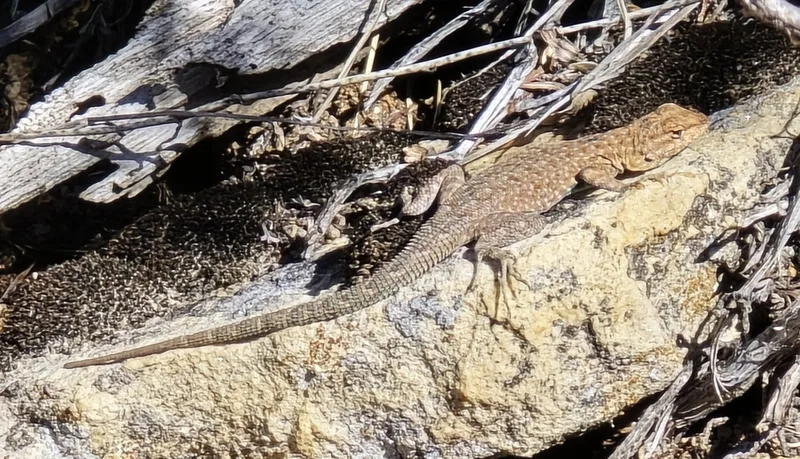
Common Side-blotched Lizard Uta stansburiana -

Cliff Chipmunk Neotamias dorsalis -
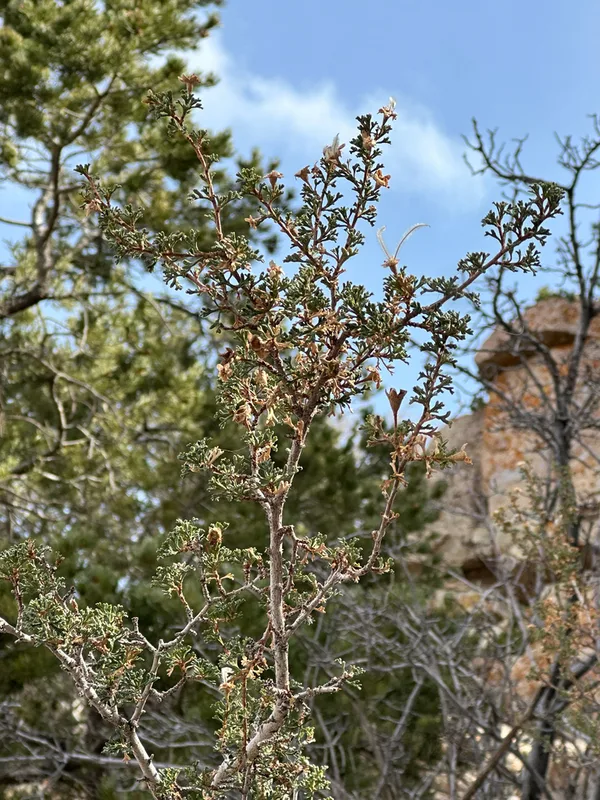
Stansbury's Cliffrose Purshia stansburyana
Field Notes · Night Sky lens · Grand Canyon Village · 36.0578, −112.1282