Death Valley
Furnace Creek · California–Nevada, USA
The desert keeps nothing overhead — no cloud, no haze, no town glow — so after dark it gives the whole sky back.
Also seen through Desert & Deep Time · all at Furnace Creek →.
Why here
Death Valley earns its reputation in daylight. It holds the hottest air temperature ever measured on Earth, a desert basin pulled low between two mountain walls that wring the rain out of every storm before it arrives. Little water reaches the ground, and the heat and the bare distances read as hardship — by afternoon they are. But wait for dark. The same conditions that punish here — thin, dry air with no moisture to blur it, no city near enough to throw up its glow, and a wide flat floor with an unbroken horizon — add up to some of the blackest, clearest night skies left in the country. When the sun goes, the sky fills in. Stars you never see from home crowd the gaps between the bright ones, the Milky Way stretches from ridge to ridge, and planets burn steady low in the west. The desert that gives so little by day hands back the entire sky after dark. This note is about learning to look up here.
The story
The valley is a gap being pulled open. Two blocks of the earth’s crust are sliding apart here, and the floor between them keeps dropping — low enough now that the lowest ground sits well below the sea it will never reach. Rain that might fill it is stolen first by the high ranges on either side, so what would be a lake is mostly dry lakebed, salt, and gravel washed down from the peaks. Almost nothing softens it: little water, few trees, long open sightlines in every direction.
People have lived with that hardness for a very long time. The Timbisha Shoshone have made a home in this valley for generations, working its springs and seasons, and their descendants live here still. Prospectors came later for borax and hauled it out by mule team across the flats; the ruins of that work still stand near the valley’s center. Every chapter of the human story here is shaped by the same fact — this is a hard, dry, open place, and it stays empty.
That emptiness is exactly what the night needs. No moisture hangs in the air to scatter light, no sprawl of towns leaks glow over the ridgelines, and the flat floor leaves the horizon clean the whole way around. The conditions that kept the valley nearly unlived-in are the conditions that keep its sky dark. Come nightfall, the same emptiness that looks like nothing turns out to hold the most stars you can stand under.
The sites
The valley floor
Badwater Basin
36.2503, −116.8258
This salt flat is among the flattest, most open ground in the park — a white salt plain that runs out to the mountains with nothing on it to break the view. After dark the salt holds a faint glow and the ring of peaks drops away into black, leaving a clean bowl of sky overhead. It is a short, level walk from the road onto the flats, and the ground stays warm underfoot long after sunset.
Let your eyes adjust for twenty minutes, then find the pale band of the Milky Way arching over the valley — dark enough here to cast the whole basin in a soft, colorless light.
- AccessShort walk
- ExertionEasy
- TimeAn hour
Devils Golf Course
36.3283, −116.8600
Here the salt has dried into a field of jagged, ankle-high pinnacles, rough enough that you stay near the car. What makes it worth a night stop is the quiet: no water, no wind in trees, no traffic, just the faint ticking of the salt as it cools. The horizon sits low and open in every direction.
Stand still, kill your flashlight, and pick out the three or four brightest points low in the sky — the steady ones that don’t twinkle are planets, not stars.
- AccessDrive-up
- ExertionEasy
- TimeAn hour
Harmony Borax Works
36.4800, −116.8735
Close to Furnace Creek and easy to reach, this old borax works sits on open flats with a low western horizon — a convenient dark site when you don’t want to drive far after dinner. The ruins reward a daylight look, but at night the draw is simply the clean, empty sky beyond them.
Just after the sky goes fully dark, watch the west for the first bright planet to appear, well before the faint stars fill in around it.
- AccessDrive-up
- ExertionEasy
- TimeAn hour
The high rim
Dante's View
36.2206, −116.7264
High on the valley’s eastern wall, this overlook sits above much of the dust and stray warmth of the basin floor. The air is thinner and steadier up here, and the view runs from horizon to horizon over the whole dark valley. Bring layers — it is markedly colder than the floor below.
Look south and low for the brightest, densest part of the Milky Way, its core, which climbs highest in the warmer months and reads as a distinct swelling in the band of light.
- AccessDrive-up
- ExertionEasy
- TimeAn hour
Zabriskie Point
36.4200, −116.8123
A short walk up from the parking area brings you to a rise over pale, folded badlands with an open eastern sky. The eroded ground catches even starlight, and the low horizon makes it a good place to watch objects rise. It is one of the easier viewpoints to reach after dark.
Face east and watch for a bright point clearing the far ridge; give it a few minutes to climb clear of the horizon haze before deciding whether it’s a planet or a rising star.
- AccessShort walk
- ExertionEasy
- TimeAn hour
The far north
Mesquite Flat Sand Dunes
36.6599, −117.0953
Open dunes with a low, rounded horizon on every side — no cliffs overhead, nothing to crop the sky. The sand is easy to walk out onto and holds the day’s warmth, which makes it comfortable to lie back and take in the whole dome at once. Walk a few minutes past the first dunes to leave the parking-lot lights behind.
On a night near a known meteor shower, lie flat, take in as much sky as you can at once, and count the streaks you catch in an hour — the open horizon here means you miss very few.
- AccessShort walk
- ExertionEasy
- TimeAn hour
Ubehebe Crater
37.0097, −117.4503
A wide crater in the park’s remote north, ringed by dark, bare ground and far from any lights. The drive out is long, which is exactly why the sky here is so deep. Stand at the rim and the darkness runs unbroken to every edge.
Look for the zodiacal light — a faint, tilted cone of glow rising from where the sun set, sunlight scattered off dust between the planets, and visible only where the sky is this dark.
- AccessDrive-up
- ExertionEasy
- TimeHalf a day
Racetrack Playa
36.6813, −117.5627
The darkest, most remote stop in this note, reached by a long, rough road that keeps almost everyone away. The playa is a dead-flat dry lakebed with an unbroken horizon and not a single light in view. Come prepared to camp or make a very long night of it; this is not a quick pull-off.
With no glow anywhere on the horizon, try to pick out the faintest stars of the Little Dipper — seeing all of them is an old test of a truly dark sky, and few places pass it as cleanly as this.
- AccessExpedition
- ExertionModerate
- TimeWorth two days
When it's best
Two rhythms matter for the sky here, and they stack. The first is the moon. Aim for the nights around the dark of the moon, when it rises late or not at all; a bright moon washes out everything faint, and the Milky Way disappears under it. The second is the season. The cooler months bring long nights and the steadiest, driest air, so the stars sit still instead of twinkling — and the valley floor, unbearable in high summer, turns merely cold and quiet after dark. Late fall through early spring gives the longest dark hours and the best odds of a clear, dry sky; the summer monsoon months run hotter and are more likely to haze over. Whatever the season, give your eyes a full twenty minutes in the dark before you judge the sky, and keep white light off. The faintest stars only arrive once your eyes have stopped expecting them.
Go deeper
The park is Death Valley National Park, straddling the California–Nevada line; the valley’s first and continuing people are the Timbisha Shoshone (the Death Valley Timbisha Shoshone Band of California). The salt flats and washes underfoot are young — Holocene alluvium in the active channels, laid over older Cenozoic and Neogene sedimentary rock (Macrostrat column 464, “Death Valley, California”). Furnace Creek sits about 190 feet below sea level; the record heat of 1913 was logged there, at Furnace Creek Ranch.
For the geology of the basin the sky sits over, start with the classic survey of the Furnace Creek borate area (1970) and the reconnaissance of Furnace Creek Wash (1963, USGS OFR 63-109). For the faulting that keeps dropping the valley floor and holding the ranges high, see the work on long-term slip rates along the Furnace Creek–Fish Lake Valley fault zone (2017). The Monte Blanco borate report (2019, USGS OFR 2019-1111) covers the deposits the mule teams came for.
The names behind what you saw
What lives here, and what it's called. Photographs from open collections — an aid to identification, not decoration.
-
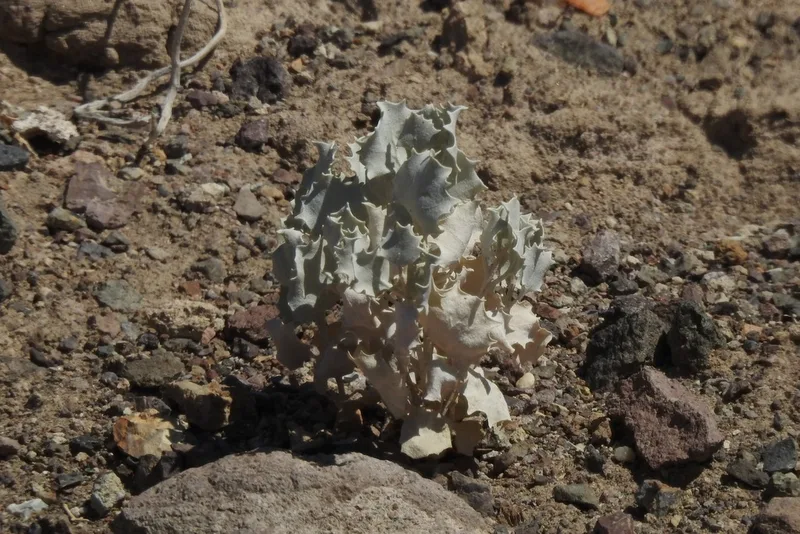
Desert Holly Atriplex hymenelytra -
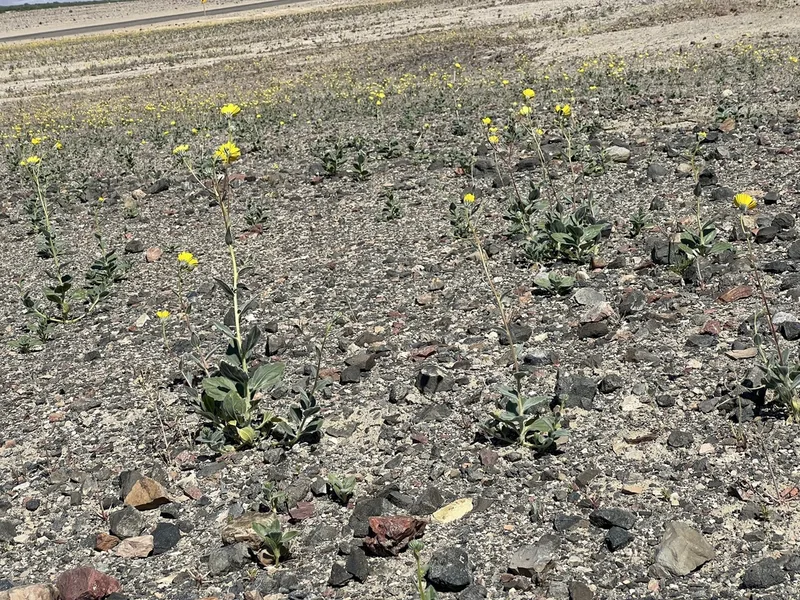
Desert Sunflower Geraea canescens -
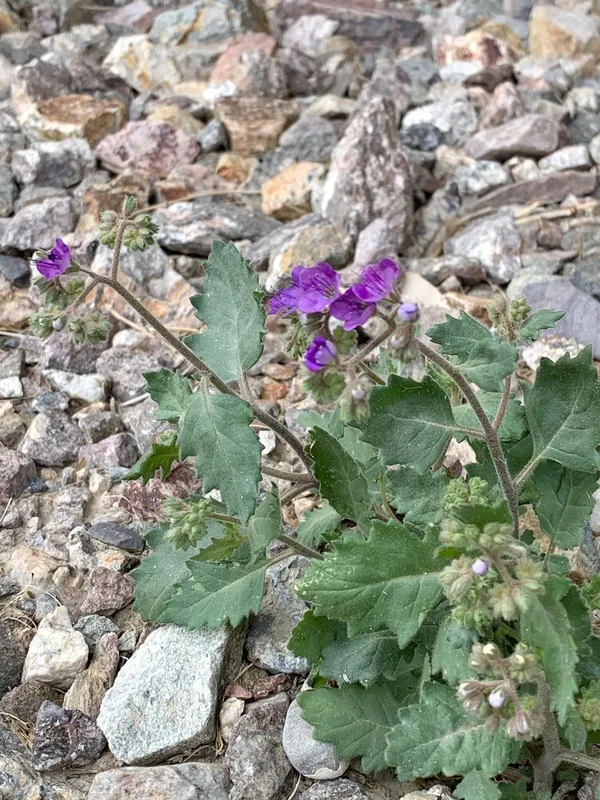
Caltha-leaf Phacelia Phacelia calthifolia -
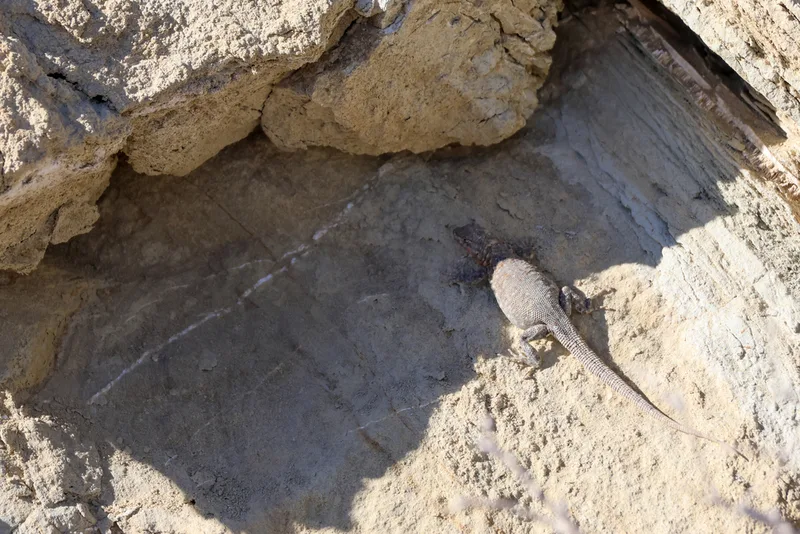
Common Side-blotched Lizard Uta stansburiana -
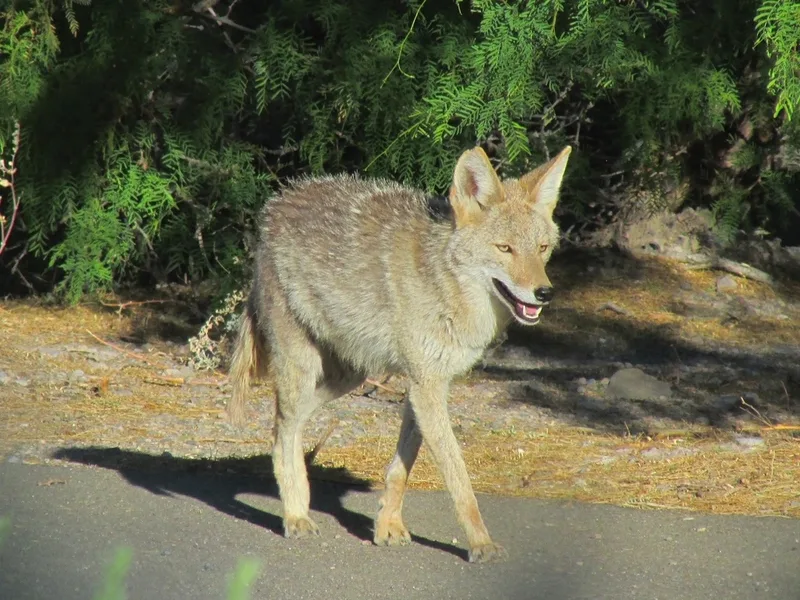
Coyote Canis latrans -

Great-tailed Grackle Quiscalus mexicanus -
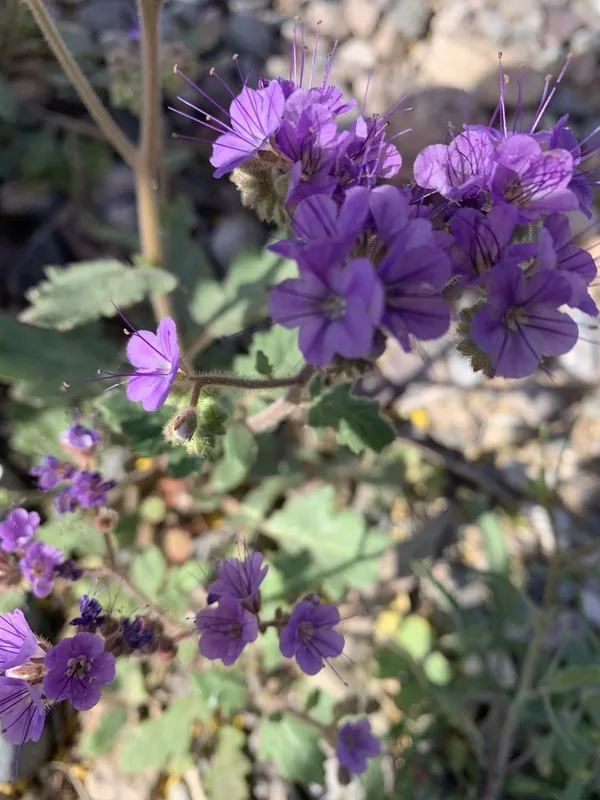
Notch-leaf Scorpionweed Phacelia crenulata -
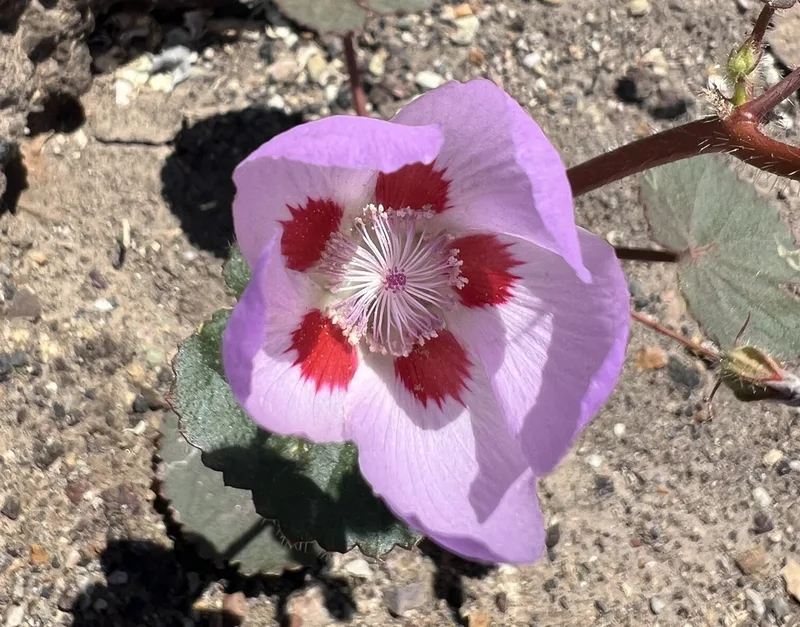
desert fivespot Eremalche rotundifolia -

White-lined Sphinx Hyles lineata -
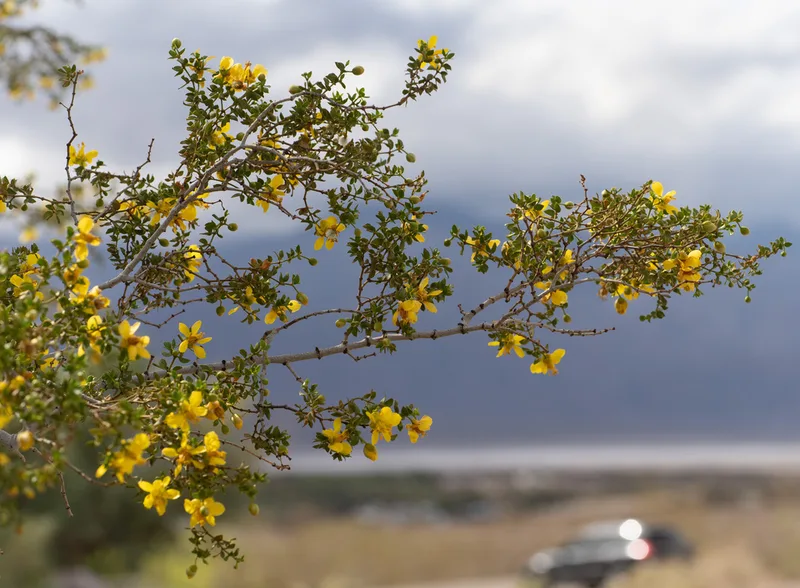
Creosote Bush Larrea tridentata -
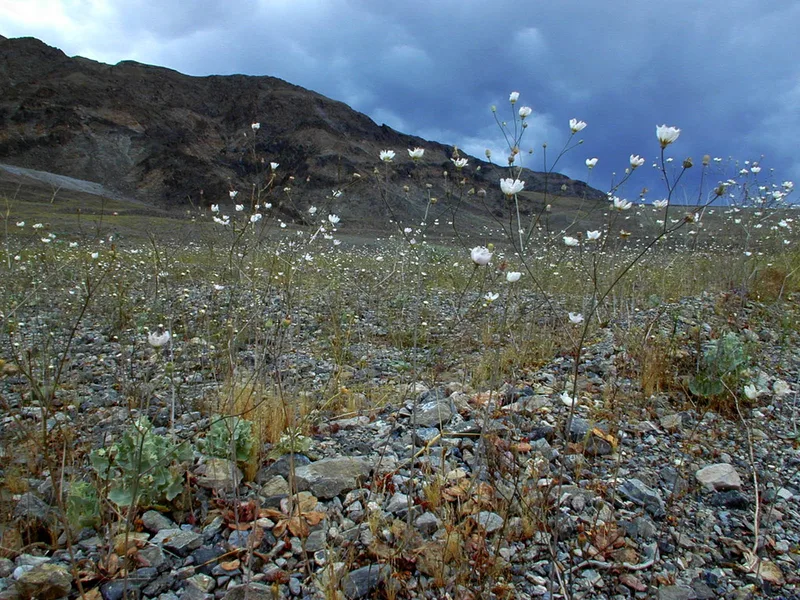
gravel ghost Atrichoseris platyphylla -
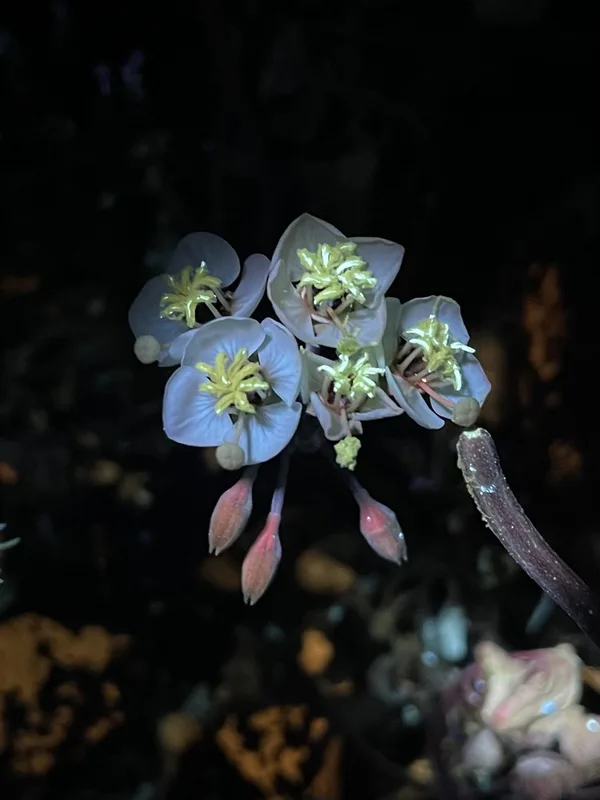
Browneyes Chylismia claviformis
Field Notes · Night Sky lens · Furnace Creek · 36.4344, −116.8628