Craters of the Moon
Craters of the Moon National Monument · Idaho, USA
You stand on rock that has barely cooled, and look up at light that left home long before the rock was here.
Also seen through Volcanic · all at Craters of the Moon National Monument →.
Why here
The rock under your boots is among the youngest in the country, and the light overhead is among the oldest things your eyes can reach. The lava that made this ground is younger than fifteen thousand years — new rock, barely cooled as the earth counts time. Look up on a clear, moonless night, though, and you see the opposite. This is high, dry country, more than a mile above the sea and set between two small desert towns, with almost nothing to throw light into the sky. So the dark comes all the way down to the black ground, and the pale band of our own galaxy stands out overhead — the massed light of more stars than anyone could count. Some of that light is a few years old, some thousands; the faint smudge of the next galaxy over is older still. That is the lens for this place: the newest ground there is, beneath the oldest view there is. Everything here, by day or by dark, turns on that one gap in time.
The story
The ground came first, and it came fast. Along a crack in the plain, lava rose again and again, building low cones of loose black cinder and pouring out sheets of rock that cooled rough in some places and smooth in others. It is young work — none of the flows here is much older than fifteen thousand years, barely a moment against the land around it.
Little softens it. Hardy plants take the cracks — low cushions of buckwheat, a knotted limber pine, the pink bitterroot that opens close to the ground — but the black rock stays mostly bare, and bare black rock holds almost no light.
People crossed this plain more than they settled it. In the eighteen-hundreds, wagons on a cutoff from the Oregon Trail worked their way over the Snake River Plain nearby, hard travel across hard country. And the place carries a name that looks straight up: Craters of the Moon. By day the comparison is the ground — dark, pitted, bare. By night it is the sky the ground opens onto.
The sites
High ground for a whole sky
Inferno Cone Viewpoint
43.4434, −113.5519
A short, steep climb up a slope of loose black cinder brings you to the top, with the horizon open all the way around. By day it is a bare dark dome; its worth for the sky is exactly that bareness. There are no trees to block the view and nothing pale underfoot to bounce light back up, so once the sun is down the darkness is close to total, from the ground at your feet to the last stars at the horizon. The cone is young, built of cinders thrown from a vent in the recent lava field — a pile of fragments barely older than the flows around it. Come up in daylight first to learn the footing, because the same loose cinder that makes the climb quick makes it awkward in the dark, then stay through dusk. As the light drains west, the brightest planets show first, then the steady stars, and finally the faint powder of the galaxy overhead. Bring a light for the walk down and a warm layer; the wind does not quit when the sun goes.
From the top, wait for full dark and turn away from any glow on the horizon. The pale, uneven band arching overhead is the massed light of our own galaxy’s stars, too far to separate by eye. Trace it down to the horizon and find its broadest, brightest stretch — that thickening points toward the crowded heart of the galaxy.
- AccessShort walk
- ExertionModerate
- TimeAn hour
Sunset Cone
43.4686, −113.5675
Off the north end of the drive, this cone earns its place as the hinge between day and night. Its slopes catch the last warm light while the flats below have already gone to shadow, and from partway up you get an open western horizon — the direction the day leaves from, and where the planets often gather. It is another young pile of cinder and spatter from the same run of eruptions that built this field, its dark surface bare enough that nothing competes with the fading sky. There is no polished trail to the top; pick a line up the firmer ground and give yourself room before dark. The reward is the changeover itself — the slow handoff as the sky deepens from blue through orange to the first pricked points of light. It is the place to watch a day end and a night begin in one sitting. Wear something warm and carry a light for the return; the temperature drops fast once the ground stops holding the sun.
Near sundown, watch for one bright point in the west while the sky is still blue. That steady, non-twinkling light is a planet, shining by borrowed sunlight rather than its own. Keep watching as the true stars follow — unlike the planet, they flicker, their thin light bent by the air.
- AccessShort walk
- ExertionModerate
- TimeAn hour
Big Sink Overlook
43.4314, −113.5416
A short walk from the loop road brings you to the rim of a wide, low basin sunk into the lava — a broad bowl of dark rock ringed by the flows around it. By day it reads as a study in erosion and collapse, the slow undoing of once-molten ground. After dark it becomes something simpler: a well of blackness. Black lava reflects almost none of the light that falls on it, so the basin holds no glow of its own, and the darkness underfoot matches the darkness overhead until the rim is hard to tell from the sky. That total dark is what makes faint things visible — the dimmest stars, the outer haze of the galaxy’s band, a slow satellite crossing. Come with your eyes already adjusted, stay off any phone screen, and give the sky twenty quiet minutes to fill in. A low rail marks the overlook; keep behind it in the dark, since the basin drops away just past your feet.
Stand at the rim after dark and notice how little the ground gives back — black lava returns almost no light, so the basin stays as dark as the sky. With no glow rising from underfoot, hunt for the faintest stars low over the far rim, the ones a brighter foreground would erase.
- AccessShort walk
- ExertionEasy
- TimeAn hour
Where the dark reaches the ground
North Crater Flow Trail
43.4575, −113.5590
This short trail leads out across a young lava flow, over ground that cooled in two very different ways — some of it smooth and ropey where the lava ran thin and fast, some of it a jumble of sharp rubble where it moved thick and slow. Gardens of shattered cinder and odd twisted shapes line the way. It is worth walking by day to read the flow, but it is also one of the easier places to step a short distance from the road into real dark. A few minutes out, the last of the car glow falls behind the rise and the sky takes over. Because the flow is black and open, there is nothing between you and the stars but air — no canopy, no pale sand throwing light back up. The footing is uneven, so bring a light and use it low, then switch it off and wait; the faint stars you could not see at first keep arriving as your eyes open to the dark. Firm shoes help on the rough rock.
Walk a little way onto the flow after dark and stop where smooth, ropey rock gives way to broken rubble — you can feel the change through your boots. Then switch off your light, look straight up, and wait; the faint stars you missed at first keep surfacing as your eyes open to the dark.
- AccessShort walk
- ExertionEasy
- TimeAn hour
Spatter Cones
43.4417, −113.5578
A cluster of small, steep cones sits just off the loop, close enough for a short walk and low enough to climb in a few minutes. They formed where thick blobs of lava were flung from a vent and landed still soft, welding into miniature volcanoes of their own — the same eruptions that floored this whole field, caught in small scale. Their steep sides and dark, bare rock make them a fine low platform for the sky: high enough to clear the immediate ground, dark enough to give nothing back. Climb one at dusk and let the others become black silhouettes against the deepening blue, then watch the stars come down to sit on their rims. Because the cones stand close together, you can turn slowly and take in the whole dome of the sky without moving far. Stay on the worn paths; the loose rock is fragile and easily scarred. Bring a light for the short scramble down once it is fully dark.
Climb one cone and let the others become black humps against the sky, then look for the pale band of the galaxy passing over them. Their bare, dark slopes throw back no light of their own, so the stars carry right down to their rims — turn slowly and take in the whole dome without moving far.
- AccessShort walk
- ExertionEasy
- TimeAn hour
Staying for the dark
Lava Flow Campground Registration
43.4607, −113.5576
This is where you stay if you want the sky on its own terms — a campground set right in the black rock, where the loop road meets the flows. Its worth for this note is simple: it lets you be here in the dead of night, when the sky is deepest, without a long drive back to town in the cold and dark. The ground is young lava, bare and dark, with little around to throw light upward, and the nearest towns are small and far. On a moonless night that adds up to about as dark a sky as the ground will give you. Pick a night when the Moon is thin or absent and rises late — that, far more than the season, decides how much you will see. Settle in after full dark, give your eyes a good half hour away from any light, and let the faint band of the galaxy and the dim smudge of its neighbor come up on their own. Nights run cold here well into spring; pack for it.
On a truly moonless night, lie back and find the faint fuzzy patch set a little apart from the galaxy’s band — the nearest large galaxy to our own, and the most distant thing the unaided eye can reach. Its light left home long before any lava cooled here; you are, quite literally, looking into the deep past.
- AccessDrive-up
- ExertionEasy
- TimeWorth two days
Carey Kipuka
43.3252, −113.6359
Far to the south, where the lava spread out and left a rise of older ground standing above it, this quiet island of earth sits well off the road. A rise the flows streamed around rather than over, it is older than the black rock that surrounds it on every side — a small piece of the country as it was before the eruptions came. Reaching it means a long walk across rough, trailless lava, not a casual stop, and it rewards those already out here overnight. That distance is exactly the point for the sky. With no road, no pullout, and no town glow anywhere near, the dark out here is as complete as the monument offers, and the quiet matches it. Time your walk to arrive well before dusk, set up while you can still see, and let the night come on around you. This is remote country; carry water, tell someone your plan, and do not count on any light but your own and the stars. Rough lava is hard on boots and ankles, so go slow and step deliberately, especially heading back in the dark.
Reach this older rise before dark and wait out the last light. Far from any road glow, watch the whole bowl of the sky come up at once rather than star by star — and with luck, catch a faint cone of light leaning up from where the sun went down, the glow of dust strung across the inner solar system.
- AccessExpedition
- ExertionStrenuous
- TimeWorth two days
When it's best
The dark itself keeps no season here — this is remote, dry country, and clear nights come often. What you plan around is the Moon: pick a night when it is thin, absent, or rises late, and the faint band of the galaxy comes out. Summer brings short, warm nights with the brightest part of that band riding high, and the most company. Late fall through early spring trades the crowds for the longest dark hours and the steadiest, driest air — but the cold is real, with nights below freezing well into spring. If you come as the ground warms, low wildflowers begin to open by day. Any clear, moonless night rewards the trip.
Go deeper
The names behind what you saw. The young rock is olivine tholeiite basalt of the Craters of the Moon lava field, part of the recent volcanism of the Snake River Plain and less than fifteen thousand years old. The two textures underfoot on the flows have Hawaiian names used the world over: pahoehoe for the smooth, ropey rock and a’a for the sharp, broken rubble. A rise of older ground standing above the lava, like Carey Kipuka, is a kipuka — an island the flows part around. The signature plants the note kept plain are bitterroot (Lewisia rediviva), limber pine (Pinus flexilis), and cushion buckwheat (Eriogonum ovalifolium).
To read next. - Geology of the Craters of the Moon National Monument, Idaho, Harold T. Stearns (1963) — the classic field account of how these cones and flows were built, still the starting point for the ground you walked. - Geology of the Craters of the Moon, Idaho — a shorter overview of the same volcanic story if the Stearns survey is hard to find. - Compositional diversity and geologic insights of the Aristarchus crater (2011) — for readers the name sends upward: a close look at one bright, young crater on the actual Moon, read from orbit. - Secondary-Impact Craters on the Moon: Topographic Form and Geologic Process (1978) — how impacts, rather than eruptions, shape the Moon’s own craters, a useful contrast to the volcanic pits underfoot here.
The last two are technical and about the Moon itself, not Idaho; they earn their place only because this ground borrowed the Moon’s name.
The names behind what you saw
What lives here, and what it's called. Photographs from open collections — an aid to identification, not decoration.
-
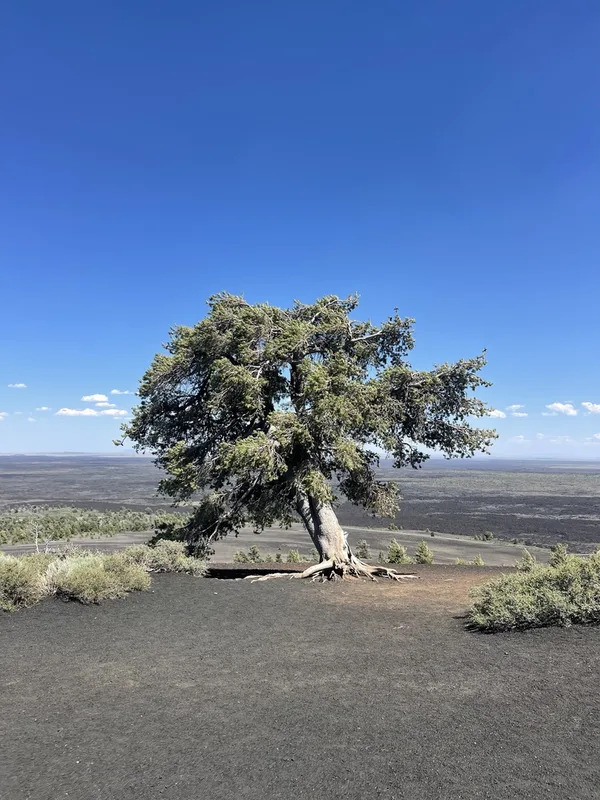
limber pine Pinus flexilis -
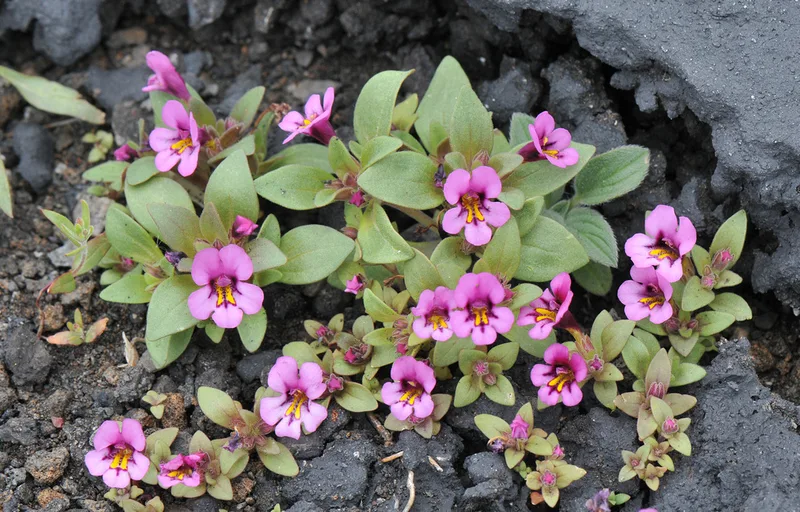
Dwarf Purple Monkeyflower Diplacus nanus -
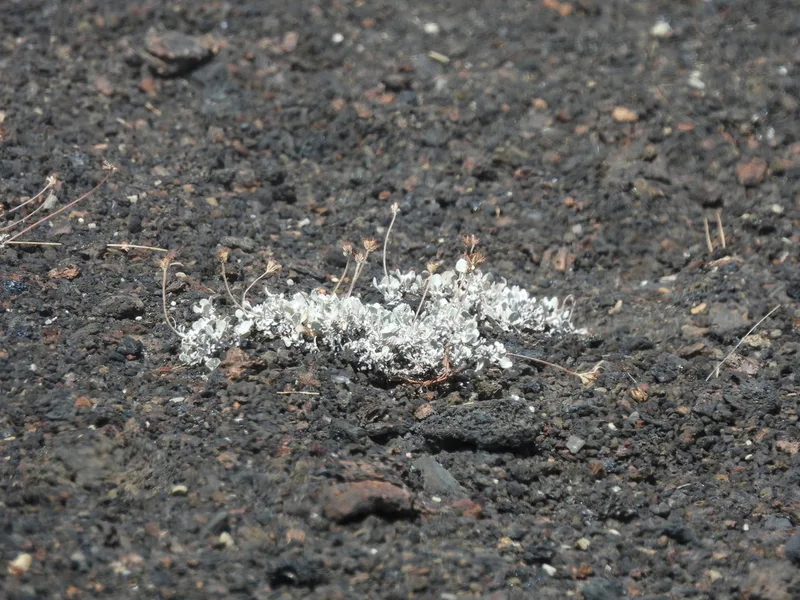
cushion buckwheat Eriogonum ovalifolium -
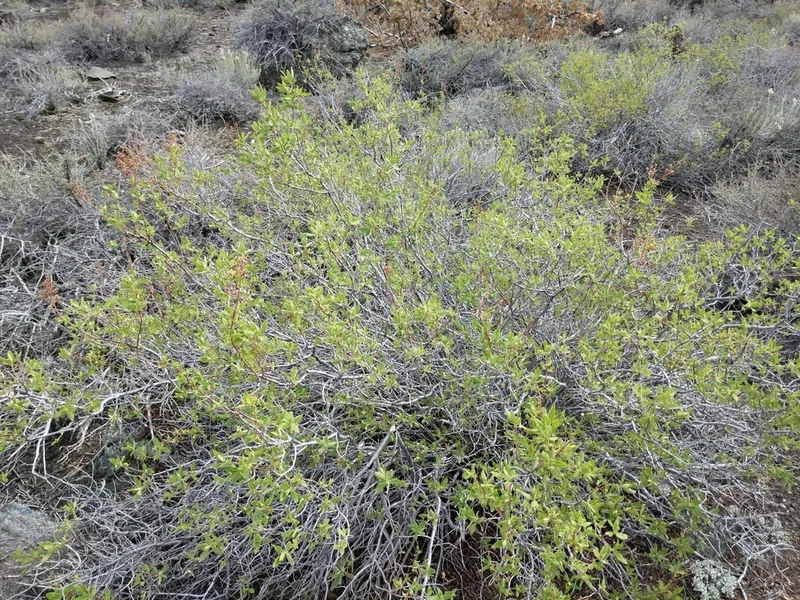
fernbush Chamaebatiaria millefolium -
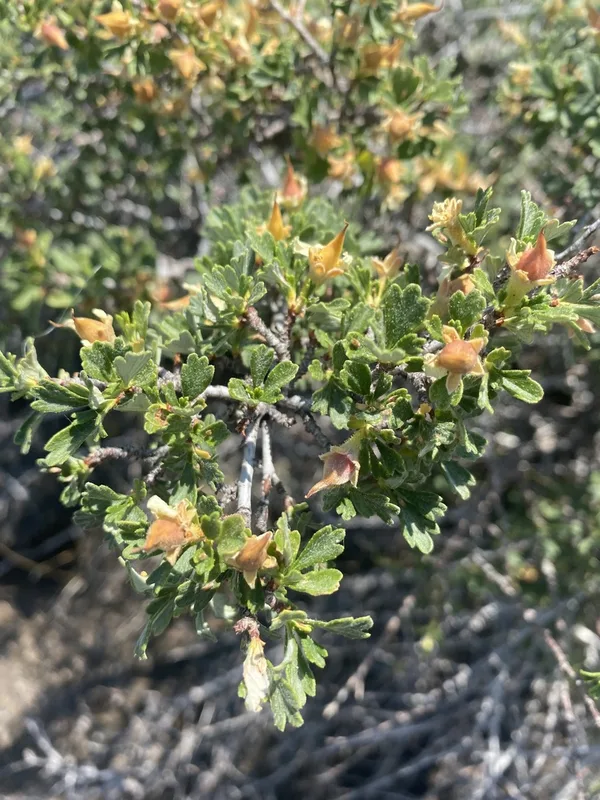
Antelope Bitterbrush Purshia tridentata -
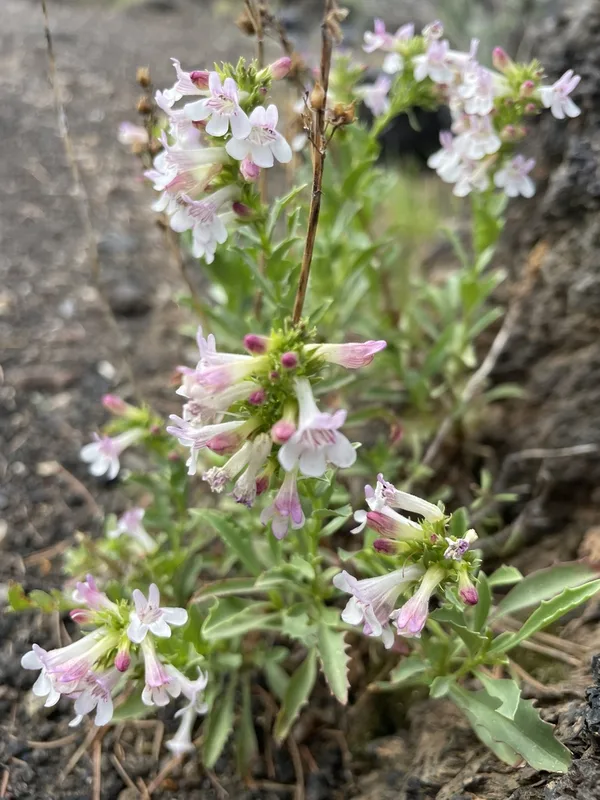
Hot Rock Penstemon Penstemon deustus -
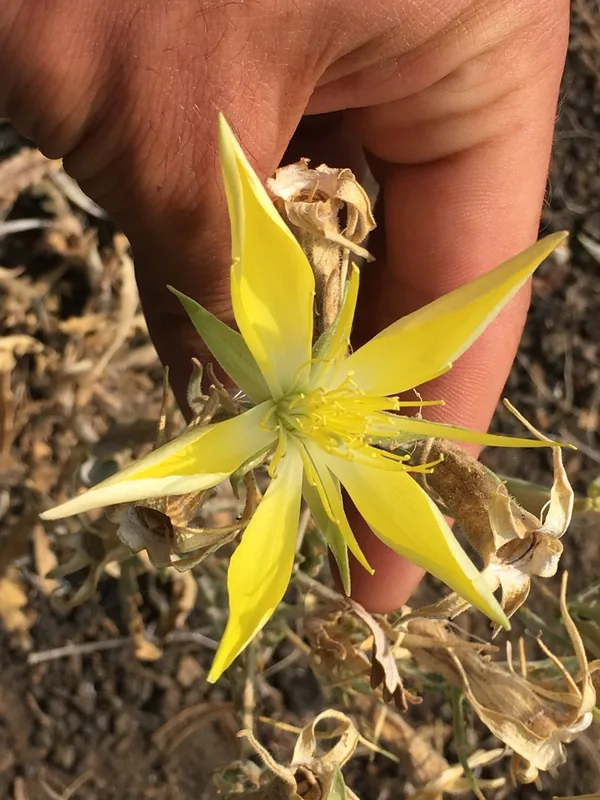
Giant Blazingstar Mentzelia laevicaulis -
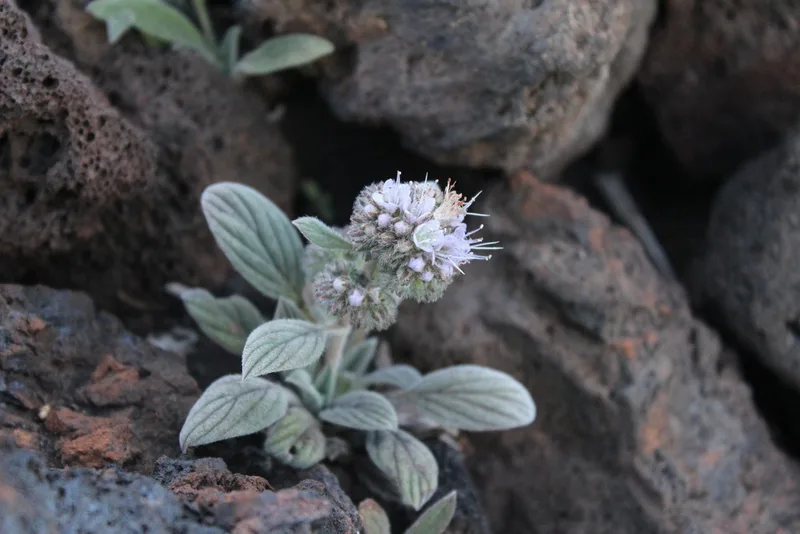
Silverleaf phacelia Phacelia hastata -
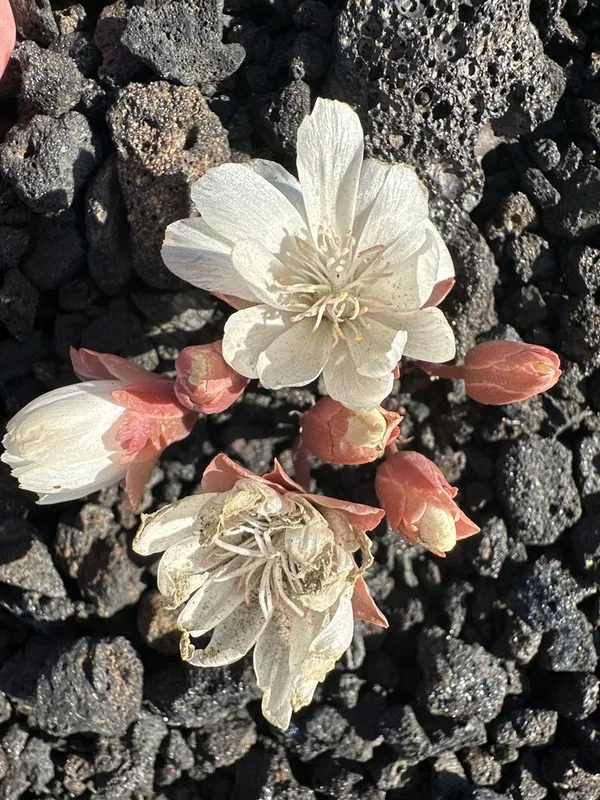
Bitterroot Lewisia rediviva -
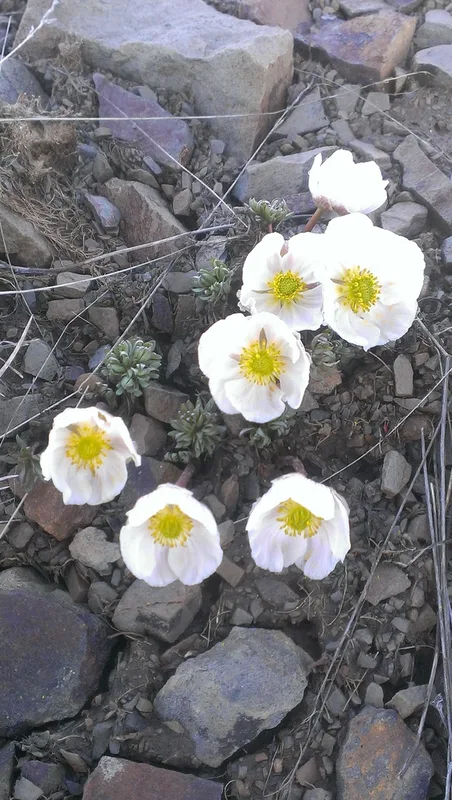
Anderson's buttercup Ranunculus andersonii -
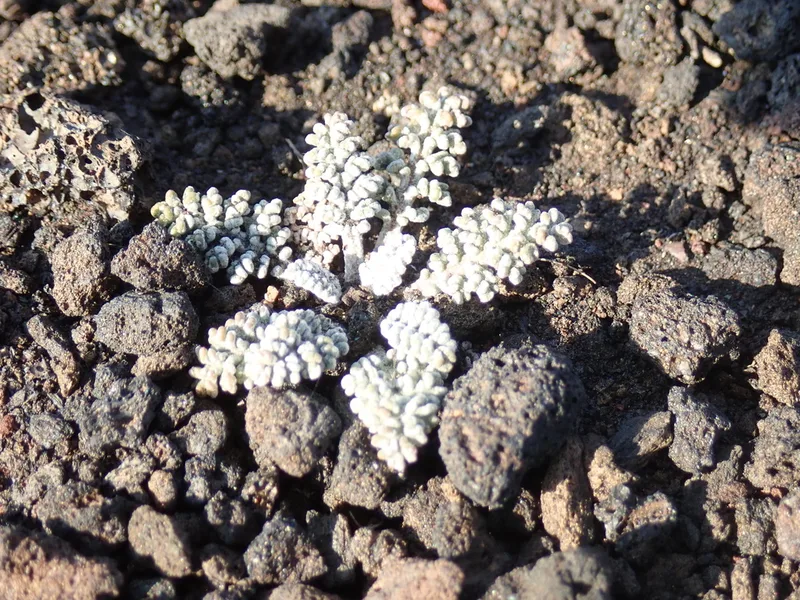
Hoary Pincushion Chaenactis douglasii -
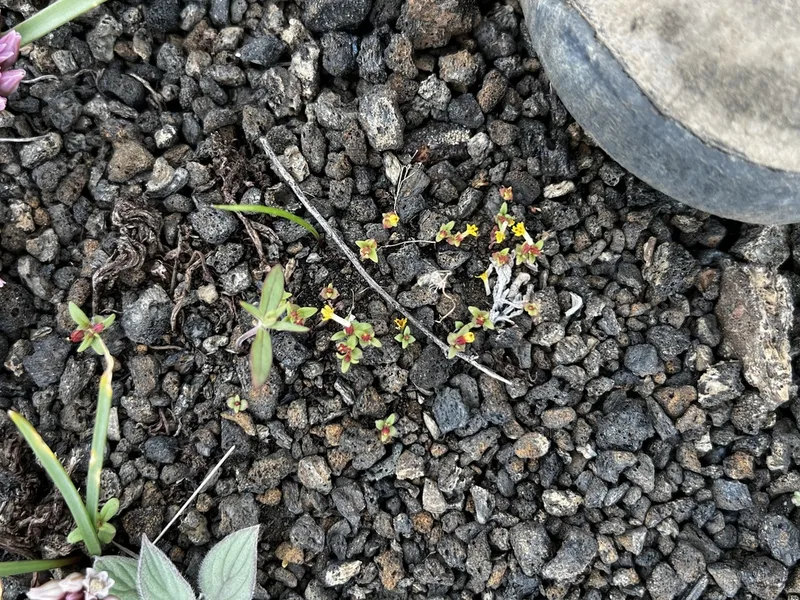
miniature monkeyflower Erythranthe suksdorfii
Field Notes · Night Sky lens · Craters of the Moon National Monument · 43.4050, −113.5061