Arches
Arches National Park · Utah, USA
Bare rock hides nothing here, except the bed of salt below that is quietly prying open every doorway you came to see.
Also seen through Rivers & Canyons · all at Arches National Park →.
Why here
Something under this park is pulling the rock apart, and it is not the wind. Beneath the whole of Arches lies a buried bed of salt, and that salt — not the rivers, not the weather scouring the surface — is the named reason the sandstone overhead has cracked into the greatest concentration of natural arches anywhere, along with the spires, fins, balanced rocks, and worn monoliths standing among them. Salt buried deep does not sit still. Under the weight of all the rock above it, it slowly shifts and swells, and the stiff stone on top can only answer by breaking. Every doorway you will walk toward began as one of those breaks. What makes it all so easy to read is that the desert wears almost nothing here — little soil, few trees, just bare stone in dry air. You look straight at the record, with nothing in the way. Everywhere you go in this park, you are watching rock in the slow act of being taken apart, and learning to read the stages it moves through.
The story
Read from the bottom up, the park keeps its age in order. Deepest and oldest is the salt, left behind when ancient water dried away and then buried under everything you now walk on. Above it came softer ground: in Late Triassic times this was a low country of rivers, floodplains, marshes, and shallow lakes, laying down mud and sand that hardened into rock. More sand piled on top and set into the pale sandstone that now stands in fins and walls across the park. And through all of it, the salt below kept working — the named reason the rock above broke into arches, spires, and balanced rocks. Not the wind alone, not the rivers alone, but that buried layer.
Then life took the bare stone on its own hard terms. Utah juniper grips the cracks, holding green through every season. In the spring warmth, kingcup cactus opens its red cups and pale cliffrose flowers along the ledges. Side-blotched lizards bask on sun-hot rock; ravens ride the updrafts along the cliffs, working the air with barely a wingbeat.
People read this ground too, though the record here is quiet. Down in Courthouse Wash, an old rock-art panel marks where earlier people left their mark on the stone. Beyond that the sources say little of who lived here and what they made of it — so this note stays with the rock and the life, which the bare desert keeps wide open to read.
The sites
The stone still whole
Park Avenue Viewpoint
38.6253, −109.5998
At the south end of the park the road drops into a corridor of tall rock walls that stand close and straight-sided on either hand. This is Courthouse Towers country, where the sandstone has not yet been hollowed into any arch — it still stands in solid slabs and blades, the raw stock every arch in the park is eventually cut from. From the overlook you look straight down the length of the passage, a file of separate towers on one side and a long unbroken wall on the other, both the same bed of rock split by cracks that weather has slowly pried wider. It makes a fitting first stop precisely because nothing here has finished forming. Fix this starting shape in your eye — stone as a solid block — and you will recognize every later stage of the process farther into the park. The walls stand this cleanly only because the country is so dry; in a wetter place, soil and plants would round them off and bury them long before you could read their shapes. Bare rock and desert air are what keep the whole record legible.
From the overlook, look at the foot of the tall walls where broken slabs have piled up. Each came away along a vertical crack, loosened over years by water working into the joint and the freeze of desert nights. Follow one crack from the top of the wall to the bottom, and you can pick out the next slab getting ready to fall.
- AccessDrive-up
- ExertionEasy
- TimeAn hour
Three Gossips
38.6358, −109.6038
A short way along from Park Avenue, three tall columns of sandstone stand shoulder to shoulder on a shared base, leaning together like figures caught in conversation — the shape that earns them their name. They are a single blade of rock that cracks have divided most, but not all, of the way down, so the three still rise from one common foot of stone. That is exactly the in-between stage worth catching here: a solid wall on its way to becoming separate towers, split by joints but not yet fully cut apart. Set them against the finished, freestanding pinnacles nearby and the sequence reads plainly — a wall becomes a fin, a fin splits into a cluster like this, a cluster into lone towers, and in the far fullness of time a tower falls. Because nothing grows to soften them, the cracks doing the dividing stand out clean from top to bottom. The Gossips show the rock caught mid-step, neither quite one thing nor the next, which is what makes them worth reading slowly.
From the pullout, look at where the three columns meet near the ground and see that they share one base of rock. The cracks splitting them run deep but stop short of the bottom — that is why they still stand together as a group. Trace one crack downward and find the point where it dies out into solid stone.
- AccessDrive-up
- ExertionEasy
- TimeAn hour
Tower of Babel
38.6413, −109.6019
Tower of Babel is one of the great standing blocks in the Courthouse Towers group, a broad, sheer-sided mass of sandstone rising in one piece above the desert floor. It earns a stop as the plainest example of where the whole story begins: bare rock still whole, a thick slab that cracks have only outlined and not yet cut through. Where the arches farther on show stone with its middle gone, this shows stone with almost nothing yet taken away — the full block, before the long work of breaking has made much headway. Walk your eye up its flanks and take in how much rock is standing here in a single unbroken piece, the raw material the park spends the rest of its time patiently dismantling. Reading it beside the thin fins and open doorways elsewhere, you can place it right at the head of the line: the most rock, the fewest cracks, the least undone. It is the before-picture for everything else you will see.
From the road, look at the sheer sides of the tower and search out the deep vertical cracks running down its faces. Those joints are where the block will one day come apart into separate towers. Find the widest crack and picture the slab it will eventually free from the mass.
- AccessDrive-up
- ExertionEasy
- TimeAn hour
The salt underneath
Salt Valley Overlook
38.7402, −109.5710
This overlook takes in Salt Valley, the broad, low basin that carries the name of the salt buried beneath the whole park. That hidden bed of salt is the reason Arches has arches at all — it is the named cause behind the fins, spires, balanced rocks, and doorways scattered across this country. You cannot see the salt from here; it lies deep underground, out of every sightline. But standing at this rail, looking across the basin that bears its name, you are about as near as the surface ever brings you to the buried engine of the entire place. Everything dramatic that stands above ground — every arch you will walk out to, every balanced rock and leaning tower — traces back down to this one unseen layer, slowly working the stiff stone above it apart. It is worth a few quiet minutes simply to hold in mind that the most important thing in the park is the one thing you cannot lay eyes on.
From the overlook, take in the full width of the low basin below and set it against the fins and rock walls standing along its rim. The valley is named for the salt buried beneath the park — the same salt the story of every arch here begins with. Fix the scale of the basin in your mind before you go on, and the scattered arches start to read as one connected thing.
- AccessDrive-up
- ExertionEasy
- TimeAn hour
Petrified Dunes Viewpoint
38.6825, −109.5826
The name says exactly what you are looking at: a rolling field of rounded, humped sandstone that was once a landscape of loose sand dunes, now set hard as stone. Where the towers and arches catch the rock in the act of being taken apart, the petrified dunes hold an earlier chapter — bare stone that still keeps the shape of the drifting sand it used to be. The smooth backs and shallow scoops spreading out below the viewpoint are old dune forms, hardened in place and frozen mid-drift. It is one of the plainest reminders in the whole park that this immovable rock, the same rock standing overhead in every arch, began as something as soft and restless as a beach. Look at it long enough and the solid ground starts to feel temporary — a slow snapshot of sand caught partway through a much longer story, on its way to becoming the next generation of fins and doorways. The desert dryness is what leaves it bare enough to read at all.
From the pullout, look across the low humps of pale rock and read them as dunes: rounded crests with shallow hollows scooped between them. This stone was wind-piled sand before it hardened. Trace the curve of one hump against the sky, and you are following the outline of a dune that simply stopped moving and turned to rock.
- AccessDrive-up
- ExertionEasy
- TimeAn hour
Where the doorways open
Fiery Furnace Viewpoint
38.7423, −109.5647
From this overlook you look across the Fiery Furnace, a close-packed maze of narrow sandstone canyons, tall thin fins, and hidden arches near the heart of the park. It is the single best place to see the middle of the arch-making process at full density — not one fin standing alone, but rank after rank crowded together, each a blade of rock that cracks have cut nearly free. Where a lone tower shows one step of the story, the Furnace shows the whole workshop at once: rock sliced into parallel walls so thin that here and there a doorway has already opened straight through one. The fins line up in rows because they follow the pattern of cracks running through the rock, and the desert dryness keeps every one of them sharp-edged and legible. From a distance it reads as chaos; give it a minute and the order underneath — row after row of thinning stone — comes clear. This is the process at its busiest, all its stages standing side by side.
From the viewpoint, look past the first ridge into the maze of narrow rock walls behind it and notice how the fins run roughly parallel, like a set of blades stood on edge. They line up that way because they follow cracks that all run the same direction through the rock. Scan along their tops for a gap where one fin has already worn through into an opening.
- AccessDrive-up
- ExertionEasy
- TimeAn hour
The Windows Trailhead
38.6871, −109.5366
A short, easy trail climbs to a cluster of large arches set high in a single wall of rock — openings big enough to walk toward and stand beneath. This is the clearest place in the park to grasp an arch as a simple thing: a thick wall of sandstone with its middle gone and its two ends still holding. Here the openings are large and close at hand, so you can watch how the rock arcs over the empty gap, carrying its own weight the way a stone bridge carries a road. Because several arches sit in the same run of wall, you can set them side by side — one barely begun, another blown wide open — and read the whole life of an arch without walking more than a few minutes. It makes the best early stop among the doorways: come here first, and the bigger, farther-out arches make immediate sense as the same thing seen at a later stage. Everything you learned from the standing towers now has its ending in view.
Walk up to one of the large openings and stand directly underneath it. Look at how the rock curves across the top — thickest down at the sides, thinnest overhead. That curve is what holds the arch up: the weight of the stone presses along the arc and down into the standing legs on either side. Then find a smaller opening nearby and put the two in order, least open to most.
- AccessShort walk
- ExertionEasy
- TimeAn hour
Double Arch Trailhead
38.6883, −109.5384
A short walk from the Windows road reaches Double Arch, two great spans of rock springing from one shared base and arcing away in different directions. It is worth the stop for sheer scale more than anything: standing underneath, you get the clearest sense anywhere in the park of how much stone is bridged overhead, and how little of it actually reaches the ground. The two openings growing from a single foundation also make a quiet point worth carrying through the rest of a visit — that an arch here is no one-off freak of the rock, but the ordinary outcome of a process the whole park is running, over and over, wherever the sandstone stands thick enough and is cracked in the right way. Seeing two spans grow from one root makes the place feel less like a scatter of oddities and more like a single thing at work, patiently, on every wall at once. Stand here a while and the whole park reorganizes itself in your mind around that one idea.
Stand beneath the point where the two spans rise from their shared base and look straight up. Notice that both openings arc away from each other out of one root of rock. Follow each span out to where it comes back down to the ground, then back to the middle — one connected piece of stone, opened twice over.
- AccessShort walk
- ExertionEasy
- TimeAn hour
Upper Delicate Arch Viewpoint
38.7377, −109.5018
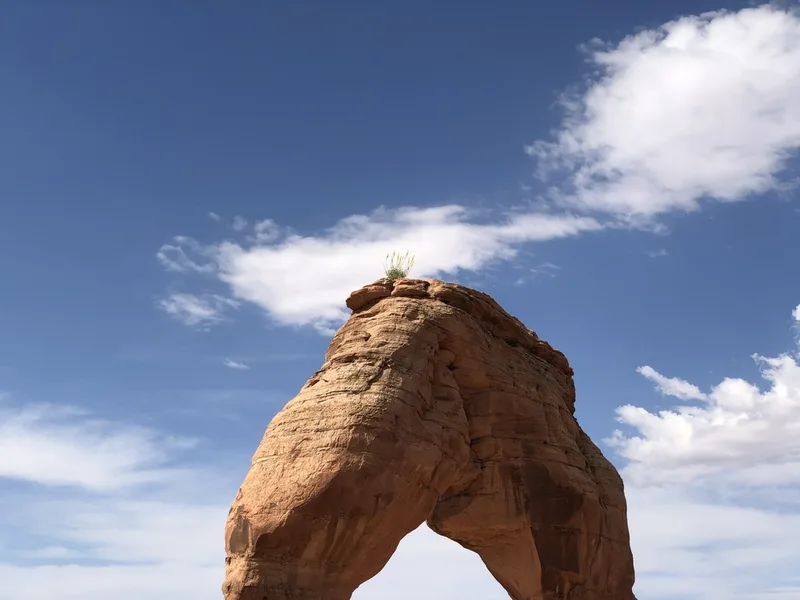
Delicate Arch is the best-known shape in the park, a freestanding arch out on an open slope of bare sandstone. The upper viewpoint asks for a short but steeper climb than the lower pullout, and pays it back with a cleaner line of sight across the canyon to the arch itself. What makes it worth the extra effort is that this arch stands completely alone — not set into a wall like the Windows openings, but out on open rock with sky showing on every side. It is a fin worn down to almost nothing but the doorway itself: two slender legs and a thin loop of stone over the top, the very last stage before an arch finally comes down. Seeing it after the Windows and Double Arch, you can place it at the far end of the sequence you have been reading all day — the wall long gone, the fin nearly gone, only the opening left standing, for now. It is the whole story’s closing line, out on open rock where nothing hides it.
From the upper viewpoint, look across the canyon to the freestanding arch and notice it is joined to nothing around it. Trace how thin the stone has worn at the top of the loop against how much thicker the two legs still are. That thinning is the arch’s whole future in a single glance — openings like this widen with time until, some year, the span finally gives way.
- AccessShort walk
- ExertionModerate
- TimeAn hour
When it's best
Spring is when this dry country stirs. As the cold eases, side-blotched lizards come back out onto the warm rock, and the desert flowers follow close behind — kingcup cactus in its red cups, plains pricklypear, and pale cliffrose coloring up in the same short weeks, usually best once the first real warmth settles in. Come in the cooler months if you can; the bare rock soaks up heat, and by high summer the middle of the day is hard going with no shade to find. Ravens work the cliffs the year around, and the junipers stay green whatever the season. Nights run cold well into spring, so carry more layer than the daytime sun suggests.
Go deeper
The names behind what you saw. The pale rock you walk on is sandstone; the older, softer layers beneath it belong to the Chinle Formation, laid down in Late Triassic rivers, floodplains, and marshes. The whole park sits over the Paradox Basin, a deep column of rock that still holds a buried bed of salt — halite, an evaporite left behind when ancient water dried away — the layer that drives the arches. The gray-green tree rooted in the cracks is Utah juniper, Juniperus osteosperma. The small lizard on the warm rock is the common side-blotched lizard, Uta stansburiana. The red spring cactus is kingcup cactus, Echinocereus triglochidiatus; the pale, five-petaled shrub is Stansbury’s cliffrose, Purshia stansburyana; the low, spiny pads are plains pricklypear, Opuntia polyacantha. The big black bird riding the cliff air is the common raven, Corvus corax.
To read next. A search for further reading on this park came back thin — most of the “arch” references it surfaced concern unrelated geologic arches elsewhere in the world — so a single title stands out as genuinely on point:
- The geologic story of Arches National Park (USGS, 1975) — the park’s own geologic biography, written about this exact ground; the place to go for how the salt and the sandstone together made everything you saw.
The names behind what you saw
What lives here, and what it's called. Photographs from open collections — an aid to identification, not decoration.
-
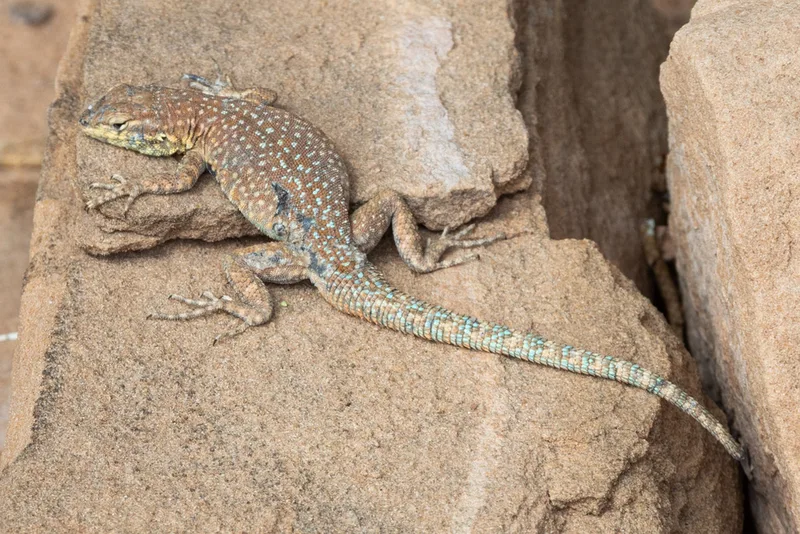
Common Side-blotched Lizard Uta stansburiana -
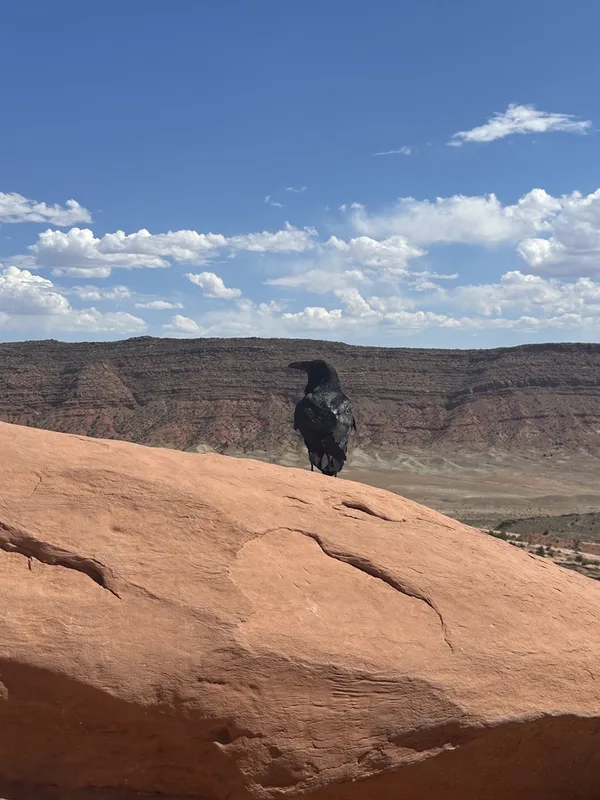
Common Raven Corvus corax -
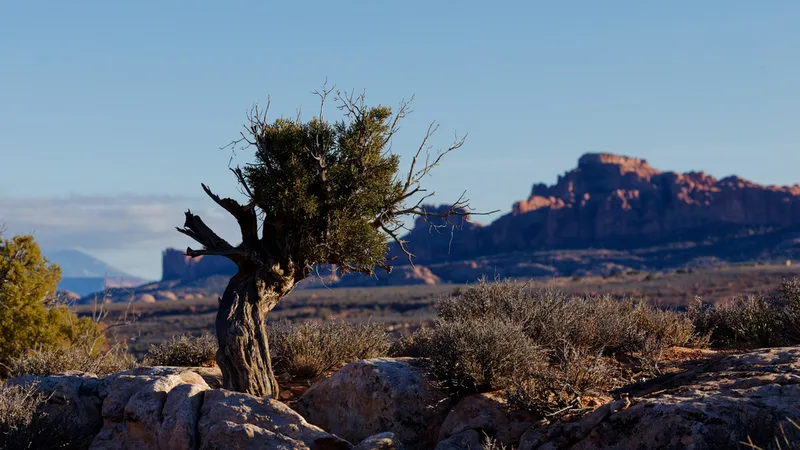
Utah Juniper Juniperus osteosperma -
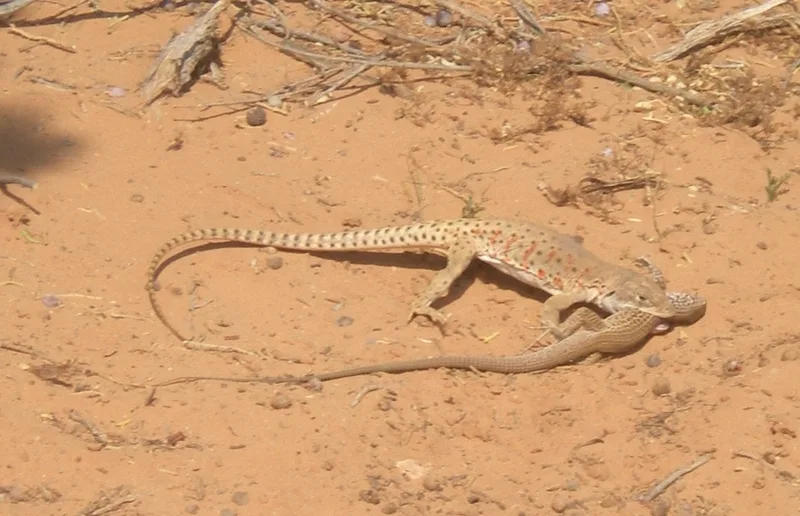
Western Whiptail Aspidoscelis tigris -
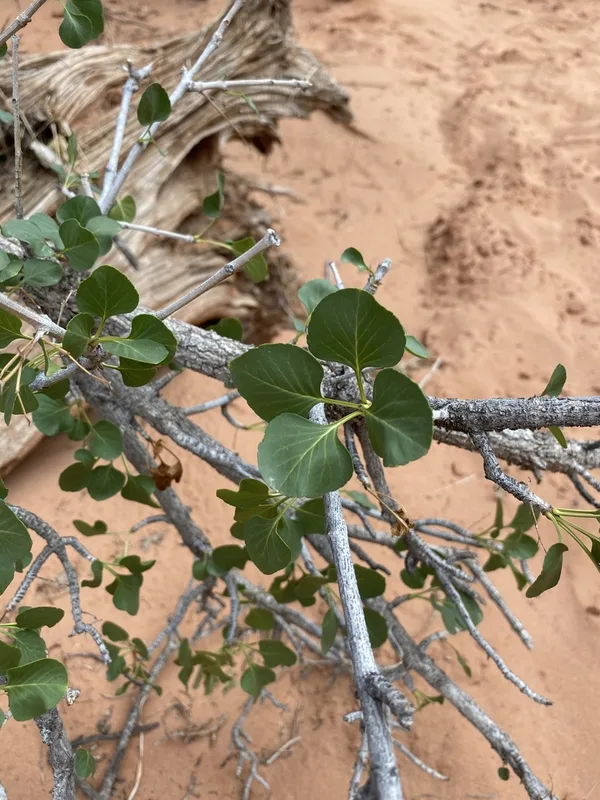
single-leaf ash Fraxinus anomala -
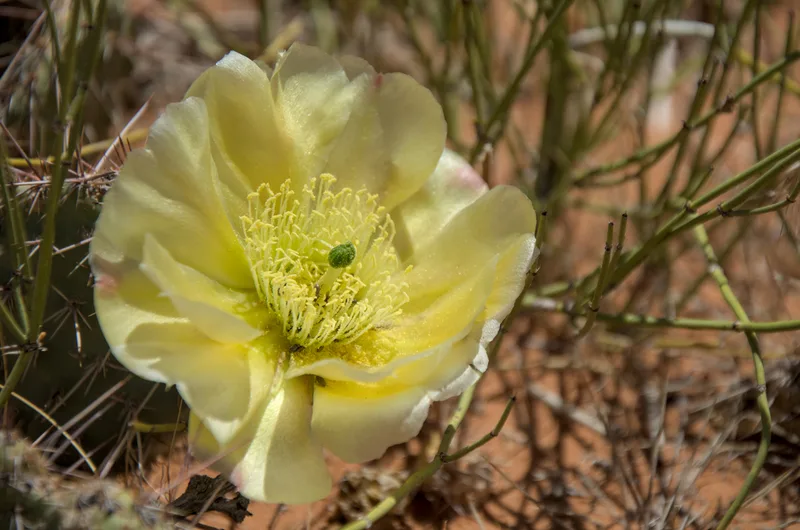
Plains Pricklypear Opuntia polyacantha -
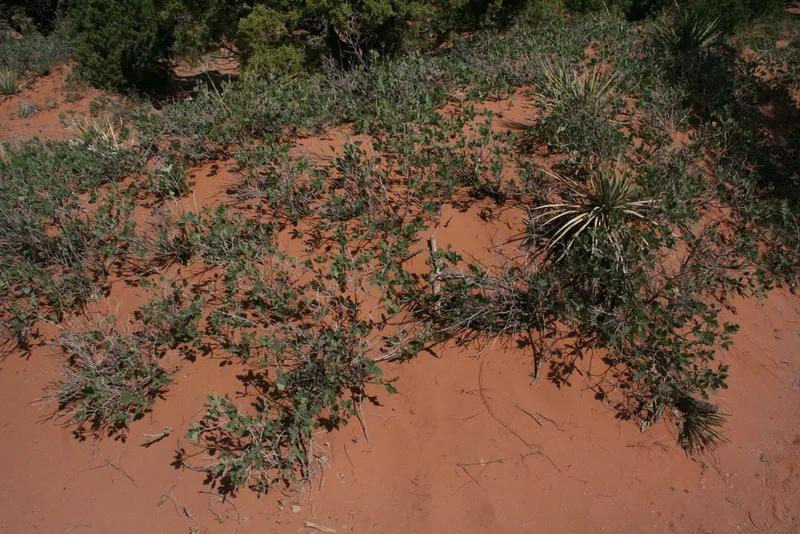
Tucker Oak Quercus welshii -
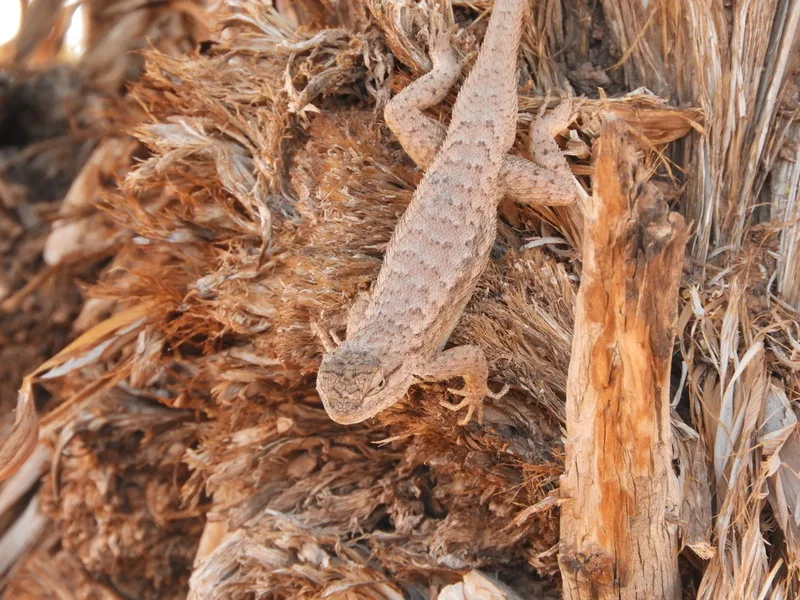
Plateau Fence Lizard Sceloporus tristichus -
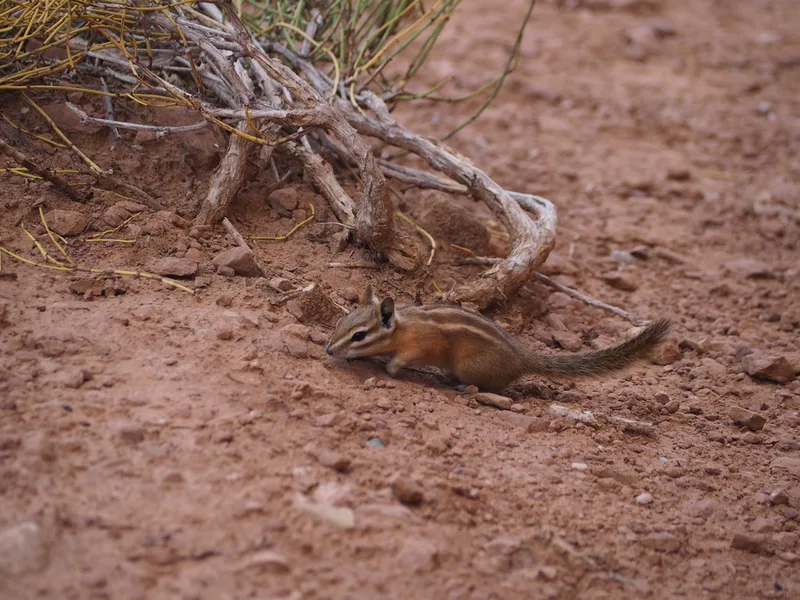
Hopi Chipmunk Neotamias rufus -
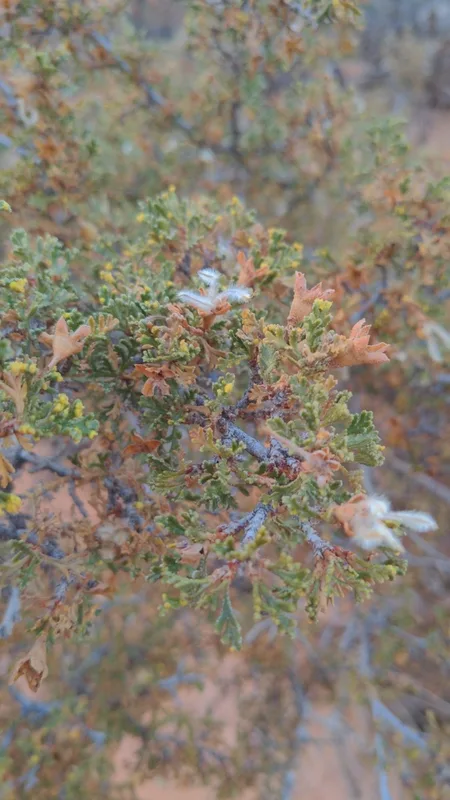
Stansbury's Cliffrose Purshia stansburyana -
Desert Prince's Plume Stanleya pinnata -
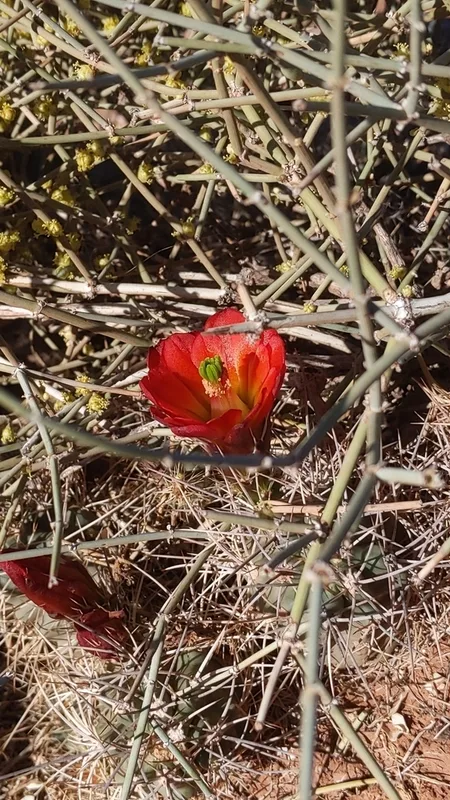
Kingcup Cactus Echinocereus triglochidiatus
Field Notes · Desert & Deep Time lens · Arches National Park · 38.7265, −109.5630