White Sands
White Sands National Park · New Mexico, USA
The desert can be bright enough to hide the fact that it is moving.
Why here
White Sands is a desert made from a mineral that usually disappears into rock. Here gypsum stays loose, bright, and mobile, forming dunes that travel across the basin while plants and animals find ways to live on them. The white surface changes the light, but its real lesson is material. A dune is not a fixed hill. Wind moves it, interdunes collect water and shelter, and roots slow the sand just long enough for life to take hold. Walk from the playa to the dune trail and watch the ground change from open mineral surface to living desert. The white is only the beginning of the story.
The sites
The moving mineral
Playa
32.7970, −106.2118
The playa is the open beginning of the white-sand story. Water and sediment gather here before wind takes the gypsum onward into dunes. The surface can look empty, but its emptiness is part of the process. A broad flat makes the material visible before it becomes a ridge. Stand at the edge and look toward the first dunes, following the route from basin to moving sand.
Find the flattest ground and trace the direction toward the dunes. Wind carries loose mineral material from the open basin into the ridges beyond.
- AccessShort walk
- ExertionEasy
- TimeAn hour
White Sands
32.8333, −106.3041
White Sands is the dune field at full scale. Ridges overlap, crests sharpen in wind, and the same material appears as slope, hollow, and broad plain. Walk slowly enough to see the surface change under your feet. The dunes move, but not all parts move equally. Windward faces stay bare; sheltered hollows hold moisture and seeds. This is a landscape where a small difference in position creates a different habitat.
Compare a bare crest with a plant-covered hollow. The hollow traps moisture and slows the sand, giving roots a chance to hold.
- AccessShort walk
- ExertionModerate
- TimeHalf a day
Life on the dunes
Dune Life Natural Trail
32.7936, −106.2126
The Dune Life Natural Trail shows how plants turn moving sand into ground. Soaptree yucca reaches above the surface, while purple sand verbena occupies places where moisture and shelter last a little longer. The plants do not stop the dunes entirely. They create small islands of stability inside a moving field. Look for the boundary around each plant, where wind piles sand on one side and removes it on the other.
Study the sand around a yucca without disturbing it. The plant changes the wind at ground level, creating a small sheltered slope where other life can gather.
- AccessShort walk
- ExertionEasy
- TimeAn hour
Interdune
32.7953, −106.2388
An interdune is the low country between moving ridges. It receives a different balance of wind, water, and shade, so it can carry life that the crests cannot. Walk the low ground and then climb one side of a dune. The change in elevation is small, but the conditions change immediately. White Sands is a system of these small differences, repeated across a bright landscape.
Look for darker or more compact ground in the interdune. It holds moisture longer than the crest and gives plants a better place to root.
- AccessShort walk
- ExertionEasy
- TimeAn hour
A desert without a fixed floor
Backcountry Camping
32.8062, −106.2754
The backcountry site is a place to watch the dunes after the day has cooled. Without the glare, the ridges become a study in shadow and direction. Wind continues to move the surface, while plants mark the places where sand has slowed enough for a living foothold. Stay with one dune rather than trying to name the whole field. Its changes through evening show how much of the landscape is made by light on moving material.
Watch one ridge through the changing light. Notice which face darkens first; its shape and direction reveal how the wind has built it.
- AccessShort walk
- ExertionModerate
- TimeHalf a day
When it's best
Cooler seasons are easiest for crossing the open dunes, while spring can bring flowers around the interdunes. Summer heat is strongest on the bright surface, and the lack of shade matters. Wind can erase tracks and reshape a ridge during the same visit. Early and late light make the dune forms easier to read, but the material remains legible in any season.
Go deeper
The names behind what you saw. The regional geology includes Cenozoic sedimentary rocks. Soaptree yucca, Yucca elata, and purple sand verbena, Abronia angustifolia, occupy the dune system.
To read next. - The monument’s geology material — for gypsum, playa, and dune movement. - The dune ecology material — for how plants stabilize moving sand and create shelter.
The names behind what you saw
What lives here, and what it's called. Photographs from open collections — an aid to identification, not decoration.
-
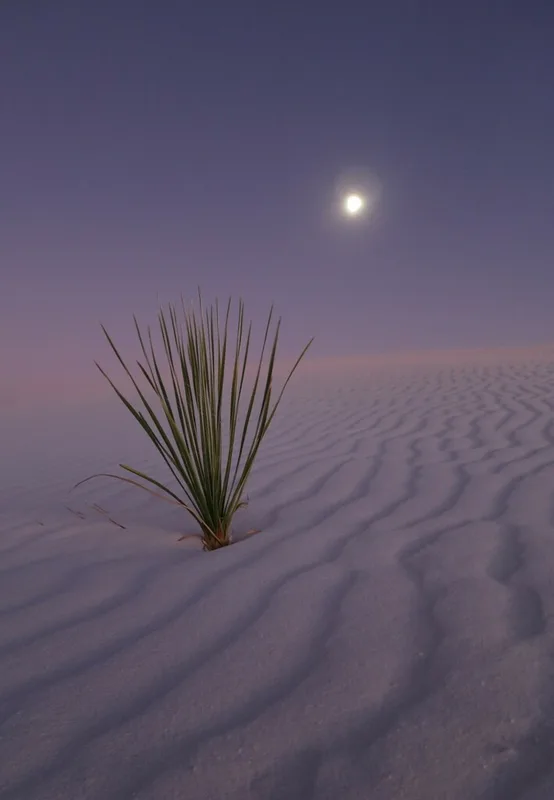
soaptree yucca Yucca elata -
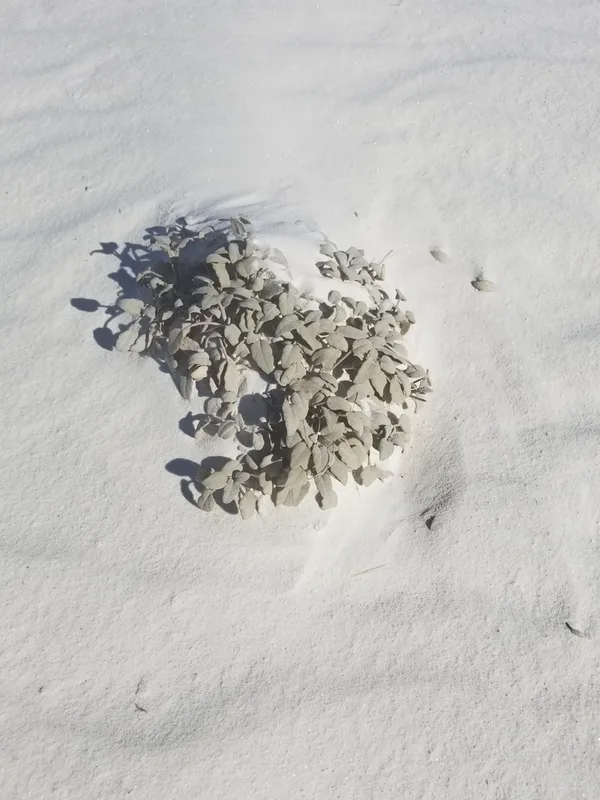
purple sand verbena Abronia angustifolia -
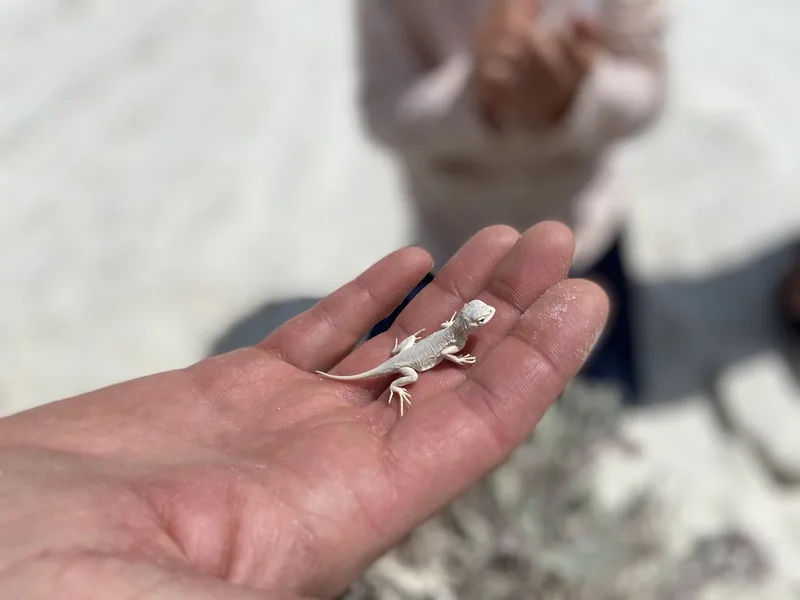
Western Earless Lizard Holbrookia maculata -
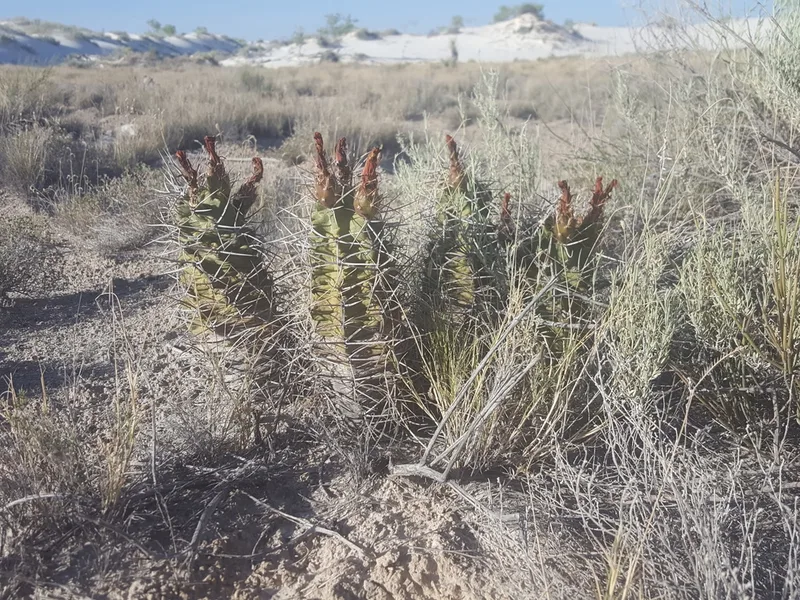
Kingcup Cactus Echinocereus triglochidiatus -
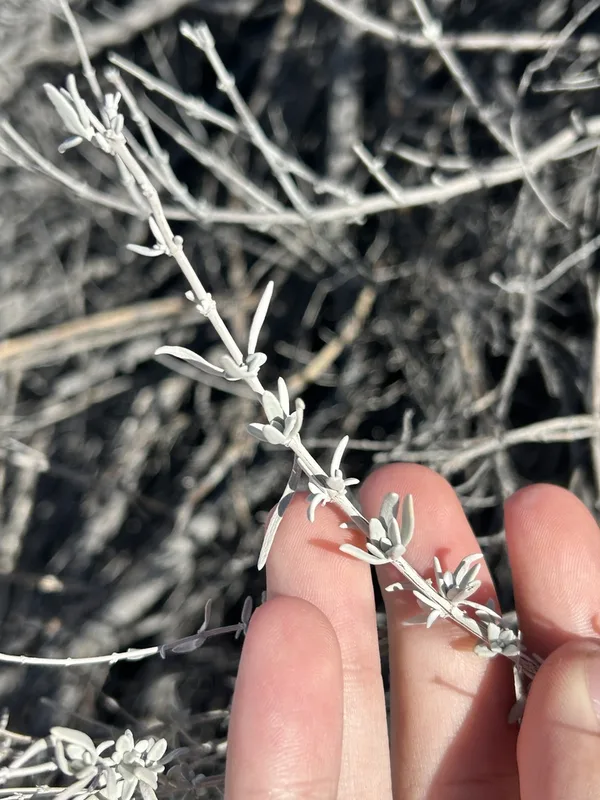
Frosted Mint Poliomintha incana -
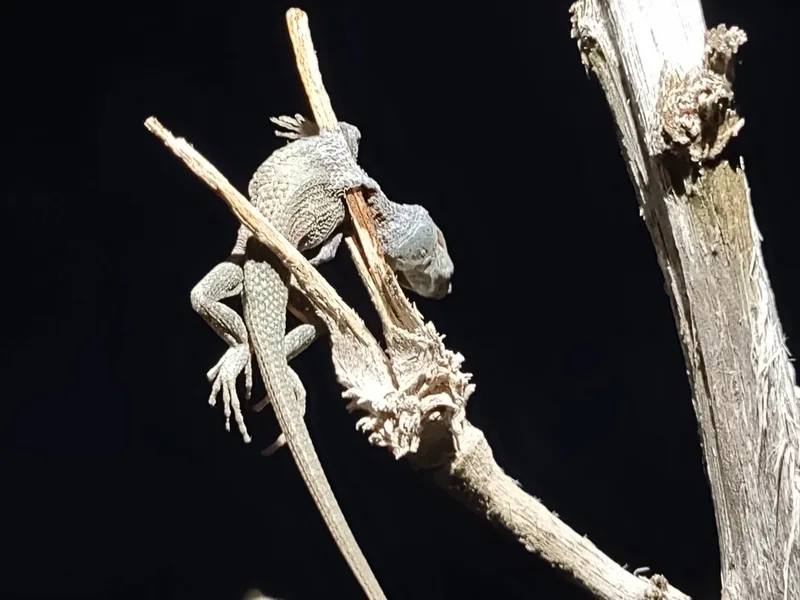
Southwestern Fence Lizard Sceloporus cowlesi -
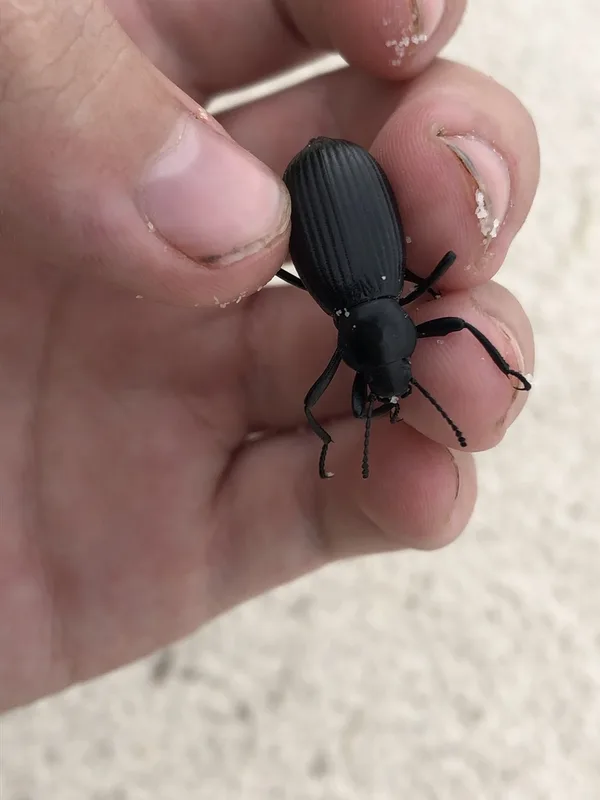
Rough-lipped Darkling Beetle Eleodes hispilabris -
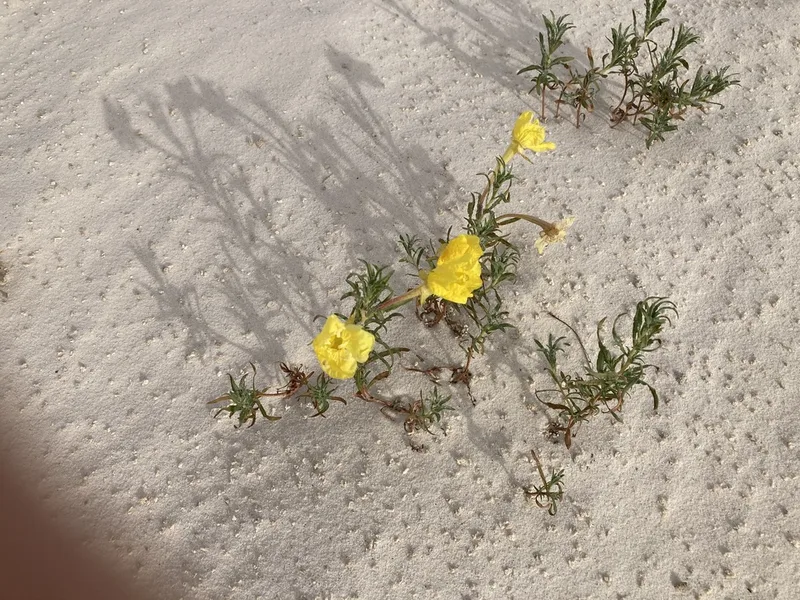
Hartweg's Sundrops Oenothera hartwegii -
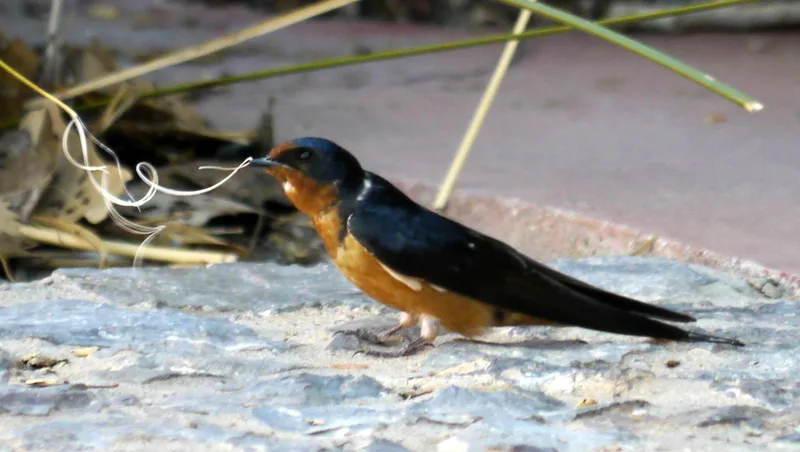
Barn Swallow Hirundo rustica -
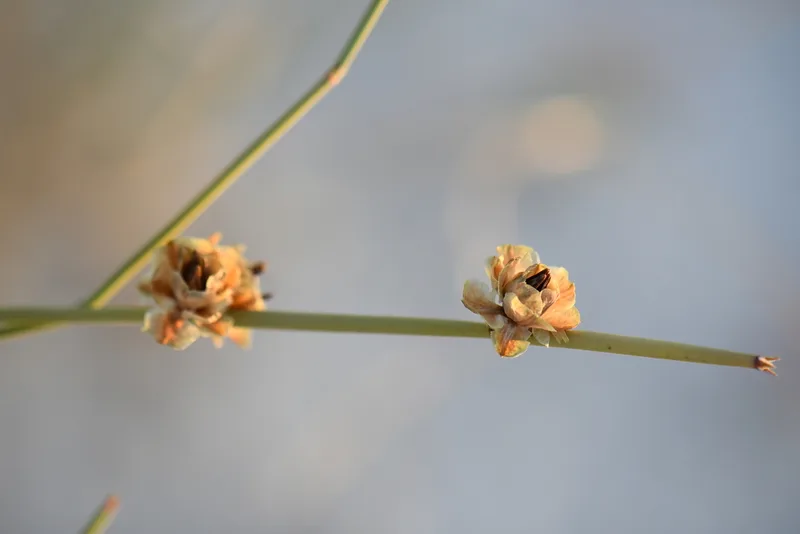
Torrey's Jointfir Ephedra torreyana -
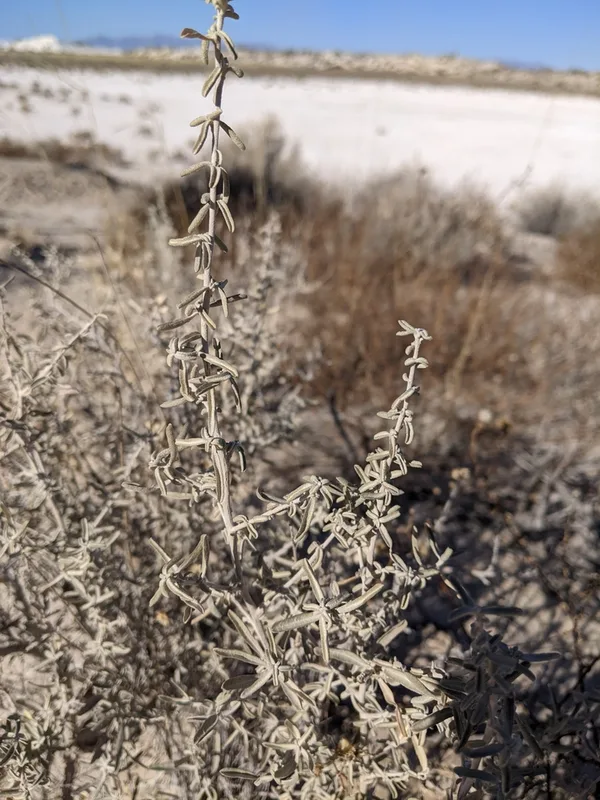
Fourwing Saltbush Atriplex canescens -
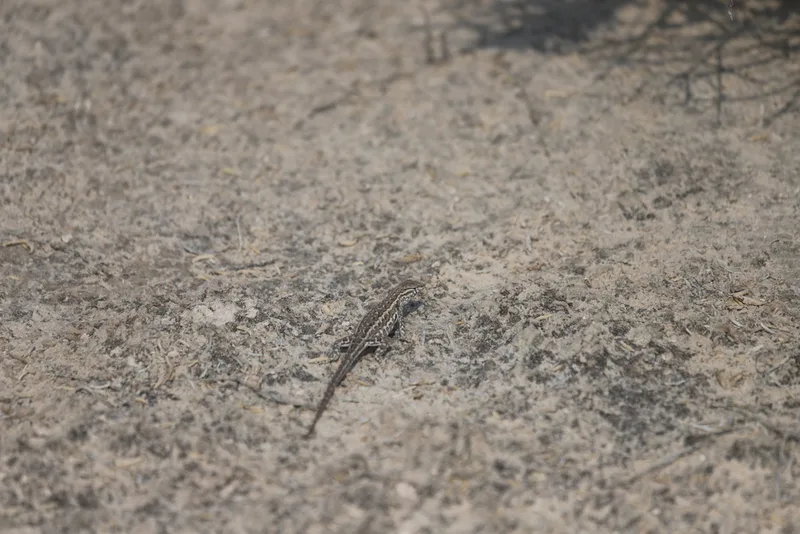
Common Side-blotched Lizard Uta stansburiana
Field Notes · Desert & Deep Time lens · White Sands National Park · 32.7642, −106.3312