The Tatacoa Desert
The Tatacoa Desert · Huila, Colombia
Here the ground gave up its plants a long time ago, and the sky moved in to fill the empty space.
Why here
Stand in the Tatacoa Desert after dark and the first thing you notice is what’s missing. No canopy overhead, no line of hills close enough to eat into the horizon, no haze thick enough to soften the stars into an average glow — just an open bowl of sky that starts at your boots and runs unbroken to the edge of vision. That absence is not an accident. This is some of the driest, most stripped-down ground in the region, worn down over a very long stretch of time until almost nothing was left standing between the ground and the sky above it. Deserts are usually described by what they lack: water, shade, cover. Here, that same lack turns out to be the whole point after sunset. The same bareness that makes the daytime badlands look almost lunar is what leaves the night sky so completely uninterrupted. Every site worth visiting after dark in this desert earns its place the same way — not by adding anything to the view, but by getting out of the sky’s way and simply letting you look up.
The story
The ground here is old and was built slowly, then taken apart slowly. Layers of sand, clay, and gravel settled here over millions of years, one thin bed on top of the last, eventually resting on even older rock beneath. Then the water that laid it down mostly left, and what water still arrives — hard, occasional rain rather than steady rain — has spent a long stretch of time doing the opposite job, cutting the soft layers back into the maze of ridges, spires, and bare clay basins visible today. Very little grows in ground worn down this far. What does hold on tends to be tough and deep-rooted: squat barrel cacti and taller columnar ones, built to store what little water passes through and shrug off the rest. People, in turn, have settled lightly on land like this. The nearby town sits on the banks of the river rather than out in the driest ground, and the desert itself has stayed largely open — too dry to farm, too little settled to light up. Land stripped bare, life that asks for almost nothing, people who left the middle of it alone: three separate reasons, stacked on top of each other, for why the sky here still gets to be the main event.
The sites
Reading the ground
Estación basaltica
3.2321, −75.1678
Before the sky takes over, spend a few minutes reading the ground. This information stop sits among low rises of dark, weathered rock, cut through by paler bands of clay and sand — the exposed edge of layers that have been building and eroding here for millions of years. During the day the colors compete for attention: rust, ash, buff, all stacked and folded by water that has long since moved on. At dusk, though, the same rock does something else. It holds the last of the day’s heat and gives it back slowly, so the ground stays warm even as the air above starts to cool — one small reason a clear desert night here rarely feels as cold as a place with almost no cover overhead might suggest. Use this stop as a hinge point: read what the sign has to say about the rock while there’s still enough light to see it, then let your eyes adjust as the color drains out of the ground and the first stars start to compete with it instead.
Stand at the board while there is still color in the rock, then stay as dusk falls. Watch the ground lose its color before the sky does — the last warm hues fade off the stone minutes before the first stars appear overhead.
- AccessShort walk
- ExertionEasy
- TimeAn hour
Mirador desierto rojo
3.2328, −75.1712
This viewpoint looks out over the desert’s red side, ochre badlands scoured down to bare clay and sandstone by rain that falls hard and rare rather than often and light. During the day the color is the whole story: warm red-orange ridges, gullies, and knife-edge ridgelines with almost nothing green to interrupt them. After sunset the same bareness becomes an advantage. There is no canopy here, no ridge of hills close enough to eat into the horizon — just an open bowl of sky that starts at your boots and doesn’t stop until it reaches the mountains at the edge of vision. The eroded shapes below turn to silhouette fast, dark cutouts against a sky that keeps getting darker and busier the longer you wait. Give your eyes real time to adjust — the desert rewards patience here more than any equipment. Faint structure that looked like nothing at first, a soft band or a smudge of light, tends to resolve the longer you sit still and let the red rock disappear into black.
Pick one ridge on the skyline and watch it turn from red rock to plain silhouette as the light drops. Once it’s fully dark, notice how much more sky is visible here than at a place with trees or buildings nearby — nothing but that one line of eroded ridge stands between you and the horizon.
- AccessShort walk
- ExertionEasy
- TimeAn hour
Desierto erosionado
3.2331, −75.1695
The name here is blunt: eroded desert. What you’re standing over used to be a thicker stack of the same red clay and sandstone seen elsewhere in the badlands, worn down over a long stretch of time by rain that comes hard and occasional rather than steady. What’s left is a maze of narrow ridges, spires, and channels, cut low enough that almost nothing blocks the view straight up. In daylight the erosion is the whole draw — a landscape carved by water in a place that mostly doesn’t have any. After dark it does something quieter: every spire and hoodoo becomes a fixed dark shape you can use to gauge how the sky moves. Track one shape against the stars for even twenty minutes and you’ll notice the sky sliding past it — not the shape moving, but everything behind it turning slowly around a point you can’t quite see from here. That’s the plainest, lowest-tech way there is to feel the planet under you actually rotating.
Choose one spire or ridge silhouette against the sky and hold your phone or a fixed post next to it as a reference. Come back to the same spot every twenty minutes or so and watch how far the stars near your marker have shifted — a plain, patient way to see the sky’s rotation for yourself.
- AccessShort walk
- ExertionEasy
- TimeAn hour
Los Hoyos - Desierto Gris
3.2361, −75.1174
Where the red desert runs out, a grayer badlands begins — the desert’s other color, pale ash and clay instead of rust and ochre. It is the same story of old sediment stripped bare by weather, just lighter in tone, and that lighter tone matters after dark. Pale ground reflects what little light there is far better than dark rock does, so on a moonlit night the whole basin here seems to glow faintly from below as much as it’s lit from above, and even on a moonless night your eyes adjust to the ground faster than they would somewhere darker underfoot. It’s a small, easy thing to test for yourself: stand still after your eyes have adjusted and notice how much of the ground you can still make out by starlight alone, texture and slope more than color. The gray desert is quieter than its red counterpart, fewer sharp ridgelines, more open basin, which makes it an easier, gentler place to simply sit and let the sky do the work without the ground competing for attention.
After your eyes have adjusted to the dark, look down at the pale ground instead of up. Notice how much of its shape and texture you can still make out by starlight alone — this lighter-colored basin holds and returns what little light there is better than the darker red badlands do.
- AccessShort walk
- ExertionEasy
- TimeAn hour
Where the horizon opens
Mirador Ventana
3.2244, −75.1304
Ventana means window, and this viewpoint is named for a gap in the rock that frames whatever lies beyond it — by day, that’s a slice of badland and open sky; after dark, it becomes something closer to a keyhole on the whole night. A window narrows your view on purpose, and that’s useful here: instead of the full, slightly overwhelming spread of stars from a wide-open viewpoint, you get one deliberate slice of sky to actually study. Whatever sits inside the frame changes through the night and through the year, since the sky itself turns and the seasons carry different stars overhead at different times. Come back to the same window months apart, and you’re looking at a genuinely different sky, not just a repeat of the last visit. It’s a small, natural reminder that the night sky is not a fixed backdrop but something that changes on its own schedule, whether or not anyone is standing here to notice.
Frame the sky through the window in the rock rather than looking at the whole horizon. Note what sits inside that frame right now — a particular star, a stretch of open dark, or nothing at all — so a return visit lets you notice what’s shifted.
- AccessShort walk
- ExertionEasy
- TimeAn hour
Antiguo ojo del desierto
3.2311, −75.1667
The old eye of the desert, this spot is named — a fitting name for a viewpoint that does nothing but look up, night after night, regardless of who else is watching. It sits close to the desert’s reddish badlands, open on most sides, with the same bare, eroded ground underfoot as its neighboring viewpoints. What sets it apart is less the view itself than the invitation in its name: a reminder that this whole desert has effectively been doing one job for longer than anyone has been visiting it, watching the same sky turn overhead through ages far older than any visitor. Come at dusk and give the desert enough time to properly darken. The transition here is unhurried — no sudden streetlight to interrupt it, no wall of trees to shorten it — just a slow fade from an orange horizon down through blue to full dark.
Watch the whole arc of dusk from here rather than just glancing up once it’s dark. Notice how gradually the color drains out of the sky along the horizon — there’s no abrupt cutoff, just a long, even fade from orange to blue to black.
- AccessShort walk
- ExertionEasy
- TimeAn hour
Lab
3.2317, −75.1711
Of the desert’s viewpoints, this one is the least dressed up — an unassuming clearing named, simply, Lab. That plainness is its real value: no interpretive signage competing for attention, no dramatic rock feature to look at instead of up. It’s a good, honest place to just sit, let a chair or blanket do its job, and give the sky the kind of sustained, patient attention that a quick stop rarely allows. Set up here early, before full dark, and you’ll have time to get comfortable before there’s anything to see, which matters more than it sounds like it should — fumbling with a chair or a flashlight in the dark costs you minutes of adjusted eyesight every time. Once you’re settled, the whole open bowl of sky is available without interruption, and patience is the only equipment this spot actually requires.
Settle in before it’s fully dark rather than after, and note how differently the sky reads once your eyes have had a real, uninterrupted stretch of time to adjust to it. Try covering any white light source, including your phone screen, and see how much fainter detail becomes visible within a few more minutes.
- AccessShort walk
- ExertionEasy
- TimeAn hour
When it's best
The Tatacoa Desert doesn’t really have an off season for looking up — the dry air here keeps thin cloud the exception rather than the rule, so a clear night is closer to the default than a stroke of luck. What does change, on a schedule you can actually plan around, is the moon. Time a visit near the new moon and the sky gets properly dark, faint stars and any soft glow along the horizon included; near the full moon, expect the desert floor itself to wash pale and silver instead, which is its own kind of striking but trades away the faintest stars to get it. Evenings stay warm enough that you won’t need much more than a light layer once the sun goes down, so there’s little cost to lingering past the point most people would call it a night.
Go deeper
The names behind what you saw The rust-and-clay badlands sit in the Honda Group, exposed here at its type locality and divided into the La Victoria and Villavieja formations — a stack of lithic sandstone with bands of greenish-gray claystone and conglomerate laid down through the Miocene. Underneath, the whole stack rests on rock mapped simply as Cenozoic sedimentary rock, tens of millions of years older still. The barrel and columnar cacti that manage to grow in this ground are Melocactus curvispinus and Stenocereus griseus.
To read next - A Middle to Late Miocene Trans-Andean Portal: Geologic Record in the Tatacoa Desert (Frontiers in Earth Science, 2021) — the fullest modern account of how this basin’s rock and rivers came together. - Geology of the La Tatacoa “Desert” (Huila, Colombia) (Memoirs of the Faculty of Science, Kyoto University, 1996) — the older, foundational stratigraphic mapping later work builds on. - Wikipedia, “Tatacoa Desert” — a plain-language overview of the desert’s size, colors, and reputation as a fossil ground. - Wikipedia, “Honda Group, Colombia” — more on how the rock underfoot splits into its named formations.
The names behind what you saw
What lives here, and what it's called. Photographs from open collections — an aid to identification, not decoration.
-
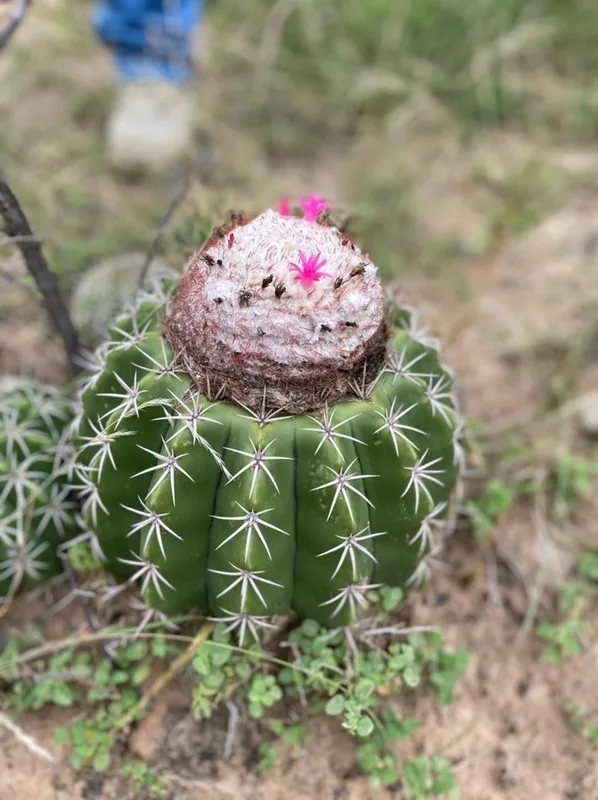
Melocactus curvispinus -
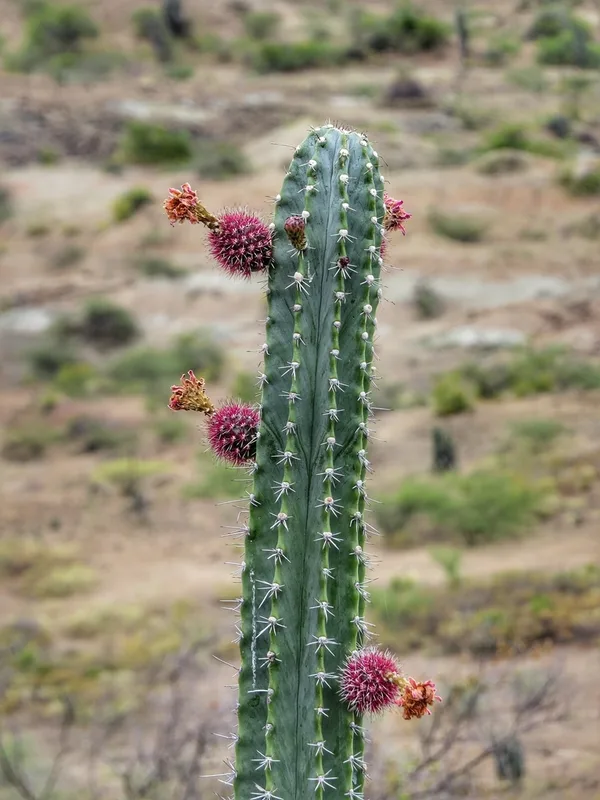
Stenocereus griseus -
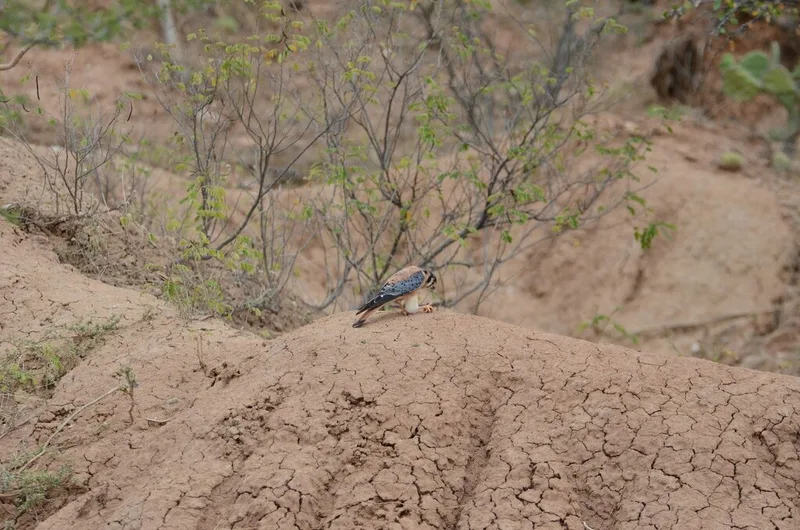
American Kestrel Falco sparverius -
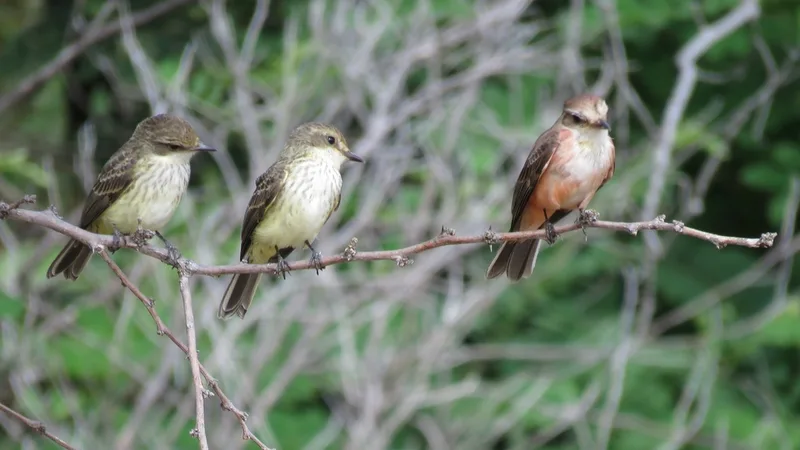
Vermilion Flycatcher Pyrocephalus rubinus -
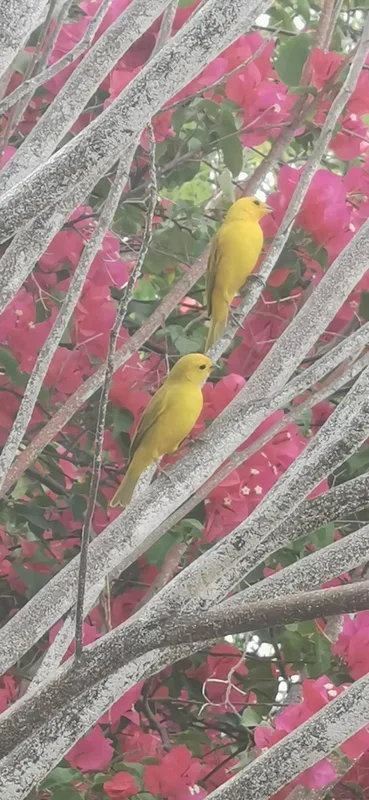
Saffron Finch Sicalis flaveola -
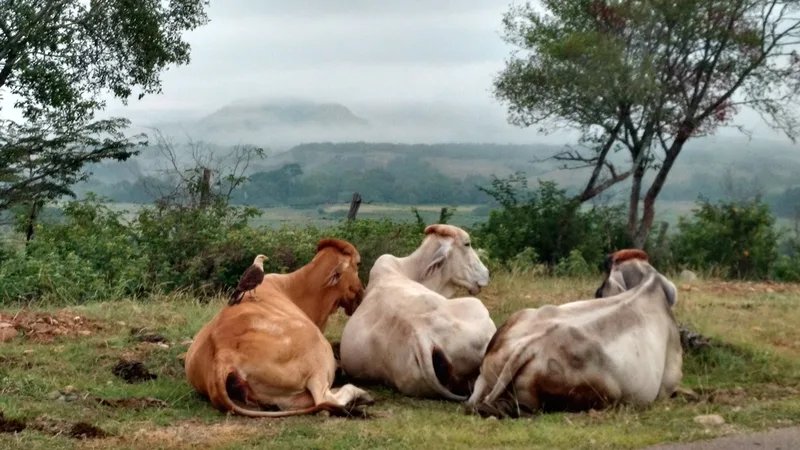
Yellow-headed Caracara Daptrius chimachima -
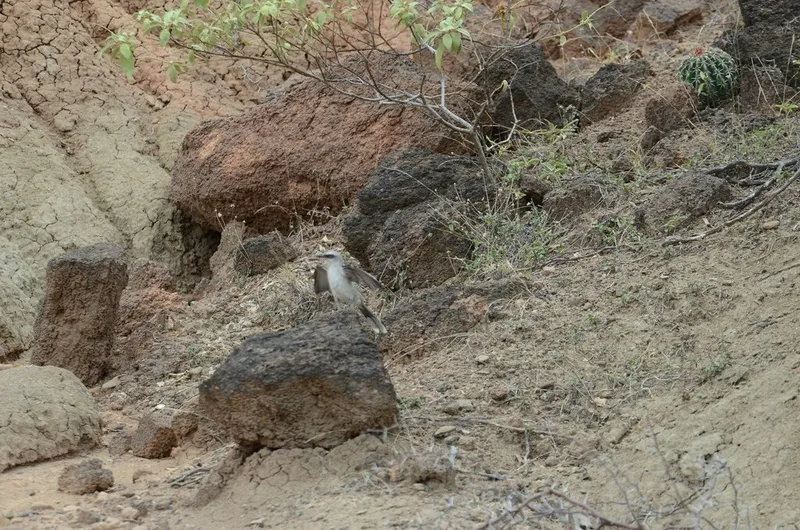
Tropical Mockingbird Mimus gilvus -
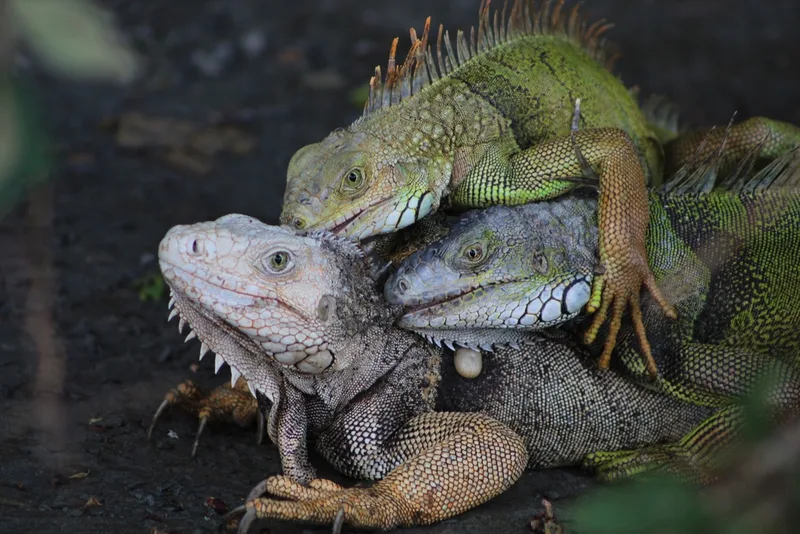
Green Iguana Iguana iguana -
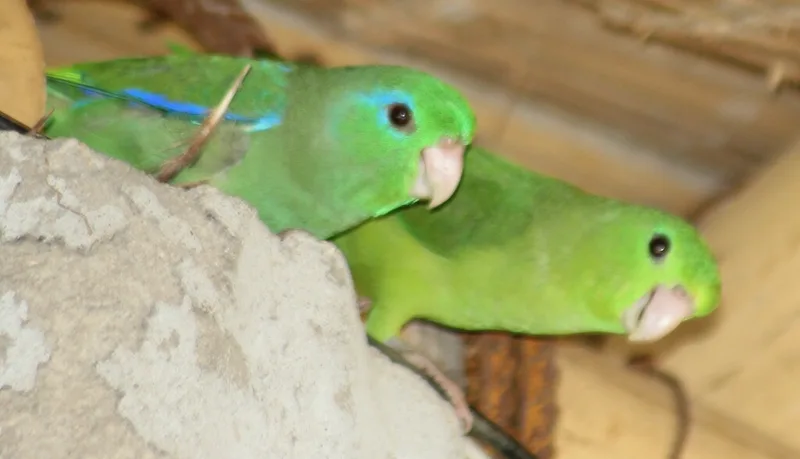
Spectacled Parrotlet Forpus conspicillatus -

Red Peacock Anartia amathea -
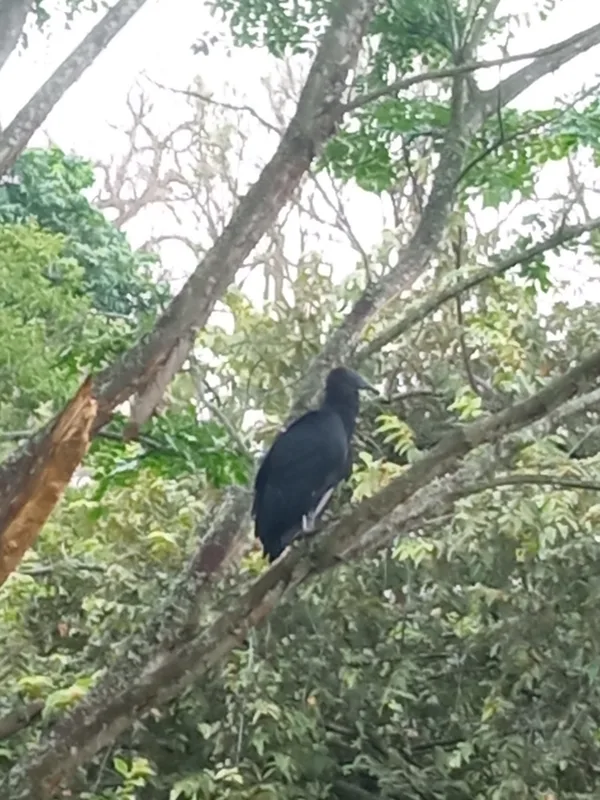
Black Vulture Coragyps atratus -
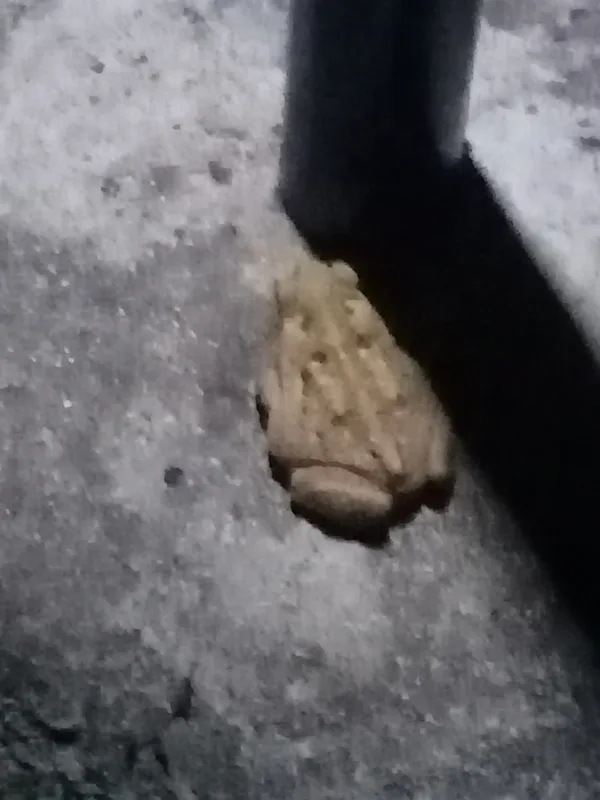
Giant Toad Rhinella horribilis
Field Notes · Night Sky lens · The Tatacoa Desert · 3.2195, −75.2190