Redwood
Prairie Creek Redwoods State Park · California, USA
In summer the rain stops, and the forest never learns it — the sea sends fog instead.
Why here
The rain here quits in summer, and the forest never seems to notice. From about the end of spring, the sky over this coast can go weeks without a drop — and yet the redwoods stay soaked, the ferns stay lush, and the ground stays dark and damp underfoot. The trick is the sea. Just offshore, cold water chills the air above it into fog, and that fog rolls in over the trees on most summer mornings. The high branches comb the moisture straight out of the passing air; it beads, gathers, and falls back down through the canopy as a slow interior rain the sky isn’t making. A coast redwood can even take in water directly through its needles, not just its roots, so the fog isn’t only cooling the forest — it’s feeding it, drink by drink, all through the dry months. That is the one idea this whole note keeps returning to. This is not a forest that happens to sit beside the ocean. It is a forest the ocean keeps alive.
The story
Start with the ground, which is older than the forest by an unimaginable stretch. The rock under these trees is a jumble of old ocean floor — shale and sandstone that was scraped off a sinking sea plate and jammed onto the edge of the continent as the two collided, a slow-motion wreck spread across tens of millions of years. It left a raw, folded, landslide-prone coast. Then the weather, and the forest, went to work on it.
Onto that coast came the redwoods, and they found the one thing they needed most already waiting: a cold sea breathing fog. The trees grew tall on fog-fed water and built a dim, wet world beneath them — ferns on every surface, banana slugs on the ground, trillium opening white on the floor in early spring and skunk cabbage lighting the wet hollows yellow. Where the forest meets the beach, elk graze the open flats in small herds, easiest to see at the edges of the day.
People made a home of all of it. A Yurok settlement once stood down at Gold Bluff, set between two river mouths and a coastal lagoon, where forest, river, and sea all met within a short walk — the whole larder in one place. Later, logging took most of the old forest along this coast. What survives here is only a fraction of it, kept back on purpose, which is why an ordinary walk among these particular trees is not ordinary at all.
The sites
The forest the fog feeds
Prairie Creek Redwoods State Park
41.4080, −124.0370
The heart of this note is a grove you can walk straight into off the parkway: old-growth coast redwoods, trees so tall their crowns are lost in their own shade. The forest here is more water than wood, and it is evergreen, so the grove looks much the same in any month — deep green, dim, and hushed, standing over a floor of ferns that never fully dies back. What carries all of it through the rainless summer is the sea. When fog drifts in off the cold water offshore, the high branches comb moisture out of the passing air, and it collects and falls back down through the canopy as a slow drip the sky isn’t making. Everything beneath the big trees lives on that borrowed water — the tall ferns, the low green sorrel, the slugs on the damp duff, the seedlings waiting in the gloom. Walk in among the trunks and the whole redwood story is already in front of you, before you’ve read a word of it: a forest the ocean waters from above, one gray morning at a time. Come early and you may catch the fog still at work, snagged in the crowns and dripping.
Lay a hand flat against the reddish, stringy bark of one of the big trunks and press — it gives, soft and fibrous rather than hard. A redwood grows bark this thick and spongy partly as armor against fire, which is one reason these particular trees have lived long enough to get so big. Look low on a trunk for a charred hollow the tree simply kept growing around.
- AccessShort walk
- ExertionEasy
- TimeHalf a day
Ah Pah Trailhead
41.4508, −124.0382
A short walk off the parkway drops you into the understory the big trees make possible. Away from the largest trunks, the redwoods stop being the whole story and the forest floor takes over: waist-high sword ferns, the finer lace of maidenhair and deer fern, and in the wettest hollows the broad glossy leaves and yellow spike of skunk cabbage, a marsh plant happy with its feet in the mud. This is a forest that never really dries out, because the same fog that waters the canopy keeps the ground cool and damp long after the last real rain. A small creek threads through the trees, part of the network of water that eventually drains north to the Klamath. Move slowly and listen: a forest this wet is quiet in a particular way, its sound swallowed by needles, moss, and soft ground. Of all the stops in this note, this is the easiest place to meet the redwood forest at eye level — not craning up at giants, but standing inside the green, dripping world their shade creates.
Watch the damp ground for a Pacific banana slug — a long, pale-yellow slug, sometimes olive or dark-spotted, easing across the leaf litter. It’s out because the ground is wet, which here is most of the time, and it earns its keep by eating fallen leaves and mushrooms and turning them back into soil. Follow one for a minute, then leave it where it is.
- AccessShort walk
- ExertionEasy
- TimeAn hour
Where the creek reaches the sea
Fern Canyon
41.4035, −124.0635
A creek called Home Creek has cut a narrow slot down toward the beach, and its walls have gone completely green — sheer faces of rock several times your height, hung top to bottom with ferns. The ferns grow there for the same reason the whole forest stays green through summer: the canyon traps cool, wet air, and fog and seep water keep the walls dripping even on a clear day. Some of these are among the oldest kinds of plants still living. Ferns were carpeting wet ground long before there were any flowers in the world, and a shaded, always-damp rock wall is exactly the kind of place they were built for. The walk up the canyon floor is short but wet — the creek is the trail, and you cross it again and again on logs and stones. This is fog feeding the land made visible in a single place: an entire canyon kept alive by water pulled from the air and the rock, with barely any soil involved. Look back down the green corridor as you climb, and it reads like the forest turned on its side.
Find a stretch of wall where water is actively seeping and look at the ferns rooted right in the rock rather than in soil. They can live on a bare wet face because they don’t reproduce with flowers or seeds at all — they scatter dust-fine spores instead. Turn a low frond over and look for the neat rows of tiny brown dots on the underside: those are the spore cases doing the work.
- AccessShort walk
- ExertionModerate
- TimeHalf a day
Gold Bluffs Beach
41.3965, −124.0684
Where the forest finally runs out, it doesn’t taper — it stops against a long backing bluff and gives way to open sand and a cold gray sea. The flats between the bluff and the water are grassland, and this is the likeliest place in the note to see elk: heavy-bodied animals that graze the open ground in loose herds, drift back toward the forest edge, and are easiest to find in the low light of morning and evening. The same cold offshore water that stacks fog over the redwoods keeps this beach cool and often overcast through the summer, when valleys not far inland are baking.
Scan the grassy flats between the bluff and the surf, early or late in the day, for elk — look first for the pale rump patches, which show up against the green long before you can make out a whole animal’s shape. If you find a herd, hold still and keep well back; the bulls are large and will move toward anyone who crowds them. Binoculars help but you don’t need them.
- AccessDrive-up
- ExertionEasy
- TimeHalf a day
Gold Bluffs Beach
41.3965, −124.0684
People lived along this stretch of coast long before there were any parks. A Yurok settlement once stood here at the bluff, set between the mouths of two rivers and close to a coastal lagoon — a place that put the full larder of forest, river, and sea within an easy walk. Stand on the sand with the bluff at your back and you can read exactly why someone would choose to live here: everything a person needs meets in this one spot.
Stand with your back to the bluff and try to place the three things this spot bundles: forest behind you, a river mouth to either side, and a lagoon somewhere close by. That triple reach — wood, river, and sea, all within a short walk — is what made this exact stretch of Gold Bluff a Yurok settlement long before it was parkland.
- AccessDrive-up
- ExertionEasy
- TimeAn hour
When it's best
The forest is green in every season — the redwoods are evergreen and the fog keeps the understory damp all year, so there is no wrong month to walk among the big trees. Winter is the rainy stretch, when the creeks run high. Early spring lights up the forest floor: trillium opening white, skunk cabbage glowing yellow in the wet hollows, ferns unrolling fresh fronds. Summer is fog season — the coast stays cool and often gray while valleys not far inland bake, the fog feeding the forest turned into weather. Elk are easiest on the open flats in the low light of morning and evening, in any season.
Go deeper
The names behind what you saw. The old seafloor rock under the forest is the Franciscan Complex — search that name for the story of how this whole coast was scraped together from a sinking ocean plate. The big trees are coast redwood, Sequoia sempervirens. The pale slug on the wet ground is the Pacific banana slug, Ariolimax columbianus; the three-petaled white flower is Pacific trillium, Trillium ovatum; the yellow marsh spike is western skunk cabbage, Lysichiton americanus; the tall ferns are western sword fern, Polystichum munitum, with western maidenhair and deer fern on the wettest walls. The elk are Cervus canadensis.
Where to look next. No formal reading list came with this note, so here are living sources worth your time. For the geology, read any overview of the Franciscan Complex — it explains the folded, landslide-prone character of the entire redwood coast. For the forest’s seasons, the iNaturalist pages for coast redwood, Pacific trillium, and western skunk cabbage work as a living calendar of what’s out and when. For the human history of this coast, look up Eshpeu and the Yurok villages at Gold Bluff. And Wikipedia’s entry on Redwood National and State Parks lays out how the national park and the three state parks fit together into one protected forest.
The names behind what you saw
What lives here, and what it's called. Photographs from open collections — an aid to identification, not decoration.
-
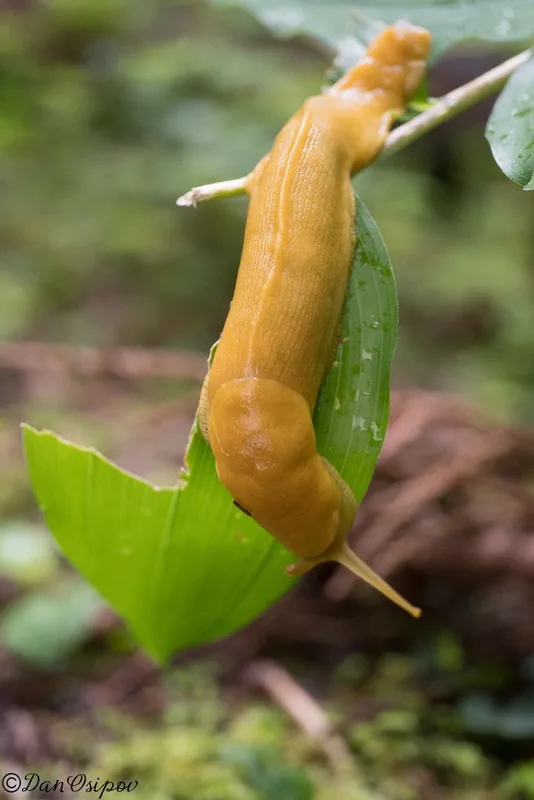
Pacific Banana Slug Ariolimax columbianus -
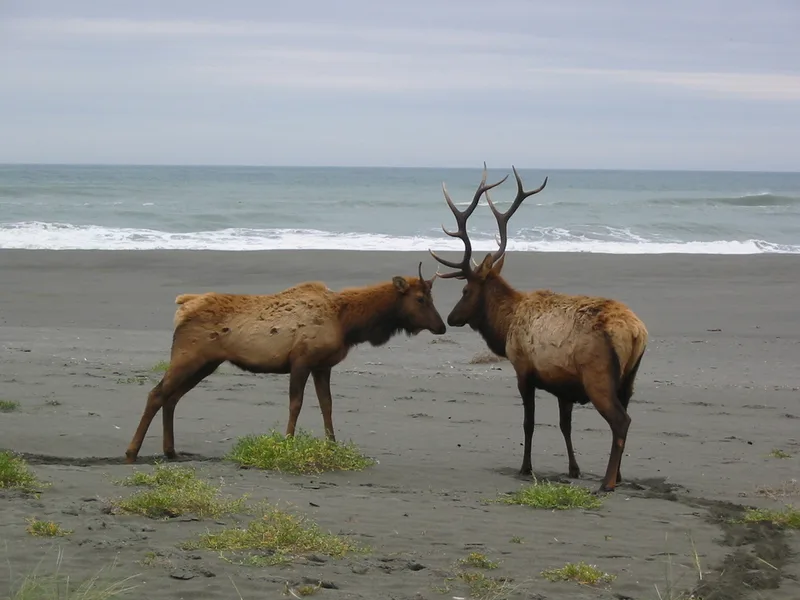
Elk Cervus canadensis -
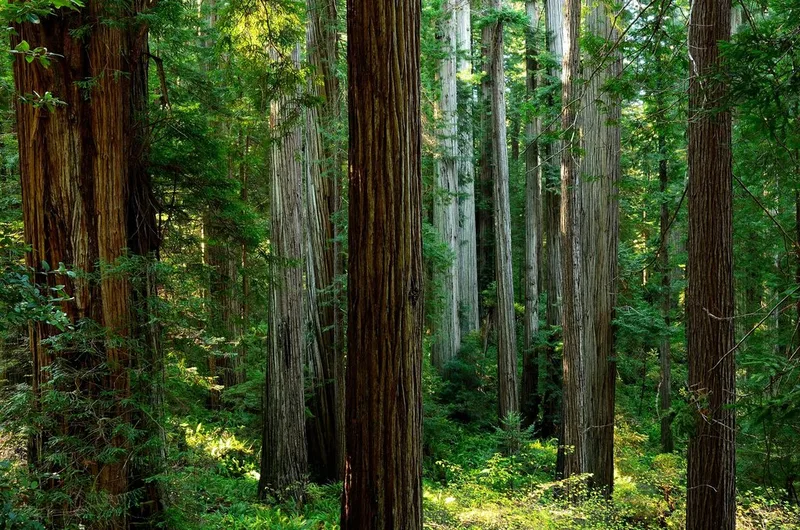
coast redwood Sequoia sempervirens -
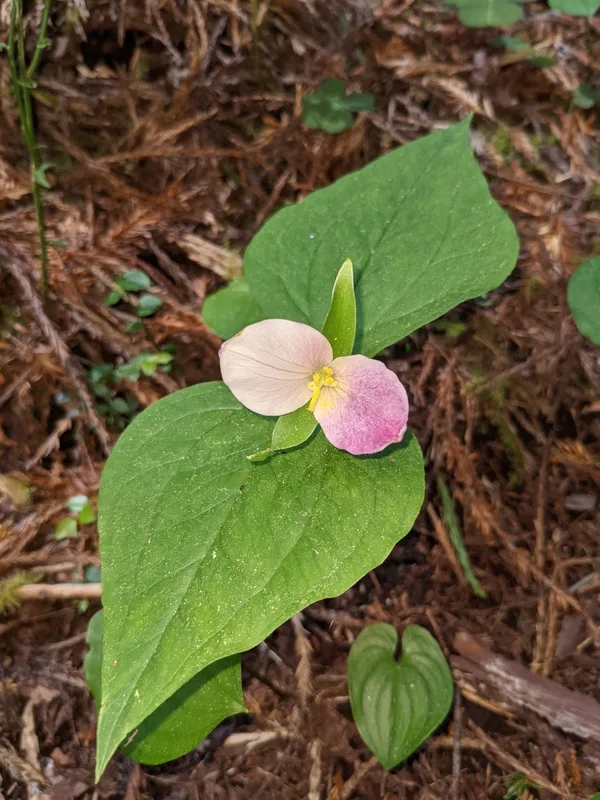
Pacific trillium Trillium ovatum -
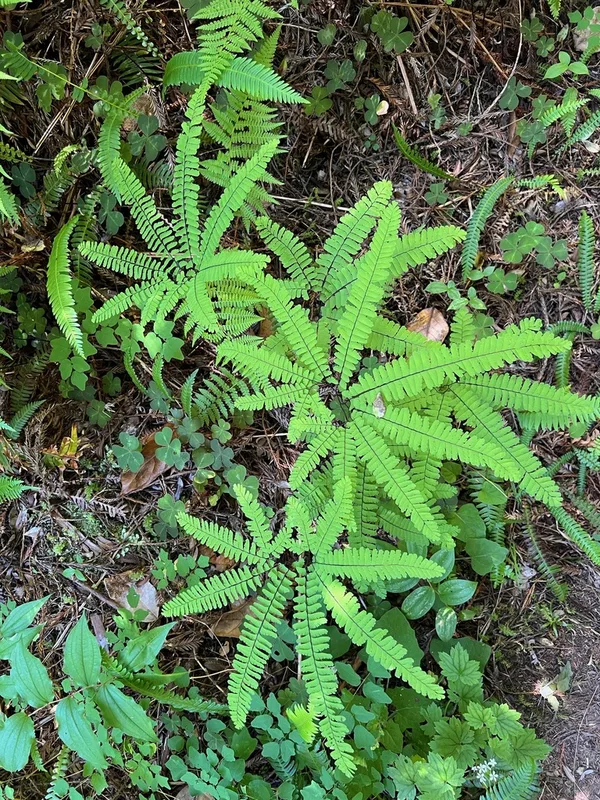
western maidenhair fern Adiantum aleuticum -
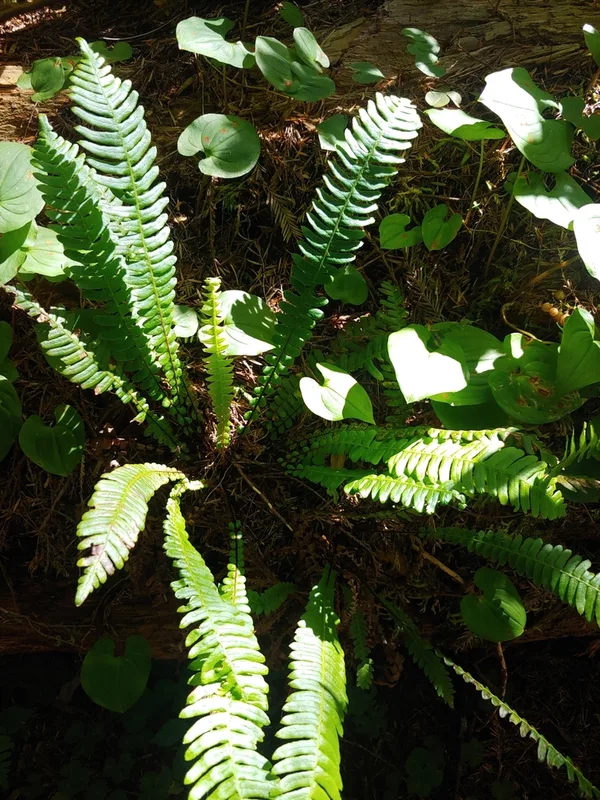
deer fern Struthiopteris spicant -
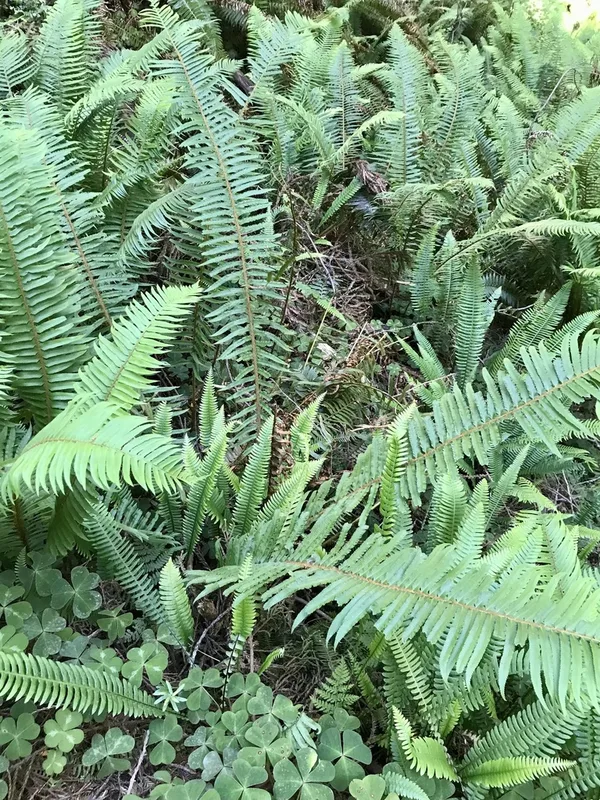
western sword fern Polystichum munitum -
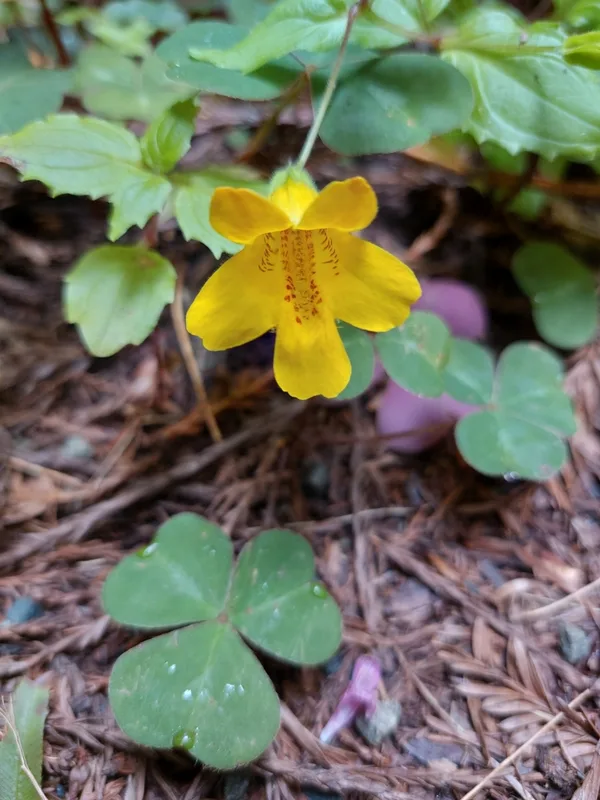
Coastal Monkeyflower Erythranthe dentata -
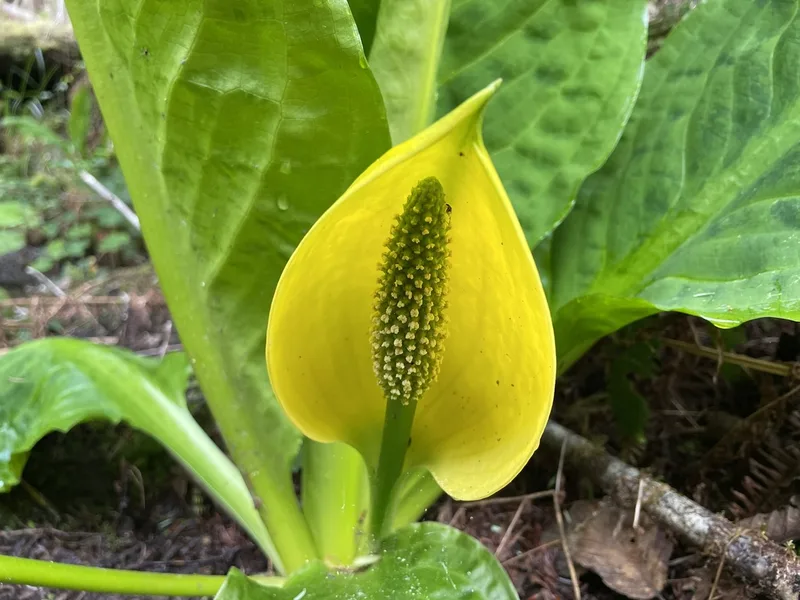
western skunk cabbage Lysichiton americanus -
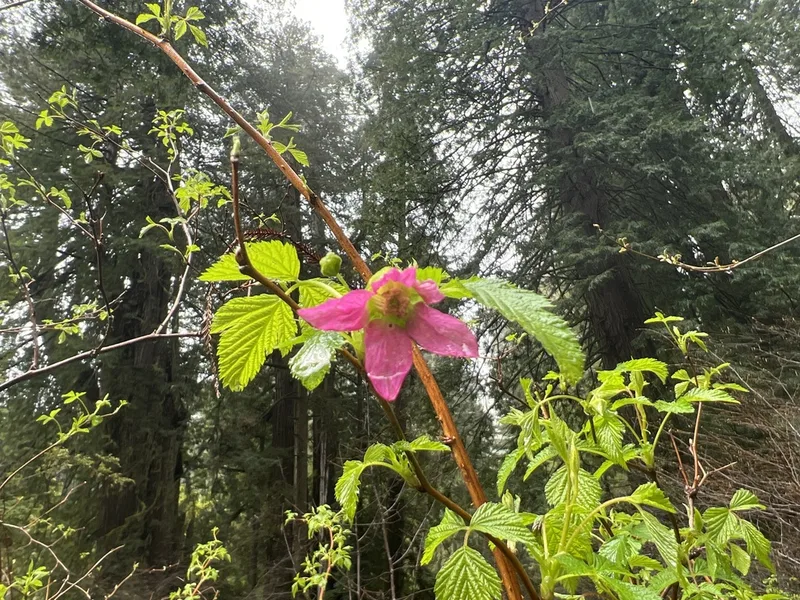
Salmonberry Rubus spectabilis -
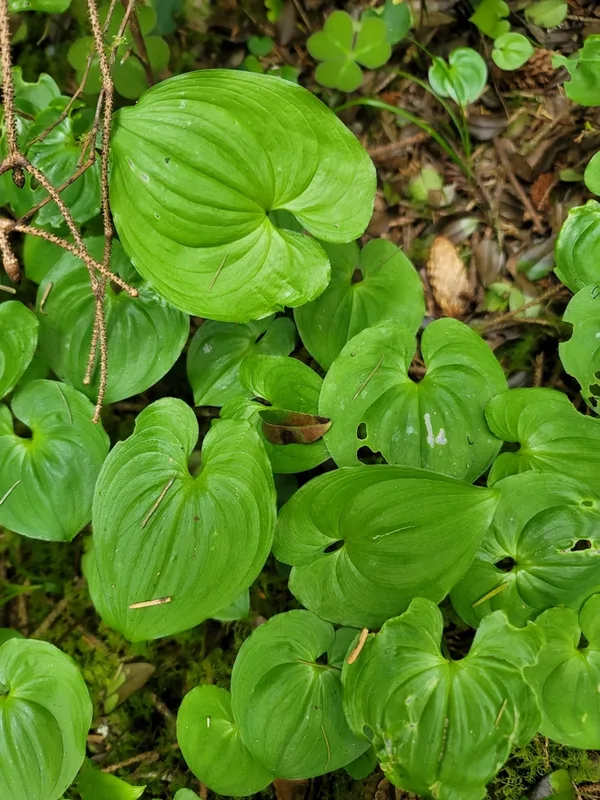
Western Lily of the Valley Maianthemum dilatatum -
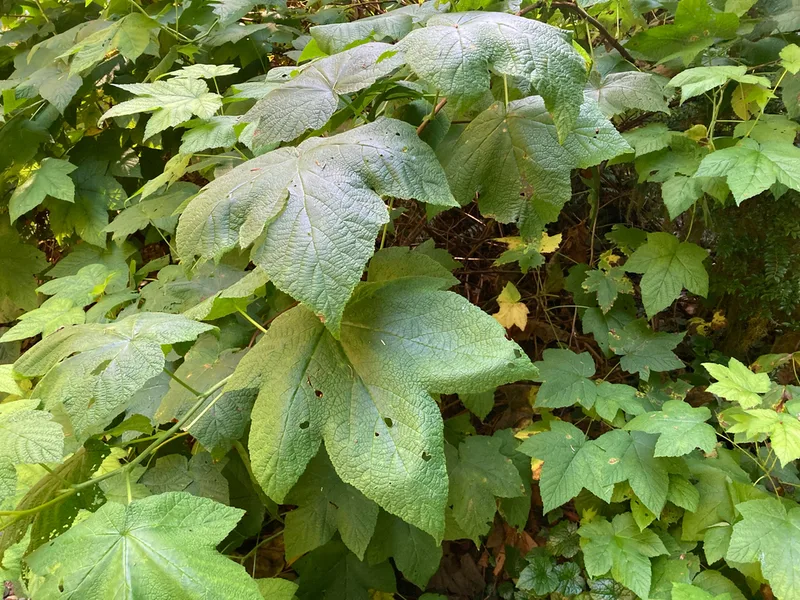
thimbleberry Rubus parviflorus
Field Notes · Fog Coast lens · Prairie Creek Redwoods State Park · 41.4023, −124.0527