Jungfrau-Aletsch
Grindelwald · Bernese Alps, Switzerland
The ice is the valley's oldest moving thing.
Why here
Jungfrau-Aletsch is a landscape where the glacier remains the main verb. Ice gathers high on the mountain, moves through the valleys, and leaves behind a country of ridges, rock, and water. The geology is older than the glacier, but the present shape belongs to their conversation. Look at the peaks first, then follow the lower routes where ice has widened the ground. Yellow-billed choughs cross the air above it, while alpine flowers take advantage of brief openings in the snow and rock. The glacier is not only a white surface. It is the force that gives the whole region its direction.
The sites
Ice above the valleys
Eiger
46.5776, 8.0055
Eiger is a mountain wall that makes the glacier’s scale visible. Its rock rises above valleys shaped by ice, so the view carries two times at once: ancient bedrock in the peak and more recent movement in the lower ground. Look for the route water and snow take away from the mountain. The glacier is easier to understand as a system of slopes, snowfields, and valleys than as an isolated white mass.
Trace the line from the high snow toward the valley. The descending route is the glacier’s drainage and movement made visible across the mountain face.
- AccessDrive-up
- ExertionEasy
- TimeAn hour
Männlichen
46.6181, 7.9380
Männlichen opens the view sideways across a glacial country. Ridges overlap, valleys widen below them, and the high peaks keep their sharper forms above the ice-shaped floor. From here, compare the broad low routes with the narrow high ridges. Ice tends to occupy and enlarge the low ground, while resistant rock remains as walls and points. The landscape’s geometry is the evidence.
Find the widest valley in view and follow its floor until it narrows. The change shows where ice had room to spread and where the mountain walls constrained it.
- AccessShort walk
- ExertionEasy
- TimeHalf a day
Life at the edge
Lauberhorn
46.5925, 7.9480
Lauberhorn brings the living edge into the high mountain view. Alpine flowers use short seasons and sheltered pockets, while yellow-billed choughs move through the open air above them. The glacier’s work creates the slopes, but sun, snow, and exposure sort life across those slopes. Look closely at the ground before looking toward the distant ice. The smallest plants are records of where snow melts soon enough and soil stays long enough for roots.
Find a flower in a shallow protected hollow. Its position shows where snow, soil, and sun line up for a brief growing season.
- AccessShort walk
- ExertionModerate
- TimeHalf a day
Wetterhorn
46.6387, 8.1156
Wetterhorn is a high reference point for the mountain system around it. Its exposed rock and snow show the limits of life, while lower slopes carry more vegetation and movement. The glacier connects these zones by carrying water and rock downhill. Stand where you can see both the high face and the lower valley. The ice is the link between them, not simply another feature in the distance.
Look from the exposed summit line down to the first green slope. The transition marks where cold and exposure give way to soil and a longer growing season.
- AccessHalf-day hike
- ExertionStrenuous
- TimeA full day
Schwarzhoren
46.6861, 8.0756
Schwarzhoren gives the glacier story a quieter scale. A dark peak, a pale snowfield, and the small plants below it form a sequence from rock to ice to life. Watch the weather move across the surface. Cloud can hide the glacier while leaving nearby flowers and birds visible, a reminder that mountain conditions change over short distances. The best reading is patient and local: one slope, one patch of snow, one living edge.
Compare a snow patch with the ground just beyond it. The difference in timing controls which plants can flower and how long they have to grow.
- AccessHalf-day hike
- ExertionModerate
- TimeHalf a day
When it's best
Summer gives the clearest access to high viewpoints and the longest season for alpine flowers. Early fall brings cooler air and changing light, while winter covers the landscape in a more continuous white. Cloud can erase the glacier from a viewpoint even when it remains below. Give the mountains time to open rather than treating one clear view as the only measure of the visit.
Go deeper
The names behind what you saw. The geology includes Quaternary loose deposits and the Helvetic and Penninic nappes. Alpine life includes yellow-billed chough, Pyrrhocorax graculus, common kidney-vetch, Anthyllis vulneraria, and European globeflower, Trollius europaeus.
To read next. - The Jungfrau-Aletsch geological material — for the nappes, valleys, and ice. - Alpine ecology resources — for the short flowering season and mountain birds.
The names behind what you saw
What lives here, and what it's called. Photographs from open collections — an aid to identification, not decoration.
-
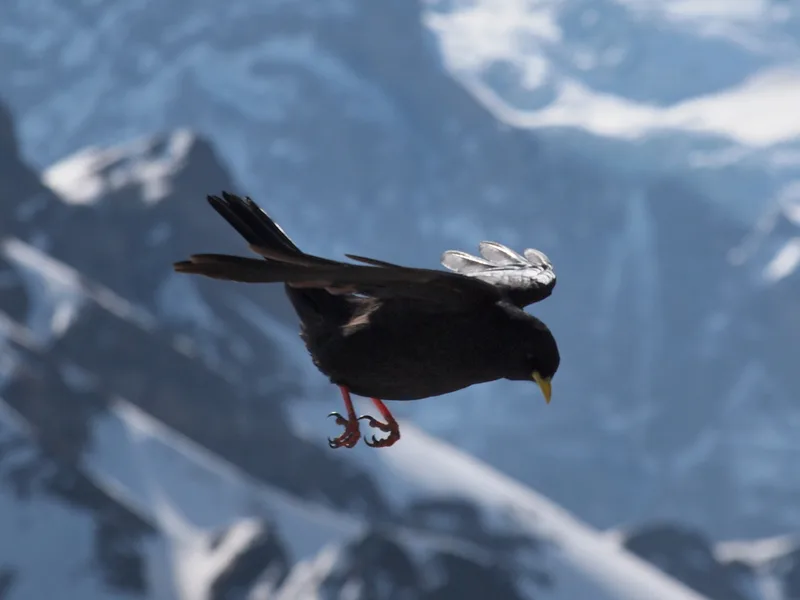
Yellow-billed Chough Pyrrhocorax graculus -
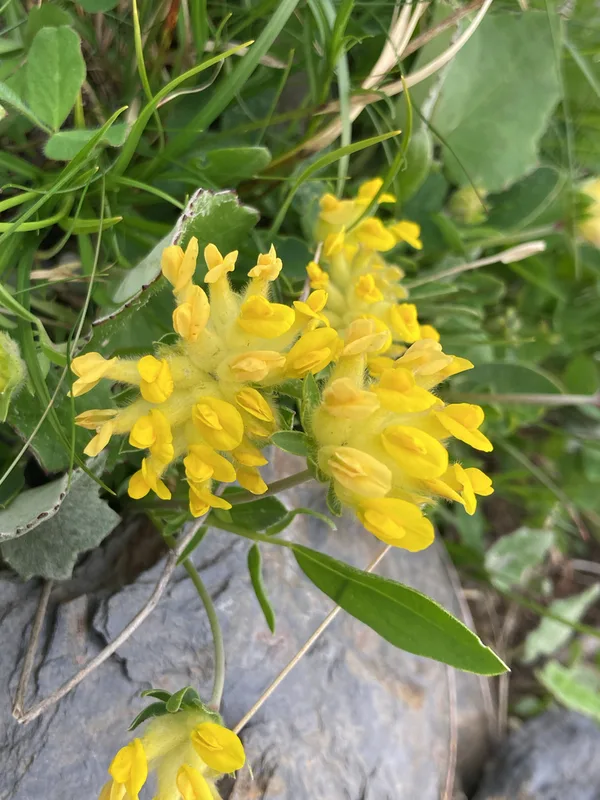
Common Kidney-Vetch Anthyllis vulneraria -
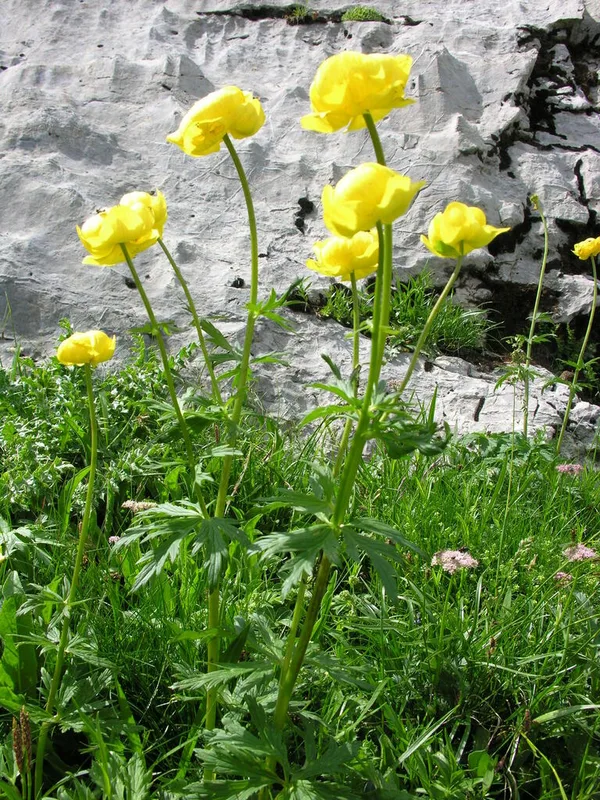
European Globeflower Trollius europaeus -
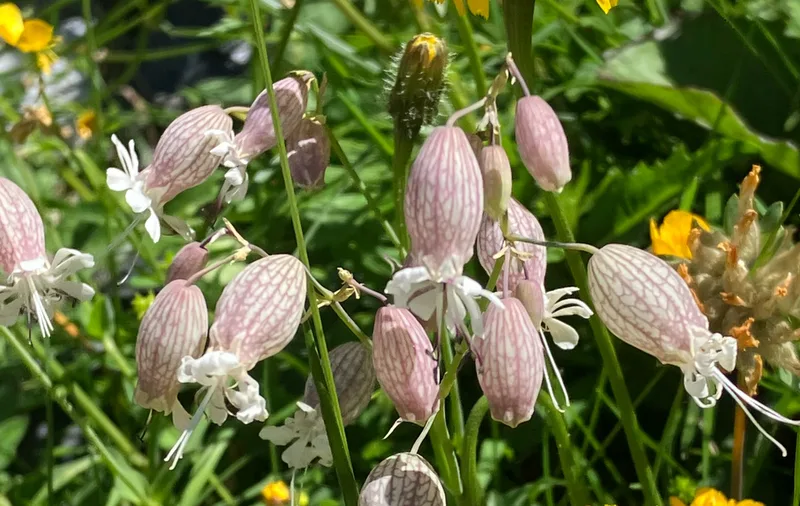
bladder campion Silene vulgaris -
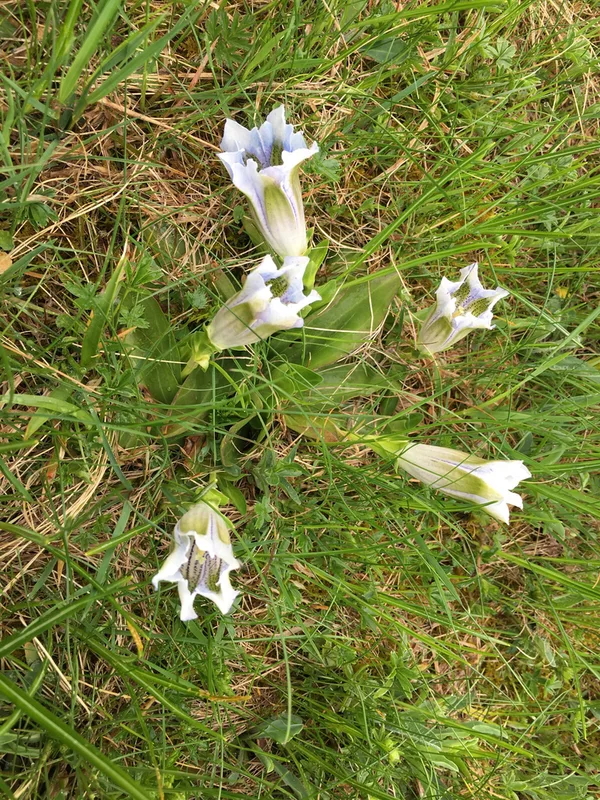
trumpet gentian Gentiana acaulis -
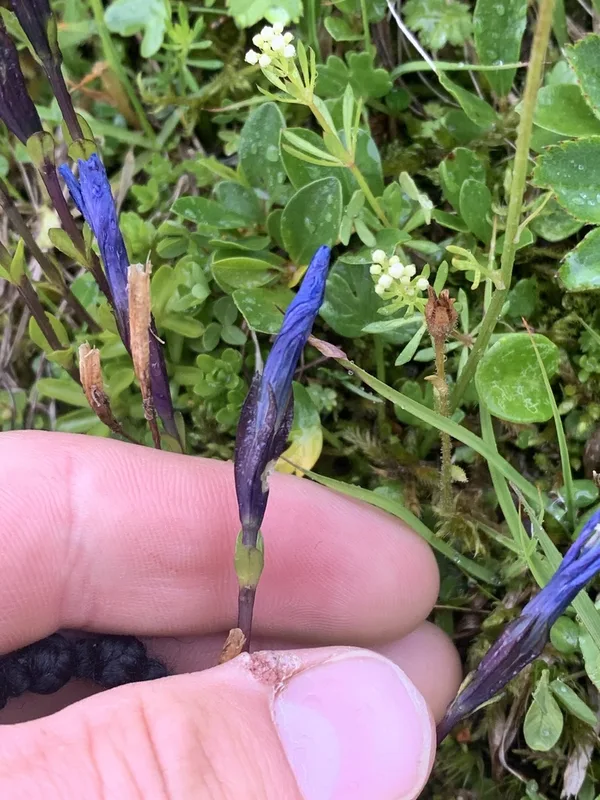
Bavarian gentian Gentiana bavarica -
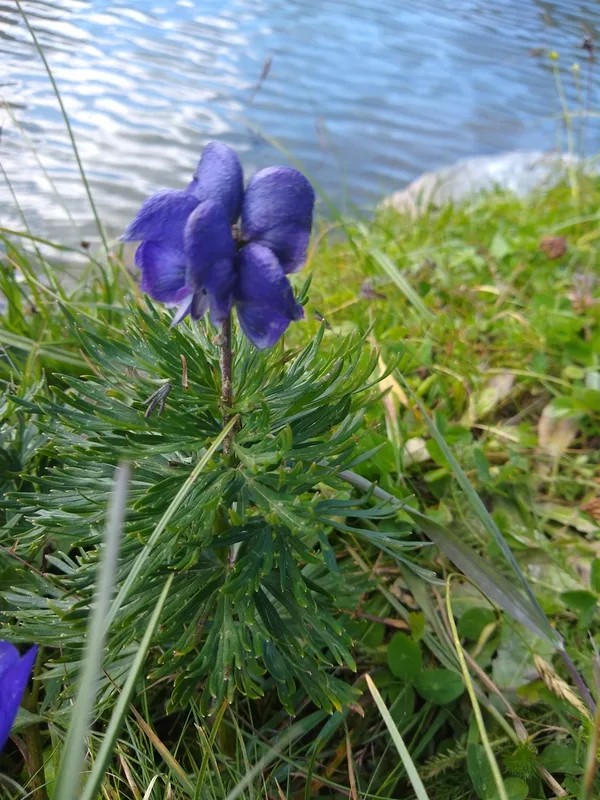
Monk's-hood Aconitum napellus -
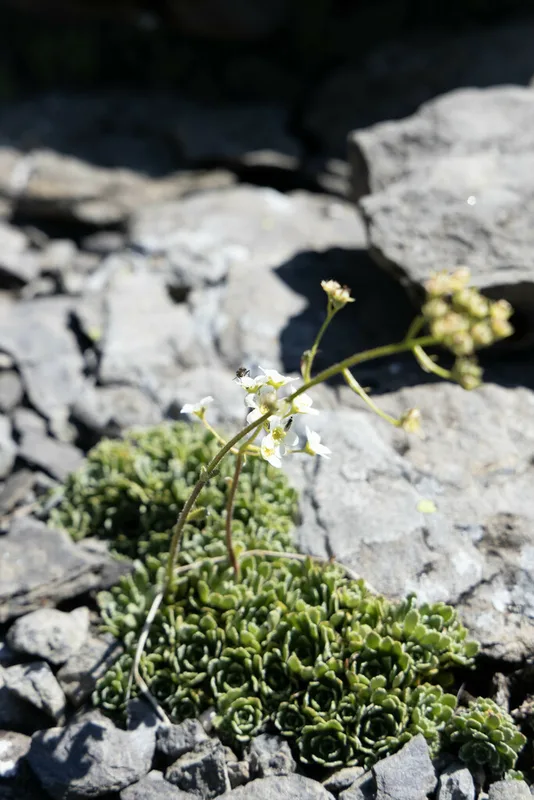
Livelong Saxifrage Saxifraga paniculata -
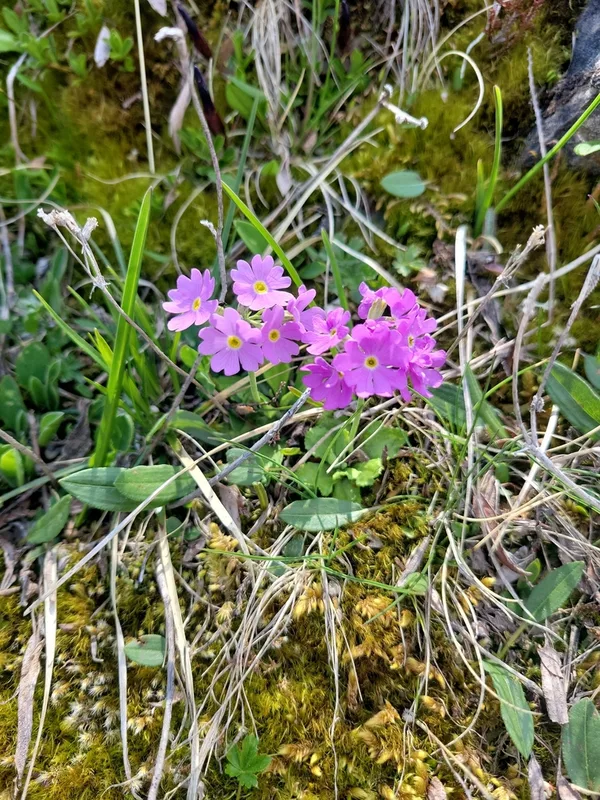
Bird's-eye Primrose Primula farinosa -
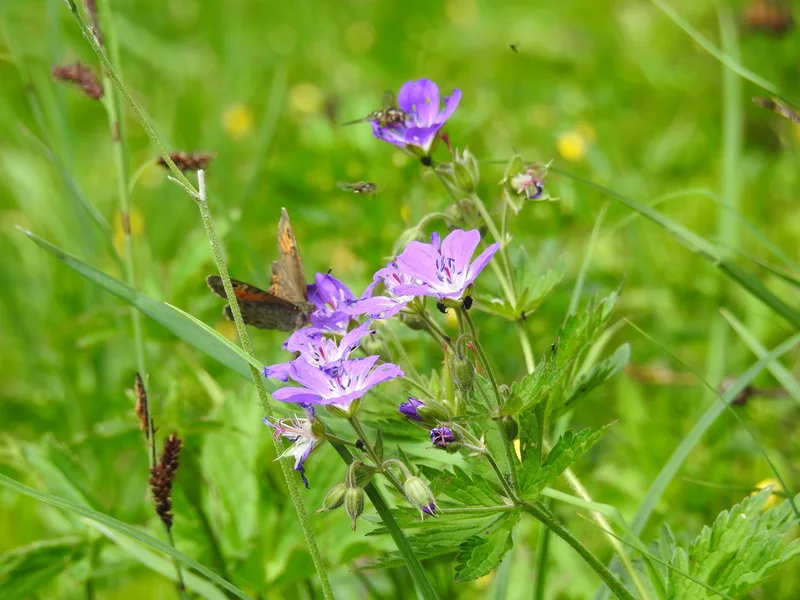
wood crane's-bill Geranium sylvaticum -
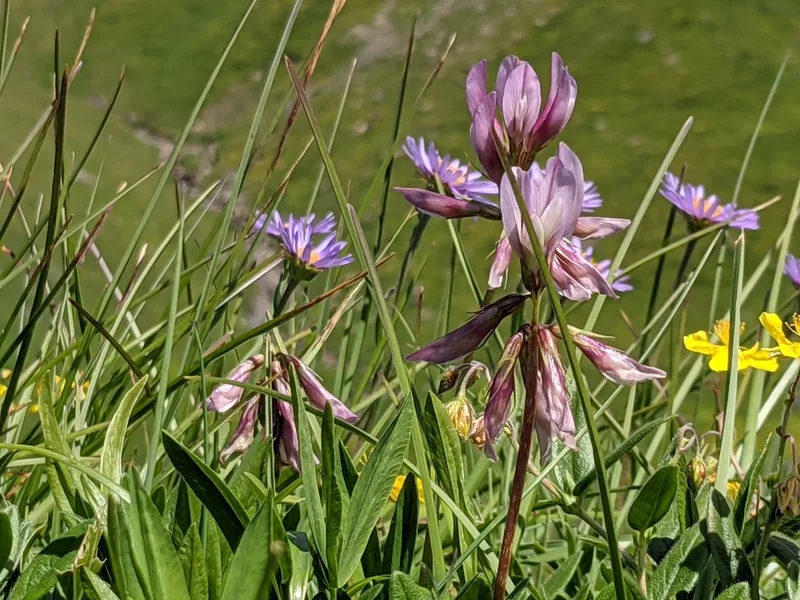
Alpine Clover Trifolium alpinum -
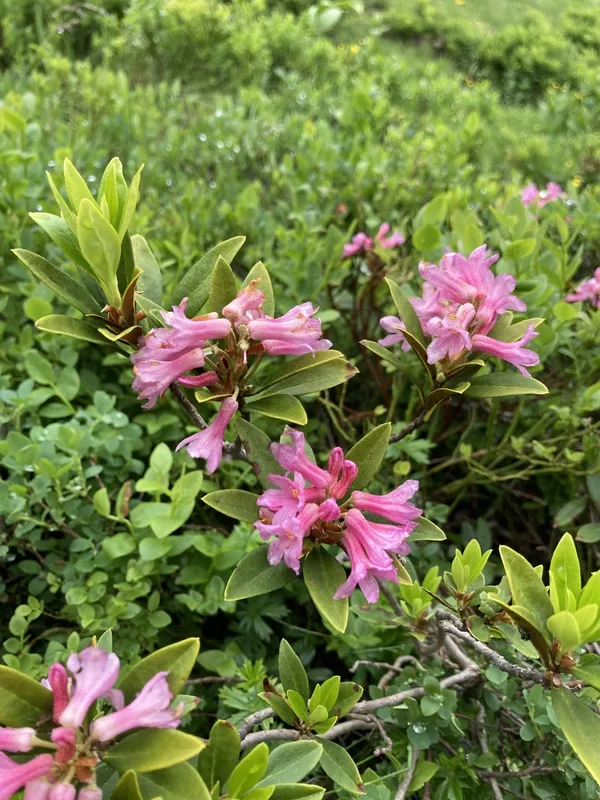
Rusty-leaved Alpenrose Rhododendron ferrugineum
Field Notes · Ice & Glaciers lens · Grindelwald · 46.6243, 8.0367