Erg Chebbi
Erg Chebbi · Drâa-Tafilalet, Morocco
The dunes are the newest thing in Erg Chebbi; the ground beneath them has been waiting since long before there was any wind to pile up sand at all.
Why here
Stand anywhere in Erg Chebbi and the sand under your boots is the youngest thing in view. Everything else here — the flat, pale plain the dune field rests against, the rock just beneath the loose grains — has been waiting since long before there was a desert at all, let alone a wind to pile it into dunes. Erg Chebbi is one of Morocco’s seas of dune sand, built where wind and a steady supply of loose grains meet on the far western edge of the Sahara, and it sits like a fresh page laid over a much older book. The dunes themselves shift by the season; the ground beneath and around them has held its record since ages most of us only remember from school. Villages ring the erg rather than sit inside it, built on the old floor because sand won’t hold still long enough to build on. That contrast — restless sand over patient rock — is what this note keeps circling back to, at every dune, every viewpoint, and every village on the margin.
The story
Erg Chebbi’s sand is the newest chapter of a much older place. Long before there was a desert here at all, this land lay under shifting seas, laying down the sediment that now floors the plain around the dunes — layers that span from before there was complex life on land through the era when fish still ruled the world’s shallow waters. Millions of years later, and still ages before the dunes existed, a much younger layer of sediment settled on top, closing most of that book. Only in the last stretch of that whole span did wind start building the sand sea travelers see today: constantly moving, constantly rebuilt, resting on rock old enough to have forgotten it was ever the seafloor.
Life took to the new sand quickly. Fennec foxes and sand geckos shelter by day and hunt in the cool dark; hoopoe-larks and desert sparrows work the dune bases at dawn; hardy desert plants root wherever the sand holds still long enough. People settled where the sand runs out — Merzouga, Hassilabied, Takojt, Tanamoust — villages that ring the erg’s edge rather than sit inside it, some raising Berber camps to send travelers out across the dunes, a landscape shaped as much by who’s passed through as by wind.
The sites
The dunes: the newest page
Sand Dunes
31.0665, −4.0109
This viewpoint looks out over the open face of Erg Chebbi, Morocco’s dune sea near the far western edge of the Sahara. Everything you’re looking at is loose sand, piled by wind into ridges that keep moving. Stand here at midday and the dunes look solid, permanent, geological. They are not. Wind picks up grains on the windward slope and drops them just past the crest, so each dune creeps slowly downwind, a little at a time, season after season. What looks like a single dune today is really a slow-motion wave, and no dune here holds exactly the same shape for long.
That’s the trick of this whole landscape: the sand is the youngest thing around. Underneath it, and all along the flat ground beyond the dunes, sits rock that predates the erg by an almost unimaginable margin — rock laid down long before there was a desert, or wind, or sand to blow. From this spot, look past the near dunes to where the ground flattens and pales in the distance. That plain is the older book; the dunes are just today’s page, laid loosely on top and rewritten every year.
Watch the near ridge of sand for a few minutes. Notice the sharp, straight edge where the crest catches the light — that’s the slip face, the steep side the wind keeps rebuilding as grains tumble over the top. Look for faint ripple lines climbing the windward slope; each one marks a single pulse of wind moving sand a little further along.
- AccessShort walk
- ExertionModerate
- TimeAn hour
Grande Dune de Merzouga
31.0777, −3.9924
The dunes rising above Merzouga are counted among the tallest in the Sahara, and this is the one most people mean when they point at the skyline and say the big one. Climbing it is slow work — soft sand gives back half of every step — and the summit ridge shifts underfoot even as you stand on it. That instability is the point. A dune this size is not a fixed landform so much as a temporary accumulation, sand heaped high enough, for now, to dominate the view before wind eventually spreads it thinner again.
Go up in the last low light of day, when the sand throws long shadows and every ripple on the surface reads clearly. From the top, the flat plain beyond the dune field comes into view, pale and rock-strewn, running out toward a horizon the sand hasn’t reached. That plain is the old floor this whole erg sits on. The dune under your feet is a recent, moving thing, built and rebuilt by wind on ground that has been there since long before any of it existed. Few places make the difference between young and old land so easy to see in one turn of the head — down at shifting sand, out at fixed rock.
From the summit ridge, look down the steep face you didn’t climb up. Watch for small sand slides where the slope is oversteepened — the wind keeps piling sand onto that edge until gravity pulls a little of it back down, over and over, which is how the dune holds its shape while still constantly moving.
- AccessHalf-day hike
- ExertionStrenuous
- TimeHalf a day
Grand Dune View Point
31.0791, −3.9913
Set close to the Grande Dune de Merzouga but easier underfoot, this viewpoint is the place to take in the whole shape of the dune field without the climb. From here the erg reads as what it is: a sea of sand with a beginning and an end, bounded on every side by flatter, harder ground. Few visitors linger long enough to notice where the sand actually stops — but it does, abruptly, without a gradual thinning, because dune sand needs a steady wind and a steady supply to keep piling up, and both run out at the erg’s edge.
That edge is worth watching for. Beyond it, the ground turns pale and stony, the surface of a much older plain that the dunes have simply been blown up against rather than grown out of. The two textures side by side — soft ridged sand against flat hard rock — are two different ages of land occupying the same view. One took a very long time to become what it is. The other is still deciding, shifting a little with every wind.
Trace the outer edge of the dune field with your eyes until you find the line where sand gives way to flatter ground. Notice how sudden the change is, not a gradual fade — that boundary marks where wind loses the strength or the supply to keep building dunes any further.
- AccessShort walk
- ExertionEasy
- TimeAn hour
Desert Berber Camp مخيم بربر الصحراء
31.1120, −4.0057
Raised on high ground at the edge of the dune field, this Berber camp is one of several outposts built to send travelers out into the erg and bring them back. The Berber presence in this part of the Sahara is old and continuous, and camps like this one carry on a practical role their predecessors would recognize: a fixed point of shelter and orientation in a landscape that otherwise offers neither. Sand dunes are notoriously hard to navigate by sight alone, since every ridge looks like the last one and the wind can erase a day-old footprint by morning.
From the camp’s high ground, the view does double duty. Look out toward the dune crests for the erg at its most changeable, then swing around toward the flatter horizon for a glimpse of the older plain the whole sand sea rests on. It’s a good spot to sit still for a while — dusk and dawn both change the read of the dunes completely, turning the same slopes from flat and pale to sharply ridged and shadowed within minutes.
As the light drops toward evening, watch how the dune slopes change from flat and washed-out to sharply defined ridges and shadow. The shift happens fast, and it’s the low, raking light — not any change in the sand itself — doing all the work.
- AccessShort walk
- ExertionModerate
- TimeHalf a day
The margin: where the old floor shows
Merzouga
31.0999, −4.0141
Merzouga is the village most travelers use as their gateway into Erg Chebbi, and its location says something plain about the land: this is where the road ends and the sand begins. Paved ground gives way to loose dune within a short walk of the village center, a boundary you can feel underfoot before you can even see it clearly, since the ground softens and slows your steps well before the first real dune comes into view.
That boundary is not just a travel convenience — it marks the edge of the erg itself, the line where wind-built sand stops covering the older ground beneath it. Villages like this one grew up along that margin rather than inside the dune field, for the practical reason that sand doesn’t hold still long enough to build on. Walk to the edge of town and look both ways: back toward buildings on solid, settled ground, and out toward dunes that are still, in a slow and ordinary way, on the move.
Walk from the village center toward the dunes and notice exactly where the ground changes underfoot, from packed and firm to soft and slow. That line is the practical edge of Erg Chebbi — try to spot it before you can see the first tall dune ahead.
- AccessDrive-up
- ExertionEasy
- TimeAn hour
Ksar Tanamouste
31.0679, −4.0166
Tanamoust sits at what’s described simply as the bottom of Erg Chebbi — the low margin where the dune field runs out against the older plain. A ksar, the fortified, densely built settlement style common across this part of Morocco, makes sense in exactly this kind of spot: solid ground to build on, with the erg close enough to work but not so close that sand threatens to bury the walls.
Standing at the edge of a settlement like this, it’s worth noticing what it’s built on. The plain underfoot here is far older than the sand piled up nearby — ground that had already been ground for an immense stretch of time before any of the dunes existed. The village occupies the stable, ancient half of the view; the erg occupies the young, restless half. Few places make that pairing so visible in a single glance: solid walls raised on old rock, facing a sand sea that is, in a geological sense, still being written.
From the edge of the ksar, look toward the erg and pick out where the loose sand ends and the firmer ground the village sits on begins. See if you can find any low ridges of blown sand creeping onto that firmer ground — a sign the boundary is not fixed, just slow.
- AccessDrive-up
- ExertionEasy
- TimeAn hour
Takojt
31.1119, −4.0091
Like Tanamoust, Takojt sits at the bottom of Erg Chebbi — one of several small villages strung along the margin where the dune field meets firmer ground. Seen from above, these settlements trace almost the whole outline of the erg, a rough human map of exactly where the sand stops. That’s not a coincidence: the same flat, stable ground that let people build here is the ground the dunes never managed to bury.
From Takojt, the dunes rise close by, and it’s an easy, unhurried place to watch the boundary between old plain and young sand without the crowds drawn to the taller dunes further along the erg. Take a slow walk along the village edge and compare the two textures underfoot: packed earth that has held its shape for a very long time, and soft sand that hasn’t held any shape for long at all. The contrast is the whole story of this place in miniature, no climbing required to see it.
Walk the edge of the village where buildings give way to open ground. Look for any low sand ridges creeping in from the erg — a sign of the boundary slowly advancing across ground that has otherwise stayed put for a very long time.
- AccessDrive-up
- ExertionEasy
- TimeAn hour
When it's best
Erg Chebbi rewards visits timed around the mild shoulder months, when daytime highs sit comfortably below the extremes and short walks across sand or rock stay pleasant rather than punishing. Summer here turns brutally hot underfoot, the kind of heat that makes crossing open sand or bare rock at midday unwise; cooler months make the same walking easy. Rain is rare and light in any season, so it changes little about when to come. One detail worth timing around, if the sky matters to you: pick a week without much moon, since a dark night over this flat, open ground is about as good as stargazing gets, with nothing nearby to dim it. Otherwise, the rock and the dunes are doing the same slow work in every season — there’s no wrong month to read them, only hotter and cooler ones to do it in.
Go deeper
The names behind what you saw - The old sedimentary rock underlying the plain around the dunes spans the Ordovician through the Carboniferous, roughly 485 to 299 million years old, with a named interval within it — the Paleozoic sedimentary rocks, Devonian in age, roughly 419 to 359 million years old. - A younger layer mapped nearby is called simply Neogene undifferentiated, roughly 23 to 2.6 million years old — still ancient, but a small fraction of the Paleozoic rock’s age. - Fennec Fox — Vulpes zerda - Anderson’s Short-fingered Gecko — Stenodactylus petrii - Greater Hoopoe-Lark — Alaemon alaudipes - Desert Sparrow — Passer simplex
To read next - Erg Chebbi (Wikipedia) — the plain definition of an erg, and where this one sits among Morocco’s other sand seas. - Merzouga (Wikipedia) — background on the village and the dune field’s standing among the Sahara’s tallest. - Rissani (Wikipedia) — the nearest town of real size, useful context for how the region’s settlement pattern relates to the erg’s margin. - Gnawa (Wikipedia) — background on one of the peoples with roots in this part of southern Morocco. - Michael Asher (explorer) (Wikipedia) — not specific to this erg, but a firsthand account of Saharan travel and nomadic desert life from a writer who lived it.
The names behind what you saw
What lives here, and what it's called. Photographs from open collections — an aid to identification, not decoration.
-
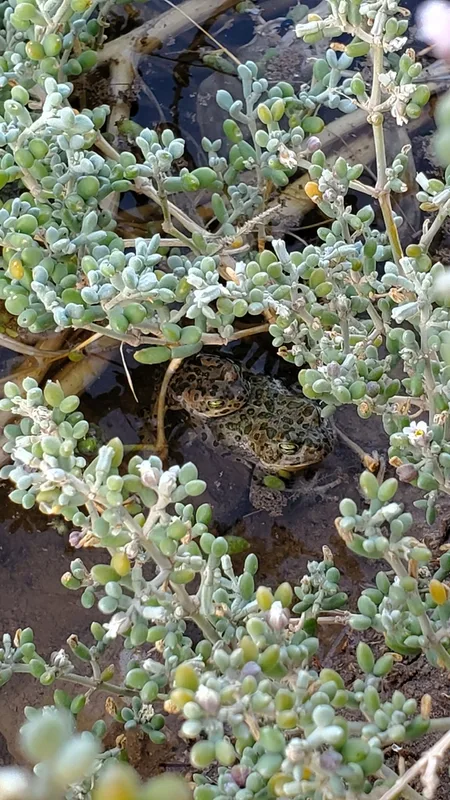
African Green Toad Bufotes boulengeri -
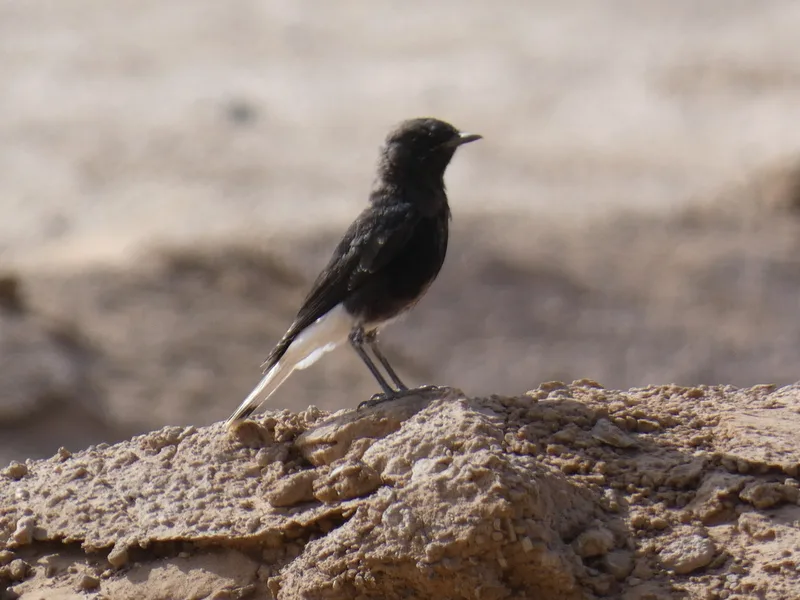
White-crowned Wheatear Oenanthe leucopyga -
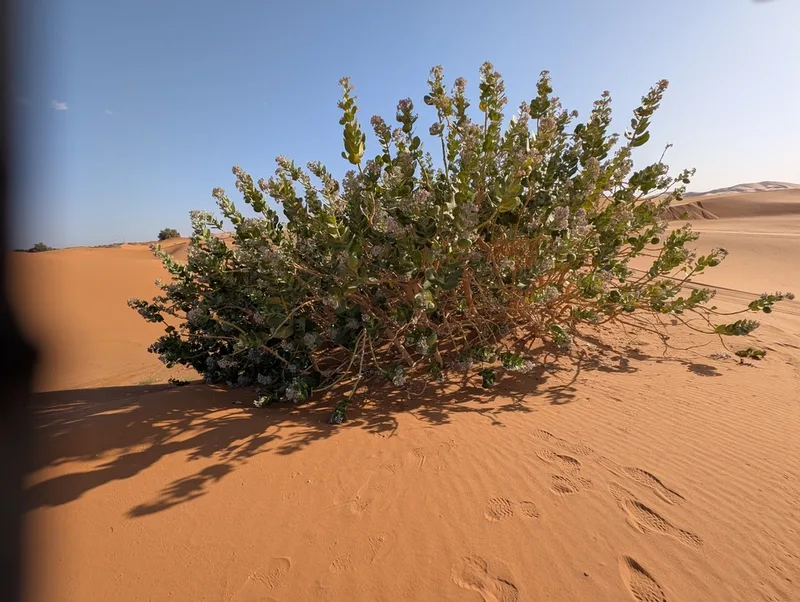
giant milkweed Calotropis procera -
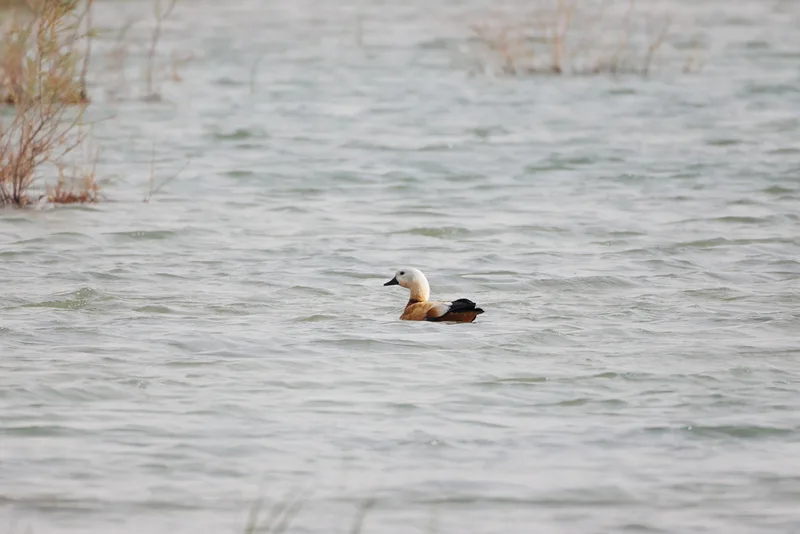
Ruddy Shelduck Tadorna ferruginea -
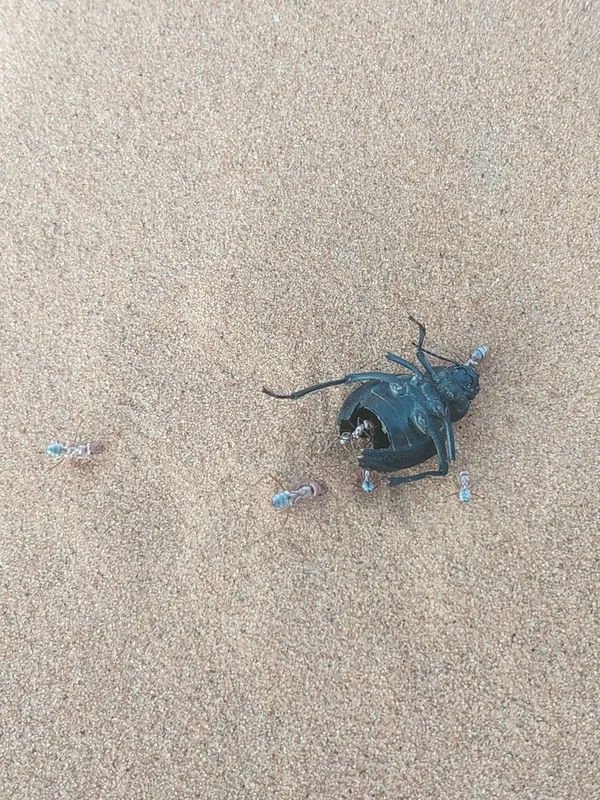
Saharan Silver Ant Cataglyphis bombycina -
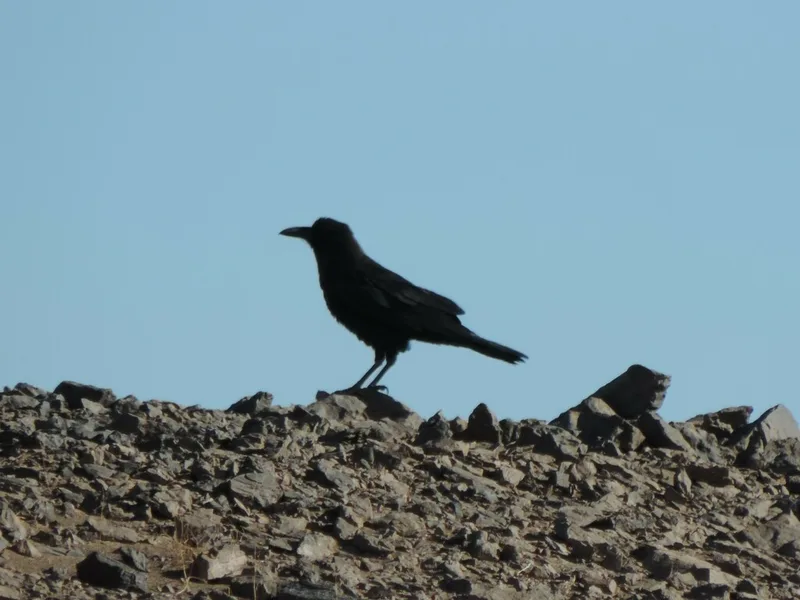
Brown-necked Raven Corvus ruficollis -
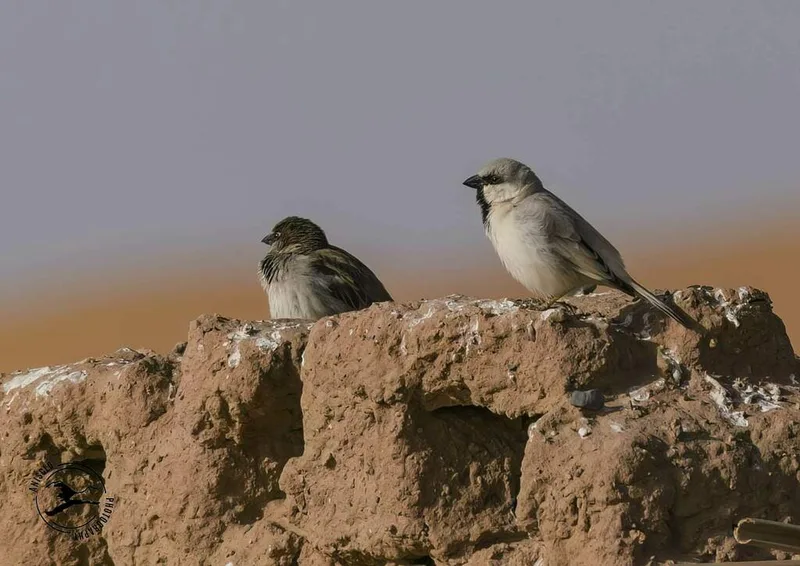
Desert Sparrow Passer simplex -
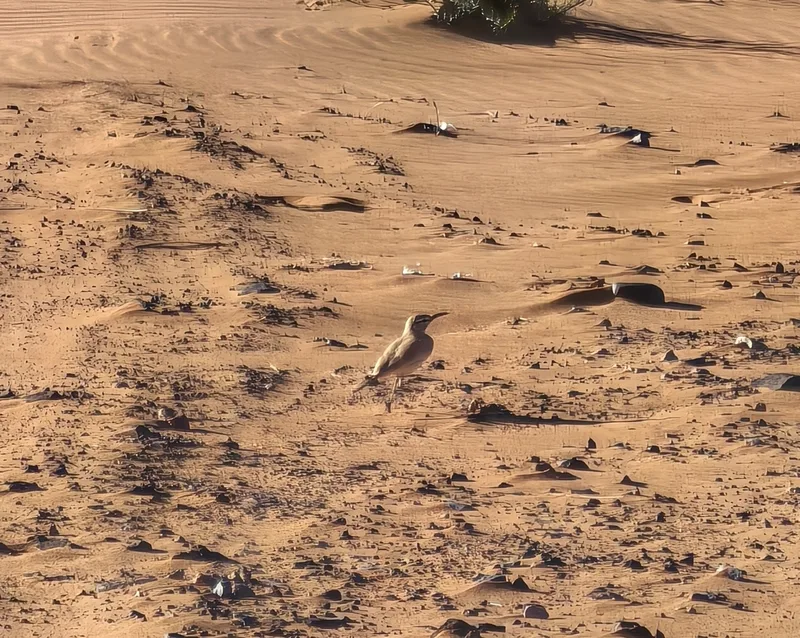
Greater Hoopoe-Lark Alaemon alaudipes -
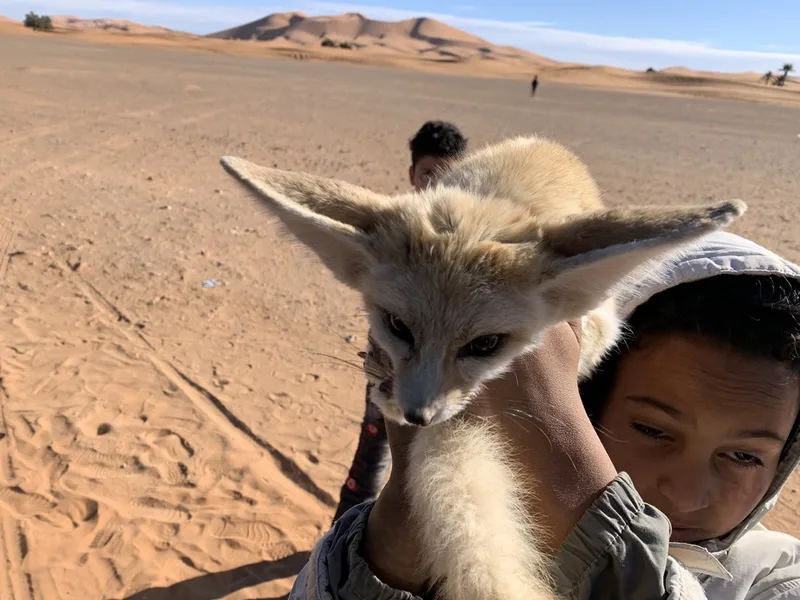
Fennec Fox Vulpes zerda -
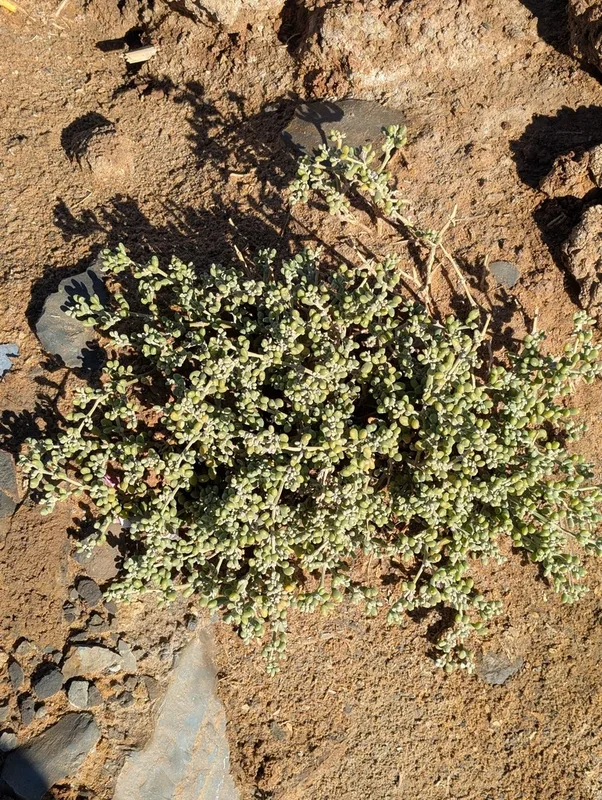
Tetraena gaetula -
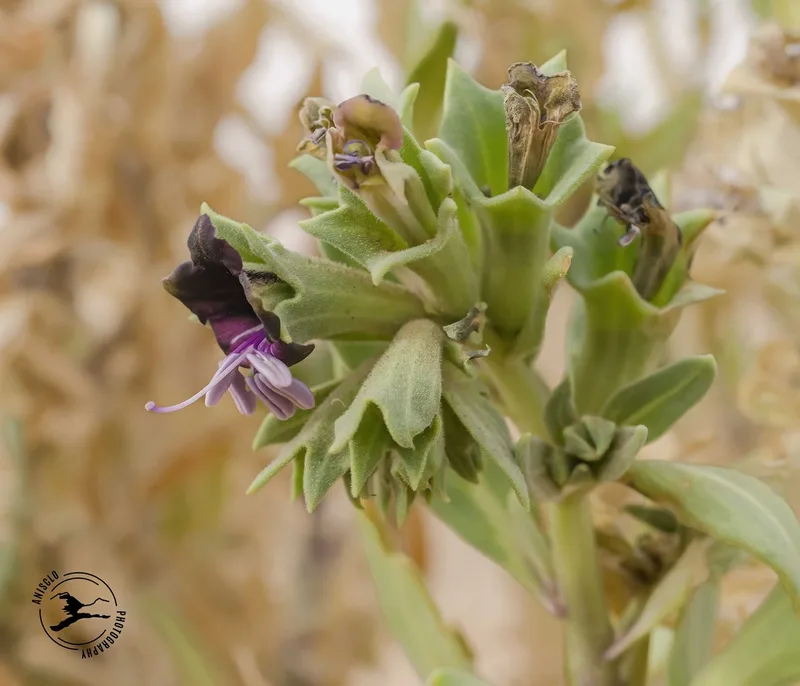
Egyptian henbane Hyoscyamus muticus -
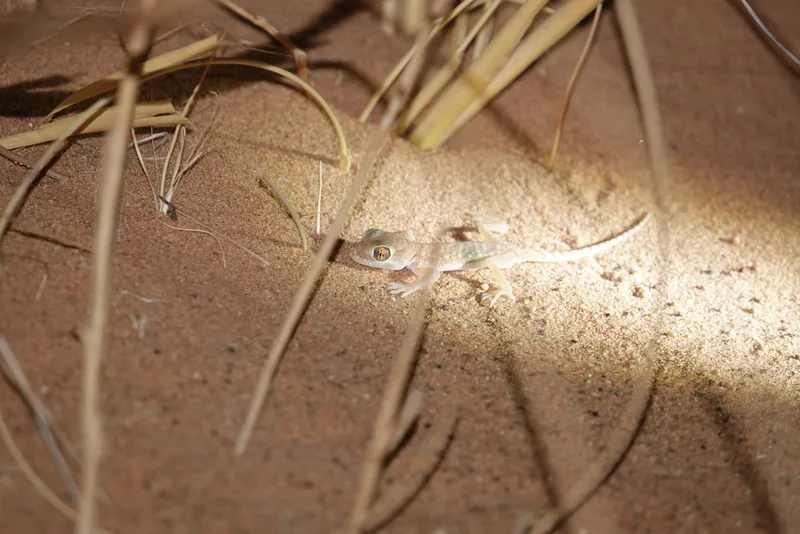
Anderson's Short-fingered Gecko Stenodactylus petrii
Field Notes · Desert & Deep Time lens · Erg Chebbi · 31.0999, −4.0141