Dana Biosphere Reserve
Dana Biosphere Reserve · Tafilah, Jordan
The bottom layer of these cliffs is sand from a sea that dried up before there were trees anywhere on Earth.
Why here
Stand at the rim above Wadi Dana and the ground itself does the talking. What reads at a glance as one cliff is really a stack: pale sandstone low down, younger and browner rock layered above it, each band a separate chapter of a sea and a shoreline that came and went long before anything with a spine walked on land. Erosion has done here what no excavation could manage as cleanly — it has cut the country open and left the cross-section standing in plain view, free for anyone willing to walk the rim and look down instead of out. Cross from one viewpoint to the next and you cross tens of millions of years without climbing more than a few hundred meters of trail. Rock-dwelling lizards now sun themselves on ledges an ancient sea once shaped, using deep time as a doorstep. This note follows the rim and the summits where that record is easiest to read, and keeps returning to the same idea: at Dana you don’t have to imagine deep time. You only have to look down.
The story
The land came first, and simply: seas advanced and retreated over this stretch of what is now southern Jordan across roughly one hundred eighty million years of the early Paleozoic, leaving sand and finer sediment behind each time, hardening in time into sandstone and other layered rock. Nothing here was arranged to be seen — it was buried, tilted, and only later stripped bare again by wind and infrequent, violent rain, the same erosion that built the escarpment now visible from the rim trails.
Life moved into the bare rock once it was exposed. Rock agamas and fan-fingered geckos took to the ledges and crevices, hunting insects in the day’s first and last light and vanishing into the stone through the hot hours. Overhead, steppe eagles, buzzards and kestrels ride the thermals the cliffs generate, hunting the same terrain from above that the lizards hold from below. Nubian ibex, a desert-adapted wild goat, work the steeper ground where almost nothing else can stand.
People read this rock too, long before there was a reserve to protect it. In the valley below, at Khirbet en-Nahas, communities were mining and smelting copper from the surrounding hills roughly three thousand years ago, at a scale archaeologists now think required real organization — an early economy built directly on what the rock contained. The reserve itself is younger: Jordan’s Royal Society for the Conservation of Nature, founded in 1966, established Dana as a protected area in 1989. Two different kinds of reading the same stone, three thousand years apart.
The sites
The rim where the rock opens like a book
Dana Tower
30.6973, 35.5798
Dana Tower sits right on the rim, and it exists to do one simple thing: lift you a few meters above the edge so the whole cross-section below opens at once. From here the escarpment reads less like a view and more like a diagram. Lighter, older sandstone holds the lower slopes; younger, more weathered rock layers sit above it, the whole sequence tipped just enough by ancient movements of the earth’s crust that you can trace a band of rock for a surprising distance before it disappears under scree. None of it was arranged for visitors — wind and the occasional violent desert rain did the excavating, over a stretch of time too long to hold in your head all at once, so don’t try. Instead pick one band of rock and follow it with your eye as far as you can before it vanishes. Kestrels and buzzards use the rising air off this same escarpment face, cutting past the tower at eye level often enough that the view is rarely empty of something moving. The rock stays still; almost everything else here doesn’t.
Pick a single pale band of rock in the cliff face below the tower and trace it sideways with your eye, not up or down. It was laid down across a wide area all at once, which is why it holds its color and thickness as far as you can follow it before scree or shadow swallow it. Watch the air just off the rim while you do — kestrels and buzzards ride the same updraft the cliff throws up.
- AccessDrive-up
- ExertionEasy
- TimeAn hour
Jabal Sarāb
30.7003, 35.5782
Jabal Sarāb rises just beside Dana Tower, close enough that the two make an easy pair: the tower for the view, this modest summit for the ground itself. Where the tower puts you above the escarpment, the short scramble to the top of Jabal Sarāb puts you level with the exposed rock, close enough to see how one layer sits directly on the one below it with no gap, no soil, nothing between them, because there wasn’t meant to be one. Each contact is a handoff between two different moments of deposition, sometimes sharp, sometimes gradual, and reading which is which is most of what geologists mean when they say they are reading rock at all. The summit is small and the climb short, which makes it a good place to slow down rather than cover ground: crouch at one of the exposed contacts and really look before moving on. Steppe eagles and other raptors pass reliably along this stretch of rim, riding the updraft the escarpment throws into the air above the very rock you’re standing on.
Find a spot where two different bands of rock meet in a clean line — a contact — and crouch close to it. Look for a sharp break in color or grain size right at the line versus a gradual blend over a short stretch: a sharp line usually means a pause or a change in the environment; a gradual blend means one kind of sediment slowly gave way to another.
- AccessShort walk
- ExertionModerate
- TimeAn hour
dana view point
30.6760, 35.6088
A short way around the rim from the tower, this second viewpoint looks straight down into Wadi Dana rather than out across it, and the difference matters. Here you see the layers in section rather than in profile — the canyon has cut down through the same stacked rock, so each switchback of the trail below crosses another band. Look closely at the canyon floor and you can pick out where harder rock has resisted the water and softer rock has given way, leaving the canyon walls stepped rather than smooth. Wild oleander and sea squill root wherever water lingers in cracks and gullies, plants built for a place where rock, not soil, is the ground floor. Standing here, the case Dana makes for itself is simple: erosion is not damage, it is disclosure. Every meter the wadi has cut down is a page turned, and the canyon keeps writing itself deeper with each flash flood that passes through, slow work on a timescale no single visit will ever show you moving.
Look down into the canyon and find a place where the walls step rather than slope evenly — a harder band of rock holding firm while softer rock below or above has worn back faster. Sea squill and oleander often root right at that seam, wherever water collects after rain; the plants are marking the same boundary the rock itself is showing you.
- AccessShort walk
- ExertionEasy
- TimeAn hour
Summits that hold the older pages
Er Rummāna
30.6886, 35.5645
Er Rummāna rewards the climb with something the rim viewpoints can’t offer: contact. Instead of looking at the layered escarpment from a platform, you are climbing through it, hand on rock instead of eye on view. Run a palm over an exposed sandstone face here and you can feel the individual grains, each one a fragment of an older mountain range, broken down, carried by wind or water, and cemented back together into something new. That is what sandstone is, wherever you find it: recycled rock given a second life. Look for faint ripples or crossing lines in some of the harder beds — the fossilized memory of moving water or wind on what was once a shifting surface, frozen the moment it hardened. The summit itself offers little shade and less water, and the plants and reptiles that hold on here are built for exactly that shortage. It is a strenuous climb for what feels like a small reward until you are actually standing on top of a few hundred million years, with the whole stacked country visible below you at once, at which point the reward stops feeling small.
Run your hand across an exposed rock face near the summit and look for faint parallel ridges or crossing lines in the surface — ripple marks left by moving water or wind on a once-loose surface, preserved the moment the sediment hardened into rock. Not every face has them; keep checking a few until one does.
- AccessHalf-day hike
- ExertionStrenuous
- TimeHalf a day
Jabal Khālid
30.6475, 35.4914
Jabal Khālid sits apart from the main rim, a solitary high point rather than part of a continuous wall, and that isolation is itself informative: it has been left standing while the rock around it has worn away faster, or was never as resistant to begin with. Not all rock erodes at the same rate, and a lone summit like this one is often the visible proof — the last hard remnant of a layer that used to extend much further before wind and infrequent rain stripped the softer ground around it down. The climb up is a genuine scramble in places, and the isolation that makes the summit worth reaching also makes it exposed: full sun, little water, and steep, loose ground for the last stretch. Nubian ibex, a desert-adapted wild goat built for exactly this kind of terrain, favor ground too steep and broken for most other large animals, and a peak like this one is precisely the sort of refuge that suits them. Go for the geology and stay for the chance, however slight, of finding you are not the only large animal that decided this summit was worth the climb.
Scan the steep, broken slopes below the summit, rather than the summit itself, for Nubian ibex — a stocky wild goat that favors exactly this kind of terrain because almost nothing else can follow it there. Early or late in the day gives the best chance; midday, expect the mountain to look empty even when it isn’t.
- AccessHalf-day hike
- ExertionStrenuous
- TimeHalf a day
When it's best
Spring is when this landscape is easiest to be outside in — mild days and cool nights replace the flat heat that settles over the reserve later in the year, and the escarpment stays comfortable for longer, sunnier climbs. It is also, not coincidentally, when the rim is busiest with wings rather than feet: steppe eagles and other raptors pass along this stretch of Jordan reliably enough in spring that a morning spent at any of the viewpoints will likely turn one up riding the same thermals the cliff face has always thrown into the air. Autumn offers a gentler echo of the same conditions, without the same certainty of raptors overhead. Summer heat and winter cold both make the exposed, shadeless summits harder work than they need to be, though the rock itself, honestly, reads the same in any season — it has been patient for longer than any visitor’s preferred month could matter to it.
Go deeper
The names behind what you saw The pale sandstone low on the escarpment is mapped formally as the “Jordan” unit, laid down in the Cambrian to Ordovician. The younger, browner rock layered above it is classed simply as Paleozoic sedimentary rock, spanning the Silurian into the Devonian. The lizards on the ledges are the Egyptian Rock Agama (Laudakia vulgaris) and the Sinai Fan-fingered Gecko (Ptyodactylus guttatus); the raptor most likely overhead in spring is the Steppe Eagle (Aquila nipalensis), alongside Common Buzzard (Buteo buteo) and Eurasian Kestrel (Falco tinnunculus). The plants rooting in the canyon cracks are Sea Squill (Drimia aphylla) and oleander (Nerium oleander).
To read next - The Dana Biosphere Reserve Wikipedia entry gives the reserve’s founding and its extent in and around Wadi Dana — good for orienting everything else here. - The Khirbet en-Nahas entry covers the ancient copper-mining site in Wadi Faynan below the reserve, the clearest record of people reading this same rock for what it contained. - The Royal Society for the Conservation of Nature entry covers the organization behind Dana’s protection, founded decades before the reserve itself. - The Nubian ibex entry gives background on the wild goat built for exactly this kind of broken, vertical terrain.
The names behind what you saw
What lives here, and what it's called. Photographs from open collections — an aid to identification, not decoration.
-
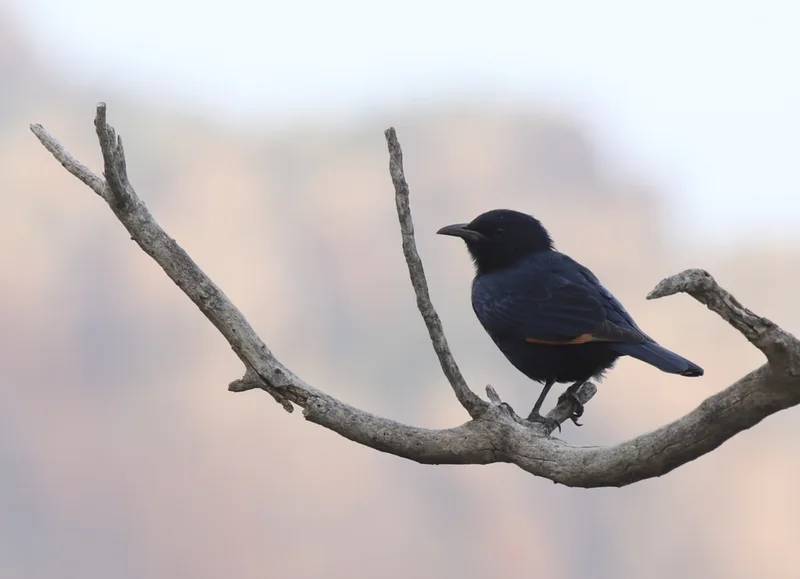
Tristram's Starling Onychognathus tristramii -
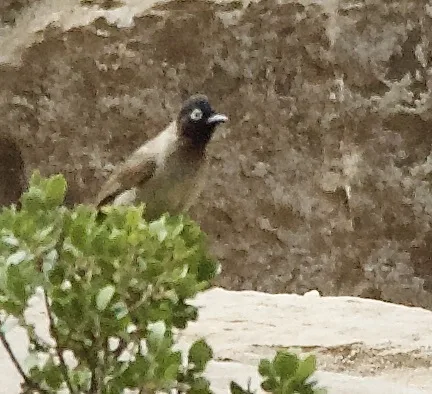
White-spectacled Bulbul Pycnonotus xanthopygos -
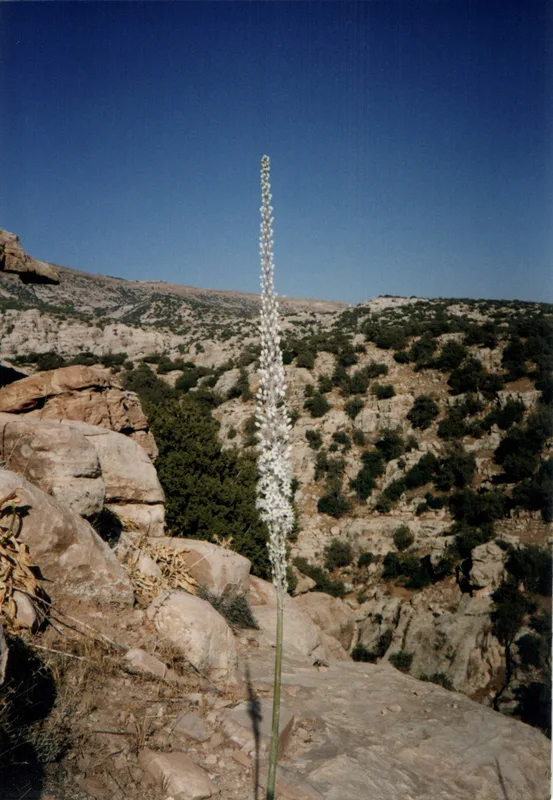
Sea Squill Drimia aphylla -
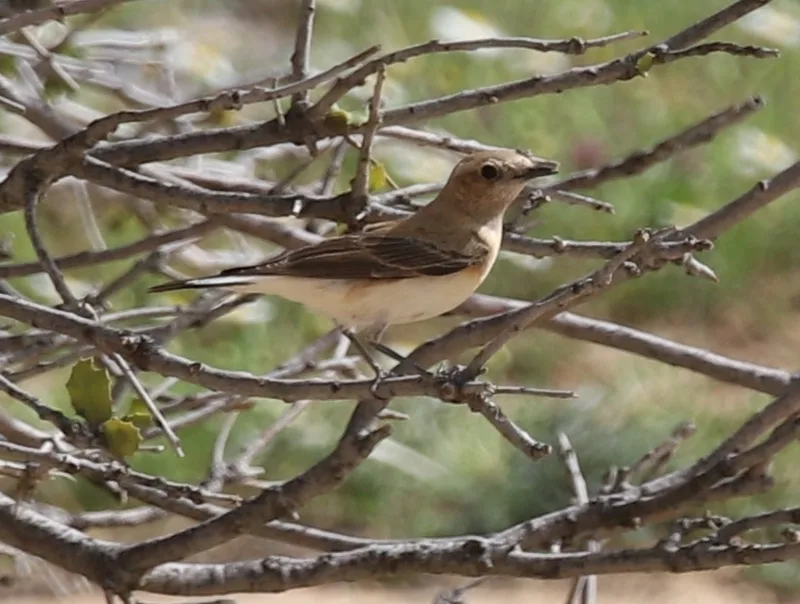
Eastern Black-eared Wheatear Oenanthe melanoleuca -
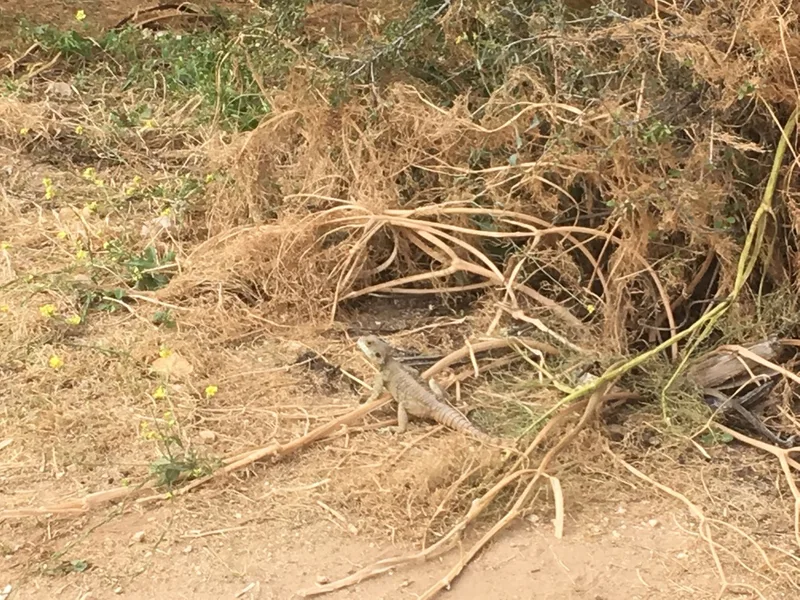
Egyptian Rock Agama Laudakia vulgaris -
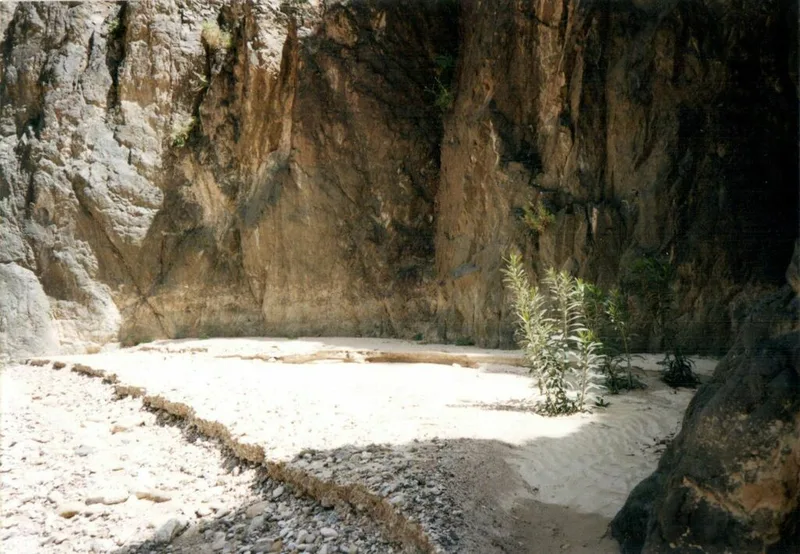
oleander Nerium oleander -
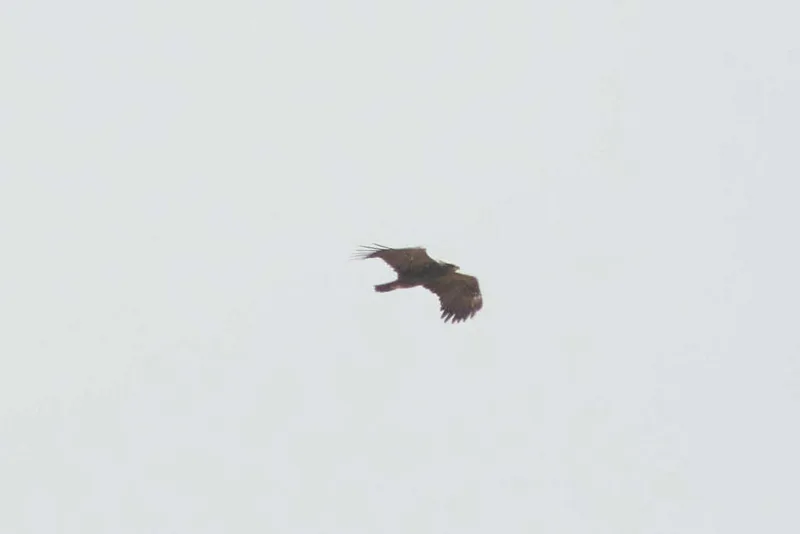
Steppe Eagle Aquila nipalensis -
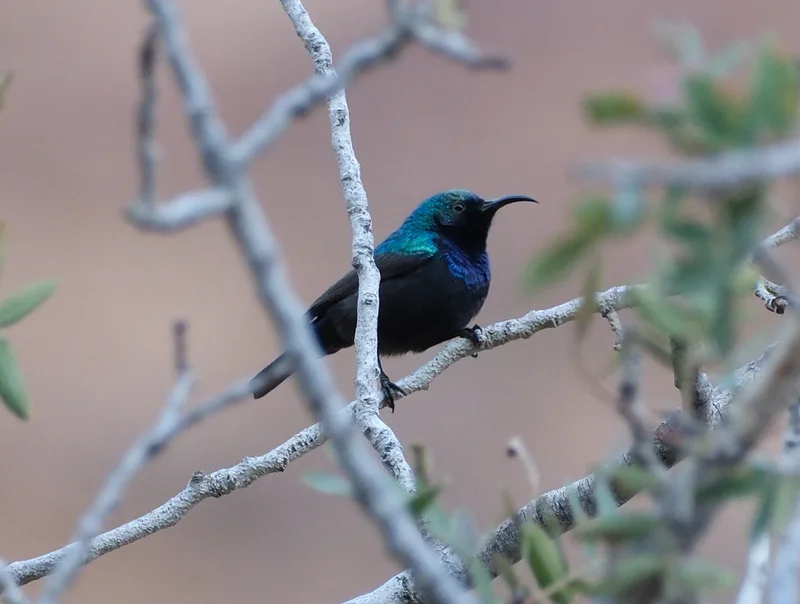
Palestine Sunbird Cinnyris osea -
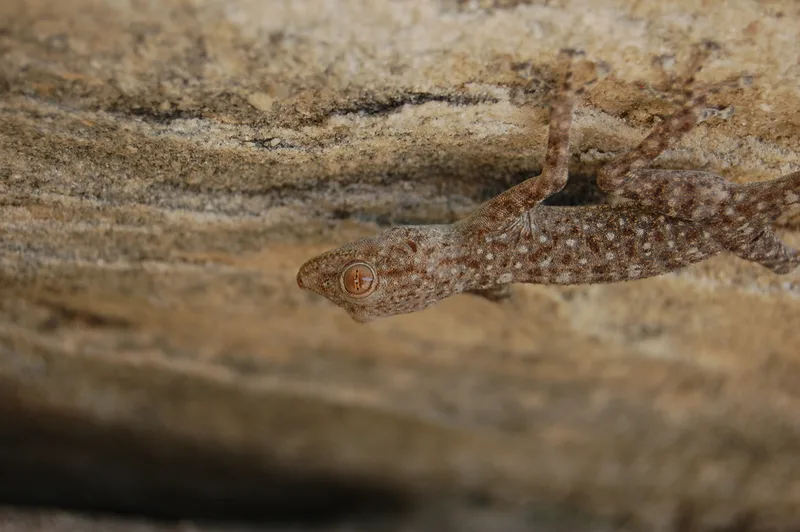
Sinai Fan-fingered Gecko Ptyodactylus guttatus -
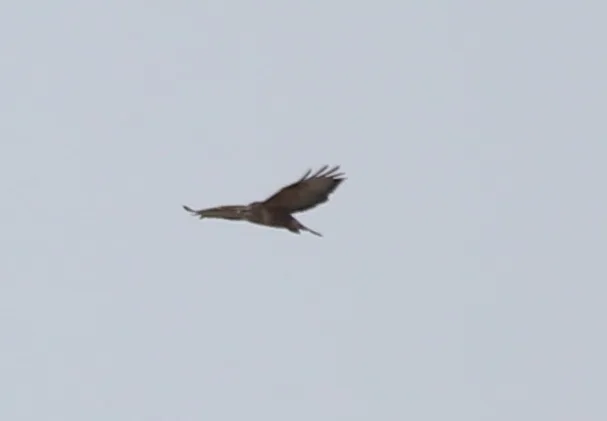
Common Buzzard Buteo buteo -
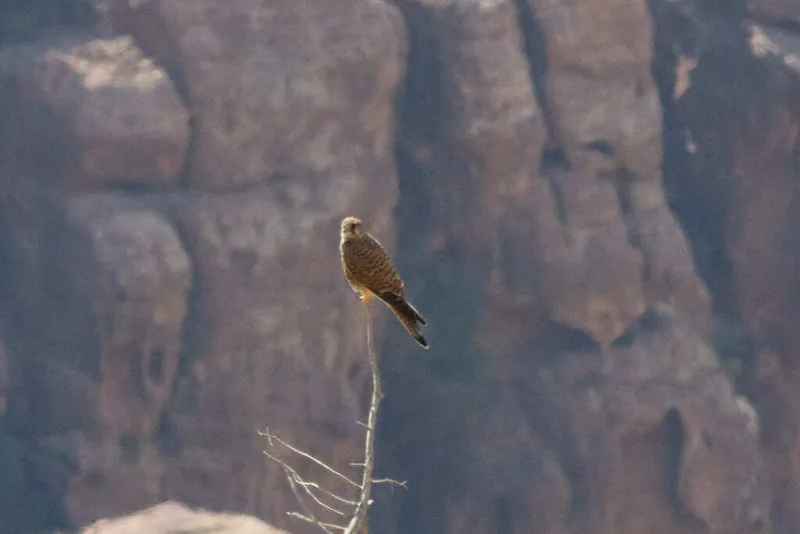
Eurasian Kestrel Falco tinnunculus -
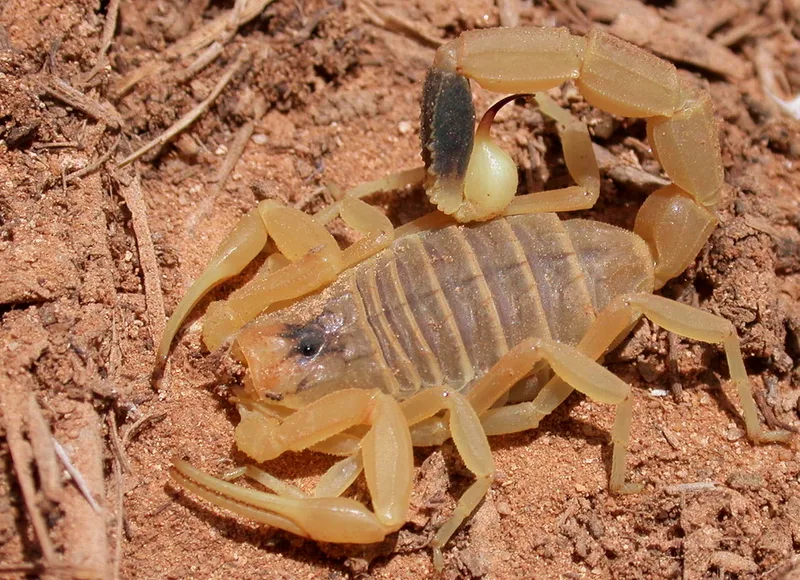
Hebrew Deathstalker Leiurus hebraeus
Field Notes · Desert & Deep Time lens · Dana Biosphere Reserve · 30.7624, 35.4425